Table of Contents >> Show >> Hide
- What Really Happened on January 28, 1986
- The Birth of the “Challenger Astronauts Are Alive” Conspiracy
- The Psychology Behind Challenger Conspiracy Theories
- The Internet: A Perpetual Motion Machine for False “Evidence”
- Why Challenger Conspiracy Claims Are Harmful
- How to Talk to Someone Who Believes the Challenger Conspiracy
- Experiences and Reflections Around Challenger Conspiracy Beliefs
- Conclusion: Honoring Facts and Honoring the Crew
On January 28, 1986, millions of people including entire classrooms of kids watched in horror as
the space shuttle Challenger broke apart just 73 seconds after liftoff. All seven crew members, including
teacher Christa McAuliffe, were killed. That part is not up for debate: it’s documented in official NASA
records, independent investigations, and countless eyewitness accounts.
But if you spend even a little time in certain corners of the internet, you’ll find something very
different: people confidently insisting the Challenger astronauts are still alive. They share side-by-side
photos, point to people with similar names, and argue that the disaster was staged. These
Challenger conspiracy theories sound outrageous, but they keep coming back, refreshed
for every new social media platform.
So why do some conspiracy theorists refuse to believe the Challenger astronauts died even when the
evidence is overwhelming? To answer that, we have to look at what actually happened in 1986, how this specific
conspiracy took shape, and what psychology research tells us about why people cling to these beliefs.
What Really Happened on January 28, 1986
Before we dig into the conspiracy, we need a quick reality check. Challenger’s final mission, STS-51L,
launched from Cape Canaveral on a cold Florida morning. Just over a minute into the flight, a failed rubber
O-ring in the right solid rocket booster allowed hot gases to escape, damaging the external fuel tank and
causing the shuttle to break apart.
The explosion was investigated by the Rogers Commission, a presidential panel that included physicist
Richard Feynman. Their report was blunt: the accident was caused by mechanical failure aggravated by cold
temperatures and a flawed NASA decision-making culture that ignored repeated safety warnings.
NASA, independent journalists, and government agencies all documented the recovery of debris and human
remains from the Atlantic Ocean. The official records and the Commission’s findings are clear that
all seven Challenger astronauts died as a result of the accident.
In other words, the factual baseline is not murky or disputed. The Challenger disaster is one of the
best-documented tragedies in spaceflight history. So where do these “they’re still alive” claims come from?
The Birth of the “Challenger Astronauts Are Alive” Conspiracy
The modern version of the conspiracy took off in the era of viral posts and image memes. A set of online
claims started circulating, pointing to people who supposedly look like the Challenger astronauts and
sometimes share similar names. The argument goes something like this: “Look, here’s a professor or
businessperson who has the same last name and kind of looks like one of the astronauts. That proves
NASA faked the disaster and gave them new identities.”
For example, conspiracy posts often focus on a law professor named Judith Resnik, claiming she is actually
Challenger astronaut Judith A. Resnik, who died in the accident. In reality, NASA’s records, biographies,
and memorials make it absolutely clear that astronaut Judith Arlene Resnik died on January 28, 1986.
Fact-checkers and science journalists have dug into these claims and found that the supposed “matches”
fall apart quickly: ages don’t line up, personal histories are different, and the people being targeted
by the theory have their own separate, well-documented lives.
Name Twins and Lookalike Photos
At the core of the Challenger conspiracy is a simple trick: taking advantage of how big the world is.
In a country of more than 300 million people, it’s not that surprising to find:
- Someone with the same last name as a famous astronaut.
- Someone with a passing resemblance to a publicity photo taken in the early 1980s.
- Someone whose job title or location seems “suspiciously” similar.
Conspiracy theorists then screen-grab these coincidences and present them as irrefutable “proof.”
They typically ignore:
- Official death certificates and obituaries.
- NASA records and memorials.
- Family statements and historical documentation.
It’s like arguing that Elvis is alive because you found a guy in Vegas with sideburns and a microphone.
It feels dramatic. It isn’t evidence.
Misunderstanding How Evidence Works
Fact-checking organizations such as Reuters and PolitiFact have repeatedly debunked the “Challenger
astronauts are alive” posts. They emphasize that the deaths are thoroughly documented and that the images
and name overlaps are coincidences, not secret NASA witness-protection programs.
But conspiracy thinking often reverses the normal rules of evidence. For true believers:
- A grainy photo becomes “strong proof.”
- Decades of detailed records become “part of the cover-up.”
- Any correction or debunking is seen as suspicious rather than helpful.
That might sound irrational, but psychology research shows it’s a very human pattern.
The Psychology Behind Challenger Conspiracy Theories
Researchers have spent years studying why people believe conspiracy theories in general, from fake moon
landing claims to modern misinformation. Their findings help explain why some people cling so tightly to
Challenger conspiracy theories.
A Need for Control in the Face of Tragedy
Catastrophic events like the Challenger disaster create a deep sense of fear and helplessness. Psychologists
have found that when people feel out of control, they’re more likely to see hidden patterns and secret
plots, even when none exist.
Believing “NASA lied, and the astronauts are really alive” can feel less frightening than accepting
“engineers warned about a design flaw, and leadership ignored them, and seven people died on live TV.”
The first story is wild but emotionally tidy: there’s a plan, an explanation, and maybe even a “happy”
twist where the crew survived. The second story is just painful human failure.
Cognitive Biases and Pattern-Hunting Brains
Studies consistently show that conspiracy believers are more prone to certain cognitive biases, including:
- Proportionality bias: the belief that big events must have big, intentional causes.
- Illusory pattern perception: seeing meaningful patterns in random or weak connections,
like similar names or faces. - Motivated reasoning: starting with a conclusion (“NASA lies”) and then hunting for
scraps of “evidence” to support it.
A 2018 review of conspiracy beliefs described them as emotional, social, and consequential they help
people make sense of events, connect with like-minded others, and maintain a worldview, even when the
beliefs clash with reality.
Once You Believe One Conspiracy, Others Come Easily
Research also shows that believing in one conspiracy theory makes it more likely you’ll believe others,
even if they contradict each other. People who are convinced that
“official stories are always lies” may embrace the Challenger theory alongside unrelated claims about
vaccines, elections, or climate change. The common thread is distrust, not careful investigation.
The Internet: A Perpetual Motion Machine for False “Evidence”
The Challenger conspiracy theory didn’t gain real traction until it found a perfect home: social media.
Platforms reward content that is:
- Visually striking (like before-and-after photos).
- Emotionally charged (“Everything you were told about Challenger is a lie!”).
- Simple enough to understand in a few seconds.
That combination makes a meme claiming “the astronauts are alive” far more shareable than a nuanced
explanation of O-ring failure mechanics or NASA internal decision-making. Fact-checks from reputable
outlets exist, but they spread more slowly and rarely go as viral as dramatic “exposés.”
Over time, these posts create echo chambers where believers mostly see content that confirms what they
already think. When someone drops a link to NASA documents or a detailed investigation, it can be instantly
dismissed as “part of the cover-up.”
Why Challenger Conspiracy Claims Are Harmful
It’s tempting to shrug all this off and say, “Let people believe what they want.” But Challenger conspiracy
theories have real-world impact.
They Hurt the Families and Legacy of the Crew
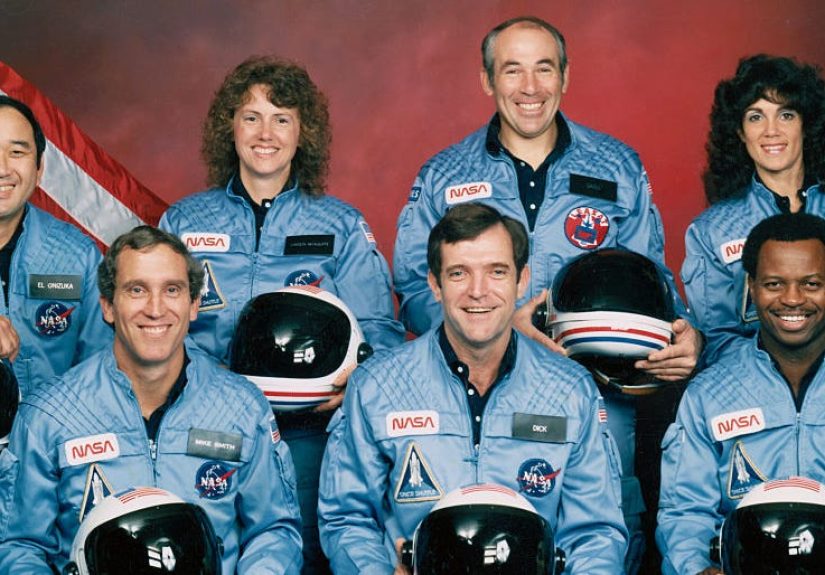
The families of the Challenger astronauts including Christa McAuliffe, Judith Resnik, Ronald McNair,
Michael Smith, Dick Scobee, Ellison Onizuka, and Gregory Jarvis have spent decades honoring their loved
ones’ memories through scholarships, education centers, and public outreach.
Claiming that those astronauts are secretly alive effectively denies their deaths and their sacrifice.
It turns a national tragedy into a game of “spot the lookalike” and treats real people like characters
in a thriller.
They Undermine Trust in Science and Institutions
When people insist that one of the most widely seen and heavily investigated events in modern history is
fake, it sends a larger message: no amount of evidence is ever enough. If Challenger can be dismissed as
a hoax, then so can climate data, medical research, or election results.
That kind of blanket distrust doesn’t lead to healthy skepticism; it leads to cynicism, paralysis, and
sometimes harmful real-world decisions.
How to Talk to Someone Who Believes the Challenger Conspiracy
If you have a friend or relative who’s convinced the Challenger astronauts are still alive, you probably
won’t win them over with a single NASA link. But there are ways to make the conversation more productive.
Lead with Respect, Not Mockery
Conspiracy beliefs are often tied to identity. If someone feels attacked or ridiculed, they’re more likely
to dig in deeper. Instead of opening with “That’s ridiculous,” try:
- “What first convinced you this might be true?”
- “How do you decide which sources to trust?”
- “What kind of evidence would change your mind?”
These questions can gently highlight double standards in how they evaluate information, without turning
the conversation into a shouting match.
Bring the Human Story Back
It can also help to refocus on the human reality of the Challenger disaster: the families, the teachers
who watched with their students, the engineers who blew the whistle on safety issues, and the reforms
that followed.
When the conversation centers on real people instead of abstract “they,” it becomes harder to treat the
entire event like a puzzle to be “solved” with screenshots.
Experiences and Reflections Around Challenger Conspiracy Beliefs
Beyond theory and data, there’s a lived, emotional side to this topic. Many people who were alive in 1986
remember exactly where they were when Challenger exploded. For them, seeing TikTok clips or Facebook posts
insisting the astronauts never died can feel like someone is rewriting their own memories.
Teachers often talk about how the launch was framed as a historic moment: a schoolteacher going to space,
classrooms gathered around boxy televisions, kids buzzing with excitement. Then, confusion people trying
to figure out whether what they just saw was some sort of malfunction or something worse. In some accounts,
adults stepped in front of the screen to shield students, not entirely sure what to say yet themselves.
Decades later, those same former students sometimes encounter Challenger conspiracy content online. A few
describe a strange disconnect: “I watched it happen, but these posts are telling me that what I saw either
wasn’t real or didn’t end the way I know it did.” That emotional clash between lived memory and
algorithm-boosted doubt can be unsettling, even for people who ultimately reject the conspiracy.
NASA staff and space educators face their own version of this. Many of them give public talks about the
Challenger disaster explaining what went wrong mechanically, how the O-ring failure occurred in the cold,
and how NASA changed its processes afterward.
During Q&A sessions, they sometimes get questions that start with: “I saw online that the astronauts
are still alive…” Instead of dismissing the question outright, some educators treat it as a teachable
moment, walking through what solid evidence looks like and why coincidences aren’t the same thing as proof.
Families of the astronauts, on the other hand, have far less patience for these claims and understandably
so. They’ve spent years visiting memorials, attending anniversaries, speaking at events, and building
foundations and learning centers in honor of their loved ones. For them, the idea that strangers on the
internet are casually declaring, “They’re not really dead,” isn’t just wrong; it’s deeply disrespectful.
There’s also a quieter group of people affected by Challenger conspiracy theories: those who didn’t live
through the original event and are encountering it almost entirely through online content. A teenager might
first learn about the disaster not from a history book or documentary, but from a viral video insisting
that the whole thing was staged. If that’s the starting point, it takes more effort and more critical
thinking to work backward to credible sources.
This is where small, everyday actions matter. A parent might pause a sensational video and say, “Let’s look
up what actually happened.” A teacher might build a lesson that includes both the technical analysis of
the accident and a discussion about how conspiracy theories spread. A friend might send a polite message
in a group chat, linking to a thorough fact-check and explaining why the photographic “evidence” doesn’t
hold up.
Over time, these grounded, human responses can help balance the algorithmic pressure to reward whatever is
most shocking. They won’t make conspiracy theories disappear, but they can make it less likely that
misinformation becomes the default version of the story for the next generation.
In the end, choosing to believe that the Challenger astronauts died as documented isn’t about blindly
trusting authority. It’s about respecting overwhelming evidence, honoring the people who were lost, and
refusing to let tragedy be turned into a never-ending internet mystery game.
Conclusion: Honoring Facts and Honoring the Crew
Conspiracy theorists refuse to believe the Challenger astronauts died for a mix of reasons: emotional
discomfort with tragedy, cognitive biases that favor dramatic stories, and an online ecosystem that
rewards sensational claims over careful analysis. The Challenger conspiracy doesn’t persist because the
evidence is strong; it persists because the story is sticky.
But the real story matters more. The Challenger crew died pursuing exploration and education, and their
loss led to hard-won safety reforms in human spaceflight. Remembering what actually happened and pushing
back against bad information is one way to honor them.