Table of Contents >> Show >> Hide
- The Brain Starts Moving Before “You” Officially Decide To
- Why Rhythm Is So Hard to Ignore
- Why Some Songs Make Us Move More Than Others
- It Starts Earlier Than You Think
- Music Turns Movement Into a Social Glue
- Why Foot Tapping Counts as Real Movement
- Everyday Examples of Unconscious Musical Movement
- Experience: What It Feels Like When Music Sneaks Into the Body
- Conclusion
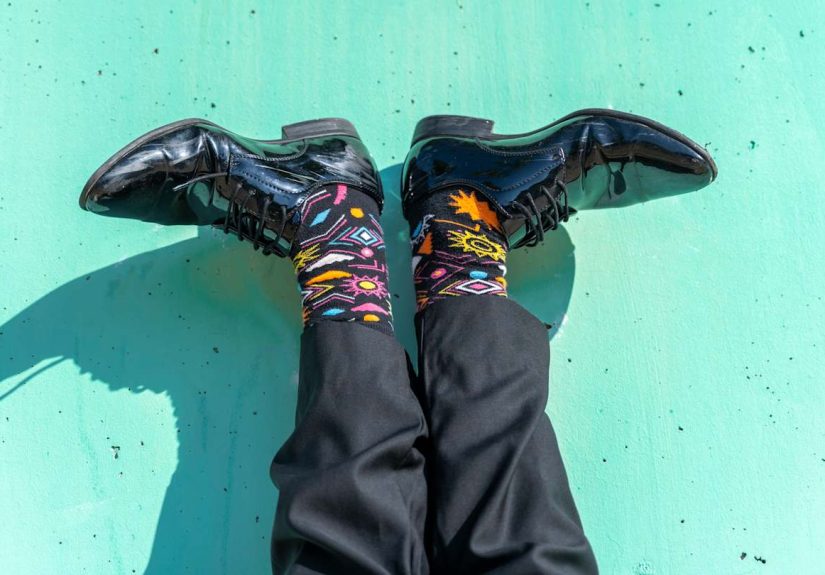
One moment you are sitting perfectly still, minding your business. The next, your heel is bouncing under the table like it just got a side hustle. You did not agree to this. You did not file any paperwork. And yet your body has quietly joined the band.
That little foot tap is more than a random habit. It is a clue about how the human brain works. Music does not just enter through the ears and stop there. It recruits attention, memory, emotion, prediction, and movement all at once. That is why a beat can seem to slip past conscious thought and go straight to the body. Before you tell yourself, “I like this song,” your nervous system may already be nodding, swaying, or tapping along.
In other words, tapping your foot to music is not silly, accidental, or a sign that you had too much coffee. It is one of the most ordinary examples of a remarkable human ability: the link between sound and movement. And once you understand what is going on under the hood, that sneaky toe bounce starts to look less like a bad habit and more like a tiny masterpiece of brain engineering.
The Brain Starts Moving Before “You” Officially Decide To
A lot of people assume music is processed like wallpaper for the ears. Nice, pleasant, and possibly useful for surviving a long grocery store line. But the brain treats rhythm more like an action signal than background decoration. When we hear a steady beat, areas involved in hearing do not work alone. Regions tied to movement planning also get involved, even when we are not actively dancing, clapping, or trying to keep time.
That matters because the body is built to coordinate with patterns. A beat gives the brain something deliciously structured: regular timing, repeated pulses, and just enough order to predict what happens next. Once those predictions start forming, movement becomes easier to prepare. Your body is essentially saying, “I know where this is going,” and your foot replies, “Great, I’ll meet it there.”
This helps explain why people often begin moving before they consciously notice it. The tap is not always the result of a deliberate choice. It can be a byproduct of the brain’s tendency to map rhythm onto motion. The beat arrives, the motor system gets interested, and your toes become unpaid interns.
Why rhythm feels physical
Rhythm is time made tangible. A melody can float, shimmer, and wander. A beat, by contrast, gives the body a place to land. That is why some songs seem to invite movement more strongly than others. It is not just that they sound catchy. They offer a clear pulse the brain can organize around.
Think about a marching band, a club track, or a stadium anthem. These forms of music often emphasize pulse in a way that makes timing feel obvious. Even quiet listeners begin to mirror it with small movements: a finger drumming on a desk, a shoulder bounce, a jaw set to the tempo, or the classic under-the-table foot tap that politely pretends it is not involved.
Why Rhythm Is So Hard to Ignore
One reason rhythm gets under our skin is that the brain loves prediction. It is always trying to anticipate the next sound, next word, next event, next awkward moment in a family group chat. Music rewards this tendency. A repeating beat gives the brain a stable framework for guessing what comes next, and every correct guess feels satisfying.
That satisfaction is part of why rhythm can feel good. The brain is not only reacting to sound after it happens. It is forecasting upcoming beats in real time. When a song sets up a pattern and then fulfills or playfully bends that pattern, we experience engagement, tension, release, and pleasure. The body responds because prediction and movement are deeply connected. If the brain can predict the next beat, it can also prepare the next tap.
This is where the magic gets especially human. Music is not just noise with a nice haircut. It is patterned sound that lets us anticipate time itself. Your foot is not merely twitching. It is participating in a prediction loop.
The reward factor
Music also connects with the brain’s reward system. That helps explain why some rhythms do more than organize motion; they create an urge to move. Researchers often call this feeling groove: the pleasurable desire to synchronize your body with music. Groove is why certain songs do not simply sound good. They feel like a dare.
Interestingly, the most movement-inducing rhythms are often not the simplest ones. If a beat is too plain, the brain gets bored. If it is too chaotic, the brain cannot lock in. The sweet spot tends to sit somewhere in between: enough regularity to predict, enough surprise to stay interesting. That is why a well-built groove can feel irresistible. It teases the prediction system without breaking it.
So no, your foot is not weak. It is responding to a carefully balanced mix of expectation, reward, and timing. Honestly, under the circumstances, it never stood a chance.
Why Some Songs Make Us Move More Than Others
Not all music triggers the same kind of motion. A mournful piano piece may pull you inward, while a tight funk groove can make your knee snap to attention like it just heard its name called. The difference often comes down to how clearly the beat is communicated and how cleverly the rhythm plays with expectation.
Songs with a strong pulse give the brain a stable framework. But the songs that really make people move often add a little rhythmic mischief. They delay an accent, push against the expected beat, or create syncopation that makes the pattern feel alive. That contrast between order and surprise keeps listeners engaged.
It is similar to conversation. If someone speaks in a perfectly flat, predictable way, you may tune out. If every sentence is wild nonsense, you also tune out. But if the rhythm is familiar with a few lively twists, your attention stays locked in. Great groove works the same way. It is musical flirtation with a timing problem.
Why dancers and non-dancers both feel it
You do not need formal training to respond to groove. A professional drummer may track subdivisions with dazzling precision, but a regular person waiting for coffee can still start bouncing in time to the shop playlist. Musical skill may change how accurately we synchronize, yet the basic urge to move appears to be broadly human.
That is part of what makes music so democratic. The body does not require a degree in jazz theory before it nods yes. It just needs a beat it can catch.
It Starts Earlier Than You Think
If foot tapping feels almost automatic, that may be because the roots of rhythm sensitivity show up very early in life. Research has found that even newborns can detect beat-related regularities, and infants move more rhythmically to music and regular sounds than to speech. In plain English: humans seem primed to notice temporal patterns long before they can explain them.
That does not mean babies are born ready to headline a percussion festival. Their movements are messy, joyful, and not exactly metronome-perfect. But the larger point is striking. Our attraction to beat is not merely a cultural add-on learned after years of concerts and playlists. It appears to emerge early, suggesting that the human brain is especially prepared to organize around rhythmic sound.
This early sensitivity helps explain why music can feel so immediate throughout life. It is not just something we understand intellectually. It is something our nervous system is ready for. The body often recognizes the beat before language catches up.
Music Turns Movement Into a Social Glue
Tapping your foot alone may seem like a private event, but the ability behind it has enormous social consequences. Humans do not just move to music individually. We synchronize together. We clap in unison, sway at concerts, march, chant, sing, dance, and lock into shared pulse in ways that make groups feel more connected.
This matters because coordinated movement changes how people relate to one another. When individuals line up in time, they often report stronger social connection, greater cooperation, and a sense of collective energy. That helps explain why music appears in rituals, celebrations, sports, protests, classrooms, weddings, funerals, and just about every event where humans want to feel something together.
Even tiny shared motions can matter. A crowd nodding to the same beat is not only consuming sound. It is participating in a shared timing experience. And timing is powerful. It creates a feeling that many bodies are briefly acting as one system. That sense of synchrony can make people feel safer, warmer, and more connected.
In that sense, your foot tap is not just a solitary quirk. It is a miniature version of the same capacity that lets choirs blend, dance floors pulse, and stadium crowds become one giant bouncing organism with questionable vocal technique.
Why Foot Tapping Counts as Real Movement
People often underestimate these tiny responses because they are subtle. If you are not moonwalking across the kitchen, it may seem like nothing important is happening. But small rhythmic movements are meaningful. They reveal that perception and action are coupled. The body does not need to launch into full choreography to prove the beat got through.
Foot tapping, head nodding, desk drumming, and shoulder swaying are efficient ways of synchronizing without committing to a whole performance. They are low-cost, low-risk, socially acceptable micro-movements. Handy, especially if you are in a meeting and would prefer not to break into a full-body groove when the elevator music gets unexpectedly good.
These little movements also help us feel the beat more clearly. Sometimes moving enhances timing perception rather than merely expressing it. In other words, we do not always move because we fully feel the beat; sometimes movement helps the beat become even more vivid.
Everyday Examples of Unconscious Musical Movement
You see this everywhere once you start looking for it. The driver whose finger taps the steering wheel at a red light. The student whose sneaker pulses beneath a classroom desk. The grocery shopper doing a suspiciously rhythmic cart push during a retro pop song. The office worker who claims to “just be thinking” while their heel is performing a flawless eighth-note pattern under the conference table.
These are not rare exceptions. They are daily evidence that music often escapes the category of passive listening. The body participates, whether or not the listener files an official report. Some people tap because they enjoy the song. Some tap because the beat is strong. Some tap because the rhythm is so well-designed that their motor system gets recruited before their conscious attention can catch it.
And yes, some people insist they are not dancing while clearly dancing from the ankles down. Science sees you.
Experience: What It Feels Like When Music Sneaks Into the Body
There is a very specific kind of experience many people recognize but rarely describe. You hear a song from another room, maybe faint through a wall, maybe from a passing car, maybe from a store speaker that has no business choosing a track that good. At first you are not even listening on purpose. Then, slowly, something shifts. Your foot starts marking time. Your shoulders loosen. Your breathing changes just a little. The music has entered the body before it has fully entered your thoughts.
That experience can feel oddly intimate because it happens below the level of deliberate performance. You are not trying to impress anyone. You are not attempting to “do music correctly.” You are simply being caught by a pulse. For a moment, time feels organized. The beat gives structure to your attention, and your movement gives structure back to the beat. It becomes a loop: the song carries you, and your body quietly confirms that it has been carried.
Many people notice this most strongly with songs they know well. The first kick drum lands, and the body remembers before the mind announces the title. A chorus is coming and your foot seems to know it. There is comfort in that. Familiar music can feel like arriving somewhere your nervous system has visited before. That may be one reason certain tracks become emotional landmarks in our lives. We do not only remember hearing them. We remember how our bodies moved with them.
But unfamiliar music can create the same effect. Sometimes a brand-new rhythm grabs you because it hits that perfect balance between clarity and surprise. You do not know the song, yet your body starts negotiating with it immediately. Not a full treaty, perhaps. More like a polite nod from the ankle. Still, the connection is real.
There is also something wonderfully human about how these reactions vary by setting. Alone at home, a foot tap can turn into a kitchen dance you hope no one recorded. In public, the same urge may shrink into a toe bounce inside your shoe. At a concert, it may expand into full-body participation because everyone around you is moving too. The internal experience is similar, but the social context changes how much of it becomes visible.
This is one reason music feels bigger than sound. It does not just pass through us; it recruits us. It asks for timing, anticipation, and physical response. Sometimes that response is huge and obvious. Sometimes it is so small you barely notice until the song ends and your foot suddenly stops, as if returning from a shift it forgot to tell you about.
Once you start paying attention, these moments become easier to spot. The body fidgets differently with music than it does with boredom. Musical movement has shape. It locks, repeats, anticipates, and enjoys itself. Even a tiny foot tap can carry pleasure, memory, prediction, and connection all at once. That is a lot of meaning for one humble shoe.
Conclusion
We tap our feet to music because the human brain is built to connect sound with movement. Rhythm activates systems involved in hearing, timing, prediction, reward, and motor planning, so a beat can become physical before it becomes fully conscious. Add a little groove, a little surprise, and a little emotional relevance, and the body joins in almost automatically.
That is why foot tapping is so common and so revealing. It shows that music is not merely heard. It is anticipated, felt, and enacted. From newborn sensitivity to beat, to social synchrony in groups, to the tiny heel bounce under a desk, the story is the same: the body is not an afterthought in musical experience. It is part of the listening process itself.
So the next time your foot starts tapping and your brain acts innocent, give credit where it is due. You are not losing control. You are being exquisitely, predictably, beautifully human.