Table of Contents >> Show >> Hide
- 1) Classic Banana Cream Pie (Diner-Style, Zero Regrets)
- 2) Coconut Cream Pie (Toasted, Tropical, and Slightly Dramatic)
- 3) Chocolate Cream Pie (Silky, Glossy, and Unreasonably Satisfying)
- 4) Lemon Meringue Pie (Bright Citrus + Cloud Topping)
- 5) Key Lime Pie (Sweet-Tart, Creamy, and Summer-Ready)
- 6) Butterscotch Pie (Brown Sugar Magic in a Crust)
- 7) Old-Fashioned Egg Custard Pie (Simple, Creamy, and Comforting)
- 8) Southern Buttermilk Pie (Tangy, Custardy, and Shockingly Easy)
- 9) Chess Pie (Sweet, Glossy, and a Little Southern Secret)
- 10) Crème Brûlée Pie (Custard + Crackly Sugar = Main Character Energy)
- 11) Peanut Butter Cream Pie (No-Bake, Crowd-Pleasing, Gone in Minutes)
- 12) Indiana Sugar Cream Pie (Vanilla Custard Comfort, Midwest Royalty)
- Quick Guide: Custard vs. Cream Pie (So You Sound Like a Pie Genius)
- Conclusion: Your “Make-It-Again” Pie Plan
- Extra: Real-Life Pie Experience (What I Learned After Making These on Repeat)
There are two kinds of pie people in this world: the “give me fruit” crowd and the “hand me a fork and step back” crowd.
This article is for the second groupthe folks who believe a pie slice should feel like a nap in dessert form.
Cream pies and custard pies are basically the cuddle blankets of baking: silky fillings, buttery crusts, and toppings that
exist purely to make you say, out loud, “Okay… wow.”
The best part? These pies range from “weeknight no-bake hero” to “holiday showstopper with a caramelized sugar top that makes
your kitchen torch feel emotionally validated.” We’re talking pastry cream, pudding-style fillings, eggy custards, tangy citrus
set with yolks, and the kind of whipped cream clouds that belong in weather reports.
Below are 12 cream and custard pie recipes (plus smart variations and troubleshooting tips) designed to help you bake with confidence
and eat with joy. Expect diner classics, Southern staples, and a few glow-ups that taste fancy without requiring a culinary degree.
Let’s make your pie rotation dangerously strong.
1) Classic Banana Cream Pie (Diner-Style, Zero Regrets)
If banana cream pie had a resume, it would say: “Excellent at making adults feel like happy kids.” The dream formula is simple:
crisp baked crust + ripe banana slices + vanilla pastry cream + whipped cream topping. The trick is texture: you want the crust
crisp, the cream thick, and the bananas freshnot sad and watery.
Make it foolproof
- Blind-bake the crust until deeply golden to avoid sogginess.
- Use ripe bananas (speckled, not mushy) and slice right before assembling.
- Chill the pastry cream with plastic wrap pressed directly on the surface to prevent a skin.
2) Coconut Cream Pie (Toasted, Tropical, and Slightly Dramatic)
Coconut cream pie is what happens when pastry cream goes on vacation. Build coconut flavor in layers: coconut in the filling,
toasted coconut on top, and (optional but elite) a crust that leans graham cracker or buttery shortbread for extra sweetness.
The end result should taste creamy, fragrant, and lightly nuttynot sunscreen-y.
Flavor upgrades
- Toast your coconut until golden for maximum “why is this so good?” aroma.
- Add a small splash of coconut milk to the custard base for deeper coconut character.
- Finish with whipped cream plus a pinch of salt to sharpen flavors.
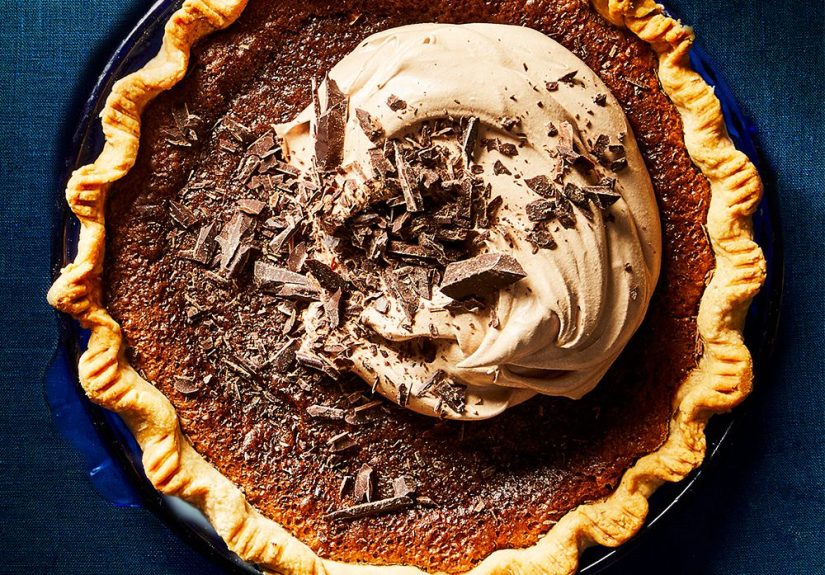
3) Chocolate Cream Pie (Silky, Glossy, and Unreasonably Satisfying)
A proper chocolate cream pie isn’t just “pudding in a crust.” It should be smooth, dark, and luxuriouslike chocolate decided
to become a spa treatment. Think cocoa + chopped chocolate melted into a thickened custard base, then chilled until sliceable.
Top with whipped cream or chocolate shavings, because we’re not here to be subtle.
Best-in-class texture tips
- Use both cocoa and real chocolate for depth.
- Whisk constantly while thickeningcustard scorches fast when you blink.
- Chill long enough to set (your patience will be rewarded).
4) Lemon Meringue Pie (Bright Citrus + Cloud Topping)
Lemon meringue pie is the extrovert of the custard pie world: bold, sunny, and not afraid of a little height. The filling is a
lemon custard thickened for clean slices, and the meringue should be glossy and stabletall, proud, and not secretly leaking
liquid like it has a side hustle as a rain cloud.
How to avoid weepy meringue
- Spread meringue on hot filling so it bonds and seals.
- Use a little cornstarch in the meringue for stability.
- Let it cool gradually to prevent condensation.
5) Key Lime Pie (Sweet-Tart, Creamy, and Summer-Ready)
Key lime pie is basically the “minimalist masterpiece” of custard pies: a crunchy graham cracker crust and a creamy filling that sets
thanks to egg yolks and citrus. The best ones balance sweet and tangy so your taste buds don’t feel like they’re in a lime-themed
boxing match. Serve chilled, topped with softly whipped cream.
Smart swaps
- No key limes? Regular limes workuse fresh juice for the cleanest flavor.
- Add a touch of yogurt or sour cream to the topping for extra tang and body.
- Chill thoroughly before slicing for neat wedges.
6) Butterscotch Pie (Brown Sugar Magic in a Crust)
Butterscotch pie tastes like nostalgia with better boundaries. It’s built on brown sugar, butter, and dairy cooked into a thick,
caramel-adjacent custard. Some versions crown it with meringue, others with whipped creamboth are correct, because butterscotch
is the boss here.
Don’t fear the stovetop
- Cook gently and whisk like you mean itsmooth custard loves steady heat.
- A pinch of salt keeps sweetness from turning flat.
- Want extra depth? Add a tiny splash of vanilla or bourbon.
7) Old-Fashioned Egg Custard Pie (Simple, Creamy, and Comforting)
Egg custard pie is the quiet genius of the pie table. It’s milk, eggs, sugar, vanilla, and a whisper of nutmegbaked until set at
the edges with a gentle jiggle in the center. Serve slightly warm or fully chilled. Either way, it tastes like your grandmother
knew exactly what she was doing (and she did).
Custard success rules
- Bake at a moderate temperature so the custard stays silky, not scrambled.
- Pull when the center still trembles a bit; it finishes setting as it cools.
- Nutmeg on top is not optionalokay, it’s optional, but it’s also iconic.
8) Southern Buttermilk Pie (Tangy, Custardy, and Shockingly Easy)
Buttermilk pie is what you make when you want a custard pie that has a little attitude. It’s sweet, creamy, and gently tangy,
often with a touch of lemon and vanilla. The ingredient list is humble; the payoff is big. If you’re baking for people who say
“I don’t really like pie,” this is the pie that changes their personality.
Why it works
- Buttermilk adds tang that balances sugar and butter.
- Flour or cornstarch helps the custard hold its shape.
- It’s great plainor with berries and whipped cream.
9) Chess Pie (Sweet, Glossy, and a Little Southern Secret)
Chess pie is a close cousin of buttermilk pie, with a custard-like filling built on eggs, butter, and sugaroften with a little
cornmeal for texture and vinegar for balance. It bakes into a glossy, golden top that looks like you tried very hard. You did…
but we don’t have to tell anyone how straightforward it is.
Make it your signature
- Add a spoonful of cornmeal for that classic faint crunch.
- A splash of vinegar or citrus keeps sweetness from getting loud.
- Serve at room temp for the smoothest slice.
10) Crème Brûlée Pie (Custard + Crackly Sugar = Main Character Energy)
Crème brûlée pie is a mic-drop dessert: silky custard filling under a glassy layer of caramelized sugar that cracks when you tap it.
Some versions bring warm spice (like cardamom) into the custard, which plays beautifully with vanilla. If you own a kitchen torch,
this is your moment. If you don’t, this is an emotionally persuasive argument to get one.
Torch tips
- Chill the pie thoroughly before brûlée-ing so the custard stays firm.
- Sprinkle sugar evenly for a uniform crackle layer.
- Torch in small circlesdon’t camp in one spot unless you enjoy bitter sugar.
11) Peanut Butter Cream Pie (No-Bake, Crowd-Pleasing, Gone in Minutes)
Peanut butter cream pie is the fastest route to “you’re a genius” compliments. The filling is typically a whipped blend of peanut butter,
something creamy (often cream cheese or a similar base), and a light, fluffy element that makes it mousse-like. Put it in a graham
or cookie crust, chill, and pretend you didn’t basically hack dessert.
Winning variations
- Chocolate cookie crust + peanut butter filling = instant classic combo.
- Add a thin chocolate ganache layer to make it feel bakery-level.
- Top with chopped peanuts and flaky salt for crunch and contrast.
12) Indiana Sugar Cream Pie (Vanilla Custard Comfort, Midwest Royalty)
Sugar cream pie is all about a velvety vanilla custard made rich with dairy and thickened just enough to slice cleanly.
It’s famously associated with Indiana, and one bite explains why: it’s warm, sweet, and deeply soothinglike a dessert version of
“you’re doing great, honey.” Often it’s finished with a cinnamon-sugar sprinkle that bakes into a delicate top.
Keep it luscious, not runny
- Cook the filling until it visibly thickens before baking (if your method calls for stovetop thickening).
- Let it cool fully so the custard sets properly.
- Serve with whipped cream or fresh berries to cut the richness.
Quick Guide: Custard vs. Cream Pie (So You Sound Like a Pie Genius)
Custard pie is usually egg-forward and baked (think egg custard, buttermilk, chess, lemon).
Cream pie often uses a stovetop-thickened base (pastry cream or pudding-style filling) and is typically chilled
(banana cream, coconut cream, chocolate cream, peanut butter cream).
Translation: custard pies are “bake it until it jiggles,” cream pies are “stir it until it thickens.” Both are “eat it until it’s gone.”
Conclusion: Your “Make-It-Again” Pie Plan
If you’re building a repeat-worthy pie lineup, start with one “no-bake lifesaver” (peanut butter cream), one “classic diner mood”
(banana or coconut cream), one “holiday Southern legend” (buttermilk or chess), and one “look what I can do” flex (crème brûlée pie).
From there, rotate based on season: citrus in summer, caramel-brown sugar in fall, chocolate when life is… life.
The secret to cream and custard pie success isn’t perfectionit’s understanding the texture goals: crisp crust, smooth filling,
stable topping. Nail those, and you’ll be the person everyone “just happens” to invite to gatherings. Purely coincidental, of course.
Extra: Real-Life Pie Experience (What I Learned After Making These on Repeat)
After you’ve made a few cream and custard pies back-to-back, you start noticing something: pies are less about recipes and more about
patterns. Once you see the patterns, you stop feeling like you’re “following instructions” and start feeling like you’re driving the car.
(Not a fast car. More like a comfortable station wagon that smells faintly of vanilla. But still.)
First, crust confidence changes everything. The number-one reason people think they “can’t make pie” is not the custardit’s the crust.
But here’s the plot twist: cream pies don’t require a flawless, architectural, flaky masterpiece. A press-in graham cracker crust or
cookie crumb crust can deliver big flavor with low stress. And when you do use a traditional pastry crust, blind-baking is the difference
between “crispy and heroic” and “why is my pie wet.” I started setting a timer for blind-baking and stopped pulling the crust early.
A deeper golden color tastes better and holds up longer under fillings.
Second, custard is basically a gentle negotiation with eggs. You don’t “cook” eggs in custard so much as you persuade them to thicken
without panicking. Low-to-medium heat, constant whisking, and patience are your power trio. The first time you make pastry cream, it feels
like it takes forever… until suddenly it thickens in about 30 seconds and you realize the stove has been playing mind games. That moment
is normal. The lesson: don’t walk away. Custard waits for no one.
Third, chilling is not a suggestion. Cream pies and many custard pies need time to set, relax, and become sliceable. Early on, I would
do the classic “it’s probably fine” move and cut in too soon. The result is always the same: delicious, but shaped like a landslide.
Now I treat chill time as part of the recipe, not an optional extra. If I need dessert sooner, I choose a pie designed for speed
(hello, peanut butter cream pie) rather than forcing a banana cream pie to meet an impossible deadline.
Fourth, toppings are where you can be playful without risking the structure. Want to add toasted coconut, shaved chocolate, crushed
peanuts, citrus zest, or a pinch of flaky salt? Do it. Those little finishing touches make a familiar pie taste “new” without you having
to reinvent the filling. I also learned that whipped cream doesn’t have to be complicatedgood cream, a little sugar, and vanilla is
already a flex. If you want to get fancy, fold in yogurt for tang, or stabilize with a touch of gelatin if the pie will sit out at a party.
Finally, the biggest surprise: people remember cream and custard pies emotionally. A slice of egg custard pie can trigger a whole story
about someone’s grandmother. Buttermilk pie makes folks argue (lovingly) about whose family version is “the real one.” Lemon meringue pie
gets applause because it looks dramatic, even when the steps are totally manageable. That’s why these pies are worth repeating: they’re
not just desserts. They’re little edible time machinescreamy, buttery, and extremely persuasive.