
Table of Contents >> Show >> Hide
- What Is Raspberry Puree, Exactly?
- Before You Start: Ingredients and Tools
- Method 1: No-Cook Raspberry Puree (Fastest and Freshest)
- Method 2: Classic Stovetop Raspberry Puree (Balanced and Reliable)
- Method 3: Roasted Raspberry Puree (Deep Flavor, Big Personality)
- Which Method Should You Choose?
- How to Control Sweetness, Tartness, and Texture
- Storage, Freezing, and Food Safety
- 15 Delicious Ways to Use Raspberry Puree
- Common Mistakes and Easy Fixes
- Experience Notes: of Practical Lessons from Real Kitchens
- Conclusion
Raspberry puree is the kind of kitchen move that makes you look wildly competent with almost no effort.
One minute you have a bowl of berries. Ten minutes later, you have a jewel-toned, bright-tart puree that can
wake up cheesecake, swirl through yogurt, rescue plain pancakes, and make vanilla ice cream feel like a fancy plated dessert.
In this guide, you’ll learn three reliable methods for making raspberry puree: a no-cook version,
a classic stovetop version, and a roasted version with deeper flavor. You’ll also get practical advice on
sweetness, acidity, texture, storage, freezing, and troubleshooting. If you’ve ever wondered why one batch tastes flat,
why another gets watery, or why seeds seem to multiply like glitter, this article has you covered.
Whether you’re cooking for a weekend brunch, a birthday cake, or your own “I deserve better than plain oatmeal” moment,
these methods are easy to adapt. No complicated pastry-school routine required. Just real, repeatable results.
What Is Raspberry Puree, Exactly?
Raspberry puree is blended raspberries, usually with sugar and a little lemon juice, sometimes strained to remove seeds.
Depending on how you prepare it, puree can be thin and pourable, thick and spoonable, or somewhere in between.
Puree vs. Coulis vs. Sauce
- Puree: Blended fruit, smooth or slightly textured.
- Coulis: Typically a smooth, strained fruit puree used as a finishing sauce.
- Sauce: A broader term; may be chunkier or thickened with starch.
For most home cooks, these terms overlap in daily use. The key is texture and purpose: drizzle, swirl, filling, glaze, or spoon-over topping.
Before You Start: Ingredients and Tools
Core Ingredients
- Raspberries: Fresh or frozen both work beautifully.
- Sugar: Granulated sugar is easiest to dissolve and tastes clean.
- Lemon juice: Balances sweetness and brightens berry flavor.
- Pinch of salt (optional): Tiny amount, big flavor lift.
Helpful Tools
- Blender, immersion blender, or food processor
- Fine-mesh strainer (for seedless puree)
- Rubber spatula (to press puree through the strainer)
- Small saucepan (for cooked methods)
- Digital scale or measuring cups
Fresh vs. Frozen Raspberries
Fresh berries give a brighter top note; frozen berries are convenient, consistent, and often more budget-friendly.
In off-season months, frozen berries can actually outperform expensive out-of-season fresh fruit in flavor.
Method 1: No-Cook Raspberry Puree (Fastest and Freshest)
This method is ideal when you want vibrant, fresh berry flavor and zero stovetop time.
Ingredients (Makes about 1 to 1 1/4 cups strained)
- 2 cups raspberries (fresh, or thawed frozen)
- 2 to 3 tablespoons sugar (adjust to taste)
- 1 to 2 teaspoons lemon juice
- Pinch of salt (optional)
How to Make It
- Add raspberries, sugar, lemon juice, and salt to a blender.
- Blend until smooth, about 20 to 30 seconds.
- Taste. Add a little more sugar or lemon juice if needed.
- For seedless puree, pour through a fine-mesh strainer and press with a spatula.
Best Uses
- Yogurt swirls
- Smoothie bowls
- Pancake and waffle topping
- No-bake cheesecake drizzle
- Quick cocktail mixer
Pros and Cons
Pros: Fast, bright flavor, no heat, minimal cleanup.
Cons: Slightly shorter shelf life, can be thinner than cooked versions.
Method 2: Classic Stovetop Raspberry Puree (Balanced and Reliable)
This is the dependable all-rounder. Heat helps dissolve sugar, soften berries, and round out tartness.
Ingredients (Makes about 1 1/4 cups strained)
- 2 cups raspberries
- 3 to 4 tablespoons sugar
- 1 tablespoon water (optional, helps start the simmer)
- 1 to 2 teaspoons lemon juice
- Pinch of salt
How to Make It
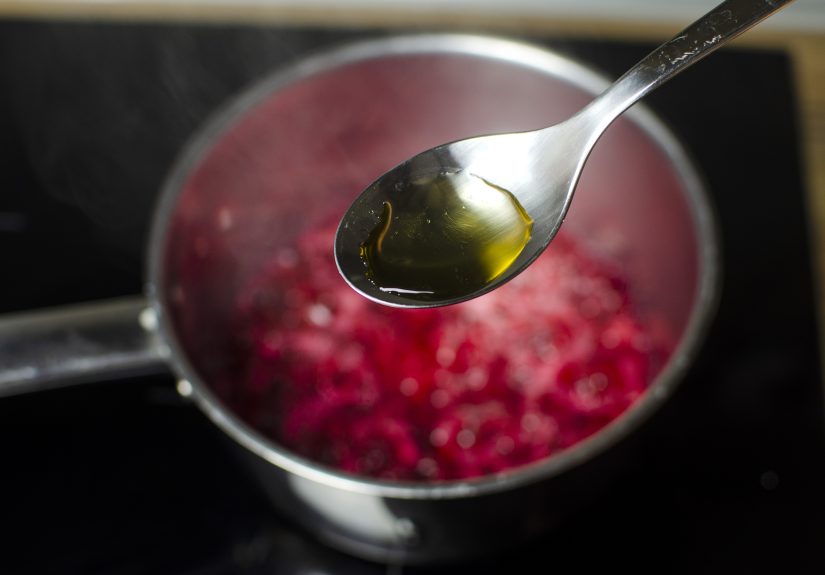
- Combine berries, sugar, and water in a small saucepan over medium heat.
- Stir and simmer 4 to 8 minutes, until berries break down and juices release.
- Remove from heat; add lemon juice and salt.
- Blend until smooth (optional if already very soft).
- Strain for a silky finish, or leave unstrained for rustic texture.
- Cool completely before storing.
Best Uses
- Cheesecake topping
- Panna cotta and custards
- Cake drizzle
- French toast and crepes
- Ice cream sundaes
Why It Works
Light cooking softens berry cells and integrates sweetness, giving a fuller flavor and smoother mouthfeel than many raw versions.
Method 3: Roasted Raspberry Puree (Deep Flavor, Big Personality)
Roasting evaporates excess moisture and concentrates flavor. If your puree has ever tasted watery, this method is your upgrade.
Ingredients (Makes about 1 cup strained, concentrated)
- 3 cups raspberries
- 3 to 4 tablespoons sugar
- 1 tablespoon lemon juice
- Optional: 1/2 teaspoon lemon zest
- Pinch of salt
How to Make It
- Preheat oven to 375°F (190°C).
- Toss raspberries with sugar and spread on a parchment-lined sheet pan.
- Roast 12 to 18 minutes, until berries collapse and juices bubble.
- Cool slightly, then blend with lemon juice, zest, and salt.
- Strain for a polished, seedless texture.
Best Uses
- Cake layers and fillings (especially chocolate cakes)
- Glaze base for tarts
- Swirls in buttercream or whipped cream
- Fancy dessert plating where flavor intensity matters
Flavor Profile
Roasting gives a richer, jammy character while keeping the berry identity clear. Think “same fruit, louder microphone.”
Which Method Should You Choose?
| Goal | Best Method | Why |
|---|---|---|
| Fresh, bright flavor in minutes | No-Cook | Fast and vivid berry taste |
| Versatile everyday puree | Stovetop | Balanced texture and sweetness |
| Concentrated, dessert-forward flavor | Roasted | Deeper taste, less wateriness |
How to Control Sweetness, Tartness, and Texture
Sweetness
Start low, then adjust. Raspberries vary in natural sweetness by season and source.
For 2 cups berries, begin with 2 tablespoons sugar and move up as needed.
Tartness
Lemon juice should support, not dominate. Add in 1/2 teaspoon increments and taste each time.
Thickness
- If too thin: simmer gently to reduce, or roast next batch.
- If too thick: whisk in 1 to 2 teaspoons water at a time.
- If seed-heavy: strain twice with a fine-mesh sieve.
Storage, Freezing, and Food Safety
- Store puree in a clean, airtight container in the refrigerator.
- Use within about 5 to 7 days for best flavor and quality.
- Freeze in small portions (ice cube trays are great for easy portions).
- Label with date and method (raw, stovetop, roasted).
- Wash produce under running water before prep; skip soap or produce detergent.
If using frozen berries, thaw in the refrigerator or cook directly in the saucepan for the stovetop method.
For long-term planning, freeze puree in recipe-size portions so you can grab exactly what you need.
15 Delicious Ways to Use Raspberry Puree
- Swirled into vanilla yogurt
- Over cheesecake slices
- As pancake or waffle topping
- In lemonade for a berry twist
- As a base for raspberry mocktails
- Over pound cake
- On oatmeal with nuts
- In overnight oats
- Layered into parfaits
- As a filling stripe in sponge cakes
- In whipped cream for pink berry cream
- Drizzled on brownies
- Mixed into vinaigrette with olive oil and vinegar
- As a swirl in popsicles
- On ice cream with toasted almonds
Common Mistakes and Easy Fixes
Mistake 1: Over-sweetening early
Fix: Add sugar gradually. Remember, sweetness grows as puree chills.
Mistake 2: Skipping the strainer when silky texture matters
Fix: Strain when serving guests, plating desserts, or topping delicate custards.
Mistake 3: Cooking too hard and too long
Fix: Gentle simmer, not aggressive boil. High heat can dull bright berry notes.
Mistake 4: Washing berries too early and storing wet
Fix: Keep berries dry in storage; rinse right before prep.
Experience Notes: of Practical Lessons from Real Kitchens
Across home kitchens, test kitchens, and baker feedback, one thing shows up again and again: raspberry puree is easy to make,
but the best results come from tiny decisions. The first is timing. People who blend berries the moment they buy them usually
get cleaner flavor than those who leave berries in the fridge for several days. Raspberries are delicate and quick to lose their
peak aroma, so a fast turnaround matters. If you can’t use them immediately, freezing early usually gives better puree than waiting
until the fruit is already soft and tired.
The second lesson is about texture expectations. Many first-time cooks assume “puree” means perfectly smooth, then feel disappointed
when seeds show up. In practice, seeds are normal unless you strain. The strainer step is not optional for a restaurant-style finish;
it is the step. A wide bowl under the sieve and a flexible spatula make a huge difference. People who use a spoon often leave a lot of
puree behind, while a spatula recovers much more fruit and cuts waste.
Sweetness calibration is the third big pattern. New cooks often follow sugar amounts exactly, then wonder why one batch tastes too tart
and another too sweet. Raspberries can vary wildly by season and source, so measuring sugar is only the starting point. The best approach
is to blend or simmer first, then adjust in small increments. A teaspoon can change everything, especially in small batches.
Another repeated observation: lemon juice is best treated as a flavor “focus ring.” Too little, and puree can taste flat. Too much, and it
tastes sharp, like lemonade accidentally moved into dessert territory. The sweet spot is usually modest. Add, taste, pause, then decide.
That pause matters more than people expect because warm puree tastes different from chilled puree.
Roasting has become a favorite among bakers because it solves two recurring complaints at once: watery consistency and weak berry flavor.
The oven drives off extra moisture and concentrates taste, which helps when purees need to hold their own against rich desserts like chocolate cake,
cheesecake, and whipped cream. Cooks who prefer bold fruit flavor consistently report better results with the roasted method.
Storage habits also separate good batches from great ones. Labeling containers with date and method sounds boring, but it prevents confusion later.
“Is this the thin one or the thick one?” is not the question you want to ask while frosting a cake. Freezing in small portionstablespoon cubes,
half-cup containers, or recipe-ready pouchesmakes weekday use much easier. People who freeze one giant container usually end up thawing too much.
Finally, the biggest practical lesson is psychological: raspberry puree feels fancy, so people save it for special occasions. But the most satisfied
cooks use it casuallyon yogurt, toast, oatmeal, and simple desserts. That frequent use builds instinct quickly. After two or three batches, most people
can predict exactly how much sugar and lemon they like, when to strain, and which method fits the dish. At that point, raspberry puree stops being a recipe
and becomes a kitchen skill you can apply all year.
Conclusion
If you want speed, choose the no-cook method. If you want versatility, choose stovetop. If you want deep, concentrated flavor, choose roasted.
All three methods can produce excellent raspberry puree with only a few ingredients and simple tools. Start with quality berries, adjust thoughtfully,
strain when texture matters, and store smart. Once you master these three approaches, you’ll always have a fast way to make desserts and breakfasts
taste brighter, fresher, and far more exciting.







 Close
Close