Table of Contents >> Show >> Hide
- 1. Letting Dirt and Grit Hang Around Like Unpaid Rent
- 2. Using Too Much Water or a Steam Mop
- 3. Cleaning with the Wrong Products
- 4. Letting Spills Sit Too Long
- 5. Dragging Furniture and Skipping Felt Pads
- 6. Ignoring Shoes, Pet Nails, and Daily Impact
- 7. Forgetting That Hardwood Reacts to Humidity, Sunlight, and the Wrong Rugs
- How to Protect Hardwood Floors Without Becoming Weird About It
- Final Thoughts
- Homeowner Experiences: What These Hardwood Floor Mistakes Look Like in Real Life
- SEO Tags
Hardwood floors have a funny way of making a room look more expensive, more polished, and more “I definitely have my life together” than reality might suggest. They add warmth, character, and the kind of timeless charm that survives trends, paint colors, and your cousin’s questionable “modern farmhouse” phase. But as durable as hardwood can be, it is not invincible. In fact, a lot of the damage that shows up on wood floors doesn’t come from one giant disaster. It comes from small daily habits that quietly wear the floor down until one day you notice scratches, cloudy finish, dull patches, or boards that look like they’ve had a hard week.
The tricky part is that many floor-damaging habits feel harmless. A little water here. A quick furniture shove there. A trendy homemade cleaner that sounds natural and wholesome enough to be served at brunch. Unfortunately, your hardwood floors do not care about good intentions. They care about moisture, friction, impact, sunlight, and whether you’ve turned your kitchen into a tiny humidity experiment.
If you want your floors to stay beautiful for the long haul, it helps to know what not to do. Here are seven common ways homeowners accidentally ruin hardwood floors, plus smarter habits that keep wood looking rich, smooth, and gloriously splinter-free.
1. Letting Dirt and Grit Hang Around Like Unpaid Rent
One of the fastest ways to damage hardwood floors is also one of the most boring: not sweeping often enough. Dust may look innocent, but grit, tiny pebbles, and tracked-in dirt act like sandpaper under shoes, socks, pet paws, and chair legs. Every trip across the room can grind that debris into the finish, slowly dulling the sheen and creating fine scratches that make the floor look tired before its time.
This is especially common in entryways, kitchens, hallways, and anywhere your household traffic resembles a minor airport terminal. If your family comes in from the yard, the driveway, or a rainy sidewalk and keeps moving without wiping shoes, the floor takes the hit. Over time, that steady abrasion wears down the protective finish, which means the wood underneath becomes more vulnerable to deeper damage.
What to do instead
Use walk-off mats at exterior doors, sweep or dust mop high-traffic areas regularly, and vacuum with a hardwood-safe setting. A microfiber mop is a hero here because it grabs fine dust instead of pushing it around like a lazy intern. Also, if your vacuum has a beater bar, turn it off before you go charging across the floor like you’re cleaning a carpet from 1998.
2. Using Too Much Water or a Steam Mop
If hardwood floors could talk, they would probably say, “Please stop drowning me.” Wood and excess moisture are not best friends. Even sealed hardwood floors can suffer when too much water sits on the surface, seeps into seams, or repeatedly saturates the finish. That can lead to swelling, cupping, warping, cracking, squeaking, and other expensive little reminders that wood is, in fact, a natural material.
Steam mops are another common mistake. They feel efficient, modern, and satisfyingly dramatic, but high heat and moisture can damage the finish and force moisture into tiny gaps. In plain English, your floor may look freshly cleaned for ten minutes and quietly start resenting you for years.
The same goes for old-school string mops that hold too much water. If the floor looks visibly wet after cleaning, that’s not a sign of success. That’s a sign your mop is doing the most in all the wrong ways.
What to do instead
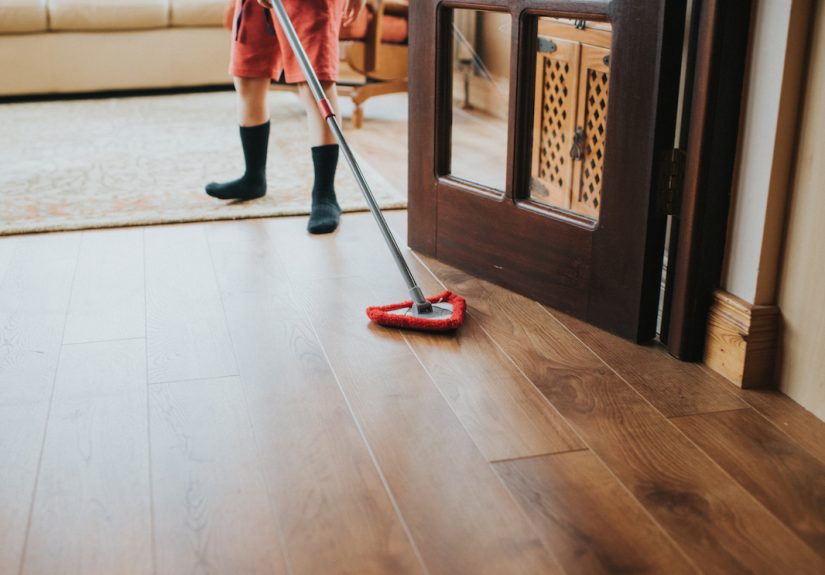
Use a damp microfiber mop, not a soaking one. Mist the cleaner lightly, work in sections, and let the floor dry quickly. For everyday upkeep, less moisture is better. Hardwood likes “barely damp,” not “freshly hosed down.”
3. Cleaning with the Wrong Products
Hardwood floors are picky, and honestly, they’ve earned that right. Many popular cleaning shortcuts can dull the finish, leave residue, or strip away protection. Vinegar is a classic example. It gets recommended online for everything short of emotional healing, but on hardwood, acidic solutions can wear down the finish over time. Harsh detergents, ammonia, bleach, abrasive scrubbers, oil soaps, and waxy shine-boosting products can also create trouble.
Sometimes the damage is obvious, like discoloration or streaking. Other times it is sneakier. A product leaves a film, that film attracts dirt, the dirt makes the floor look dull, and then you clean more aggressively, which makes the problem worse. Congratulations: you are now trapped in a floor-care soap opera.
Even products marketed as “multi-surface” are not always safe for hardwood. Tile cleaner, vinyl cleaner, and random DIY formulas are not worth the gamble when floor finishes vary so much from home to home.
What to do instead
Choose a hardwood floor cleaner recommended for your floor’s finish and follow the label directions. If you are not sure what finish you have, start with the manufacturer’s care instructions. The safest routine is usually simple: microfiber mop, hardwood-safe cleaner, light application, done.
4. Letting Spills Sit Too Long
Spills are not just messy; they are sneaky. A splash of water near the sink, a pet bowl overflow, melted ice from a dropped drink, or cooking splatter that sits overnight can all seep into seams and edges. Once moisture gets where it shouldn’t, you may see dark staining, raised grain, swelling, or edges that start to buckle.
This is why kitchens and dining areas often show wear first. Homeowners think, “It’s just a little splash,” and the floor thinks, “Noted. I will remember this.” Repeated small spills are often more damaging than one obvious accident because they happen so often and get ignored so casually.
Sticky messes can also trap grit, which turns every footstep into a scratch session. So even when the liquid itself is not disastrous, the aftermath can be.
What to do instead
Wipe up spills immediately with a dry or slightly damp cloth, then follow with a hardwood-safe cleaner if needed. Put absorbent mats near sinks and pet bowls, but make sure those mats are breathable and compatible with wood floors. More on that in a minute.
5. Dragging Furniture and Skipping Felt Pads
You know that horrible sound a chair makes when someone scoots it back too quickly? Your hardwood floor knows it too. Chairs, bar stools, benches, couches, and even decorative side tables can scratch or dent the finish when dragged across the surface. Heavy furniture is especially good at leaving behind dramatic evidence of your rearranging phase.
And no, picking up one side of a sofa and “kind of shimmying it” across the room does not count as gentle. That is just chaos with a throw pillow.
Even everyday movement can be rough on wood floors. Dining chairs are repeat offenders because they shift constantly. Without felt pads, every meal becomes a tiny flooring attack. Over time, those repeated scrapes create visible wear patterns that make the room look older and rougher than it really is.
What to do instead
Put felt protectors on furniture legs and replace them when they get dirty, flattened, or fall off. Lift furniture instead of dragging it. For large pieces, use protective sliders or temporary runners like hardboard when moving items. Five extra minutes of caution can save you from years of staring at an ugly scratch you absolutely know happened during “just a quick layout change.”
6. Ignoring Shoes, Pet Nails, and Daily Impact
Hardwood floors handle ordinary life well, but “ordinary” can still be rough. High heels, sports cleats, hard-soled shoes, and untrimmed pet nails all put extra pressure on the finish. Add in dropped toys, bags, cookware, and whatever mystery object your child launches across the room, and the floor starts losing the battle one tiny impact at a time.
Dogs are lovable, loyal, and fully capable of turning a hallway into a scratch test. Cats are lighter, but they contribute their own acrobatic chaos. Guests in heels can do more damage than they realize, particularly on softer wood species or older finishes. The issue is not that one step destroys the floor. It’s the repetition that adds up.
This is also why some floors start looking worn in paths and zones rather than everywhere equally. It is not random. It is the visible map of how your household actually lives.
What to do instead
Adopt a no-shoes-inside rule or at least discourage heels and cleats on wood floors. Keep pet nails trimmed. Use area rugs in traffic-heavy spots where appropriate. And if your dog greets every delivery driver by doing an Olympic sprint through the foyer, that entrance probably deserves a little extra protection.
7. Forgetting That Hardwood Reacts to Humidity, Sunlight, and the Wrong Rugs
Here is where hardwood gets a little dramatic, but also completely reasonable. Wood expands and contracts as humidity changes. When indoor air gets too dry, boards can shrink and gap. When the air gets too humid, boards can swell, cup, or feel stressed. Most guidance lands in the general range of keeping indoor humidity steady, roughly around 30% to 55%, depending on the manufacturer and floor type.
Sunlight is another slow-burn issue. Direct sun can darken or lighten wood over time, creating those awkward “floor tan lines” when you move a rug or piece of furniture and realize one section of the room has been aging in public while the rest stayed protected.
Then there are rugs. Rugs are great for protection, but the wrong backing can trap moisture, stain the finish, or block airflow. Solid rubber or latex-backed rugs are a common problem. Some pads can also discolor the floor or leave a sticky mess behind.
What to do instead
Keep indoor humidity stable with a humidifier or dehumidifier if needed. Use blinds, curtains, or UV-filtering window treatments in sunny rooms. Rotate rugs and furniture occasionally so color change happens more evenly. And choose breathable, non-staining rug pads designed for hardwood floors. Your floor wants protection, not a suffocating plastic blanket.
How to Protect Hardwood Floors Without Becoming Weird About It
You do not need to hover over your floors like a museum curator. A solid routine is enough:
- Sweep, dust mop, or vacuum regularly using hardwood-safe tools.
- Use a microfiber mop and a cleaner made for wood floors.
- Clean spills right away.
- Add felt pads to furniture legs.
- Use door mats and breathable area rugs in high-traffic zones.
- Keep humidity consistent year-round.
- Protect sunny rooms from intense direct light.
If your floors already look dull, scratched, or slightly uneven, do not panic. Surface wear can often be improved with professional recoating, and deeper issues may be fixable through refinishing. The key is to stop the damaging habits before minor wear turns into expensive repair work.
Final Thoughts
Hardwood floors are tough, but they are not magic. Most damage does not happen because homeowners are reckless; it happens because the wrong habits feel harmless until they stack up. A little extra water, a harsh cleaner, a chair dragged one too many times, a spill left overnight, a season of wild humidity swings, and suddenly your beautiful wood floors are looking less “classic elegance” and more “survived a minor historical event.”
The good news is that hardwood floor care is not complicated once you know the rules. Keep grit off the surface, go easy on moisture, use the right cleaner, protect against scratches, and respect the fact that wood reacts to the environment. Do that consistently, and your floors can stay gorgeous for years instead of becoming a cautionary tale in plank form.
Homeowner Experiences: What These Hardwood Floor Mistakes Look Like in Real Life
A lot of hardwood floor damage does not begin with a dramatic disaster. It starts with habits that feel normal. One homeowner notices that the area near the kitchen sink looks slightly duller than the rest of the room. At first, it seems harmless. Then the finish starts looking cloudy, the seams appear darker, and one board near the dishwasher develops a faint raised edge. What actually happened was not one giant flood. It was months of tiny splashes from handwashing, cooking, and water drips from a dish rack that were never wiped up right away.
Another common experience shows up in dining rooms. Everything looks fine until sunlight hits the floor at the right angle and reveals a galaxy of little scratches under the chairs. Nobody remembers doing anything reckless. The family simply scooted chairs in and out every day, often without felt pads, and the repeated movement slowly wore down the finish. Once people see those scratch patterns, they usually realize the floor has been quietly taking damage for years.
Pet owners often describe the same surprise. They assume their dog is too small to affect the floor, or they think nail scratches only happen with very large breeds. Then they start noticing scuffs in the hallway, near the back door, or around windows where the dog gets excited and changes direction at top speed. The wear is usually worse in the same narrow paths because pets, like humans, tend to run the same routes over and over.
Humidity-related issues are especially confusing because they can feel random if you do not know what you are looking at. A homeowner may notice small gaps between boards in winter and assume the floor is failing. Then summer arrives and those gaps shrink, but the boards near a humid bathroom or poorly ventilated kitchen begin to look slightly cupped. The problem is not always bad installation. Sometimes it is simply that the home environment keeps swinging from too dry to too damp.
Then there is the “helpful cleaning hack” experience. Someone tries vinegar and water because it sounds simple, cheap, and natural. At first, the floor looks clean. After repeated use, though, the shine seems flatter, the surface starts looking tired, and certain areas pick up smudges faster than before. The floor is not being refreshed; the finish is being slowly worn down.
One of the most relatable experiences is moving a rug and discovering a color difference underneath. Homeowners are often shocked when they lift a runner or area rug and find that the covered section looks newer than the exposed floor around it. That moment is when sunlight damage becomes very real. It is not always “damage” in the catastrophic sense, but it does change the floor’s appearance enough to make the room look uneven.
These experiences all point to the same truth: hardwood floor problems usually build gradually. The upside is that gradual damage can be prevented by gradual improvement. When homeowners switch to microfiber cleaning, wipe spills right away, add felt pads, trim pet nails, and manage humidity better, they usually see the floor hold up far more gracefully. Hardwood rewards consistency. It just has a very unforgiving way of asking for it.