
Table of Contents >> Show >> Hide
- The Foolproof Charcuterie Board Formula
- 1) The Classic Crowd-Pleaser Board (A.K.A. “The One Everyone Understands”)
- 2) The Brunch Charcuterie Board (Because Mornings Deserve Snacks Too)
- 3) The Mediterranean Mezze Board (Big Flavor, Zero Fuss)
- 4) The Veggie-Forward “Crudité + Dip” Board (Color = Instant Upgrade)
- 5) The “Comfort Snack” Board (Movie Night Energy, Party Looks)
- 6) The Holiday/Winter Board (Festive Without Being Fussy)
- 7) The Dessert “Charcuterie” Board (A Sweet Plot Twist)
- 8) The “Local Market” Board (Seasonal + Fresh + Flexible)
- 9) The One-Cheese “Statement” Board (Budget-Friendly, Still Fancy)
- How to Arrange Any Board So It Looks “Styled”
- Make-Ahead Tips (So You Can Actually Enjoy the Party)
- Common Mistakes (And How to Avoid Them)
- Real-World Charcuterie Board Experiences (500-ish Words of “Been There” Wisdom)
- Conclusion
A charcuterie board is basically the party version of “I had a plan” even if the plan was “buy tasty things and make them look intentional.”
Done right, it’s part appetizer, part centerpiece, and part edible conversation starter (because someone will absolutely ask, “Wait… what IS that jam?”).
This guide gives you nine themed charcuterie board ideas, plus the simple “formula” that makes any board feel abundant, balanced, and not like a lonely pile of crackers.
The Foolproof Charcuterie Board Formula
Before we jump into the nine ideas, here’s the secret: most great boards follow the same flavor-and-texture blueprint.
Pick a theme, then build a mix of salty + sweet, crunchy + creamy, and rich + bright/acidic.
When those contrasts show up on the same board, it tastes “fancy” even if you assembled it in leggings.
What to include (a balanced shopping checklist)
- Cheese (2–4 types): a creamy cheese, a firm aged cheese, and something bold (blue, smoked, or spicy).
- Charcuterie/protein (1–3 options): cured meats, smoked fish, roasted chickpeas, nuts, or plant-based slices.
- Crunch vehicles (2–3 options): crackers, toasted baguette, pretzel thins, pita chips, or veggie “crackers” like cucumber rounds.
- Produce (2–4 options): grapes, berries, apple slices, dried fruit, cherry tomatoes, sliced peppers, etc.
- Briny/pickled bites (1–2 options): olives, cornichons, pickles, pickled onions, marinated artichokes.
- Spreads (1–2 options): honey, fig jam, mustard, hummus, tapenade, or a creamy dip.
- Crunchy extras (1–2 options): nuts, seeds, crispy chickpeas, chocolate-covered almonds.
- Garnish: fresh herbs, citrus wedges, edible flowers (optional), or simply a little “space” so things look curated.
Portion planning (so you don’t run out in 9 minutes)
If the board is an appetizer before a meal, plan smaller portions; if it’s the main event, plan bigger.
A practical range for many gatherings is a couple ounces of cheese and protein per person, plus plenty of crackers/produce for volume.
Translation: it’s better to have extra grapes than to watch guests eat salami with their bare hands because the crackers disappeared.
Food safety in one sentence (please don’t skip this)
Keep perishables chilled until serving, and don’t leave meat, cheese, or cut fruit out too long; refresh from the fridge as needed.
If it’s hot where you are (especially outdoors), treat the board like a diva: it wants shade, cool temps, and timely attention.
1) The Classic Crowd-Pleaser Board (A.K.A. “The One Everyone Understands”)
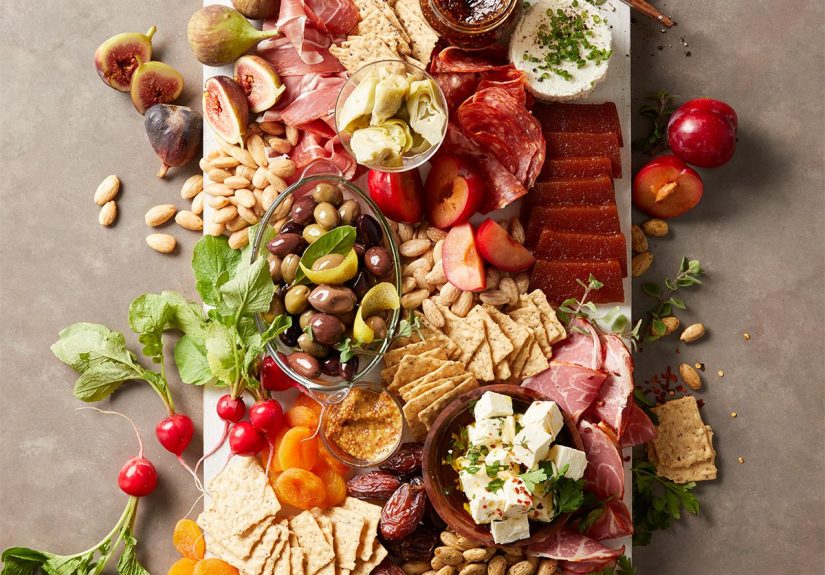
This is the traditional charcuterie vibe: cured meats, cheese, crackers, fruit, and just enough extras to look like you hired a stylist.
It’s perfect for birthdays, game nights, or anytime you want reliable “wow” without experimenting with seaweed snacks.
Build it
- Cheese: aged cheddar, brie (or camembert), and a nutty alpine-style cheese.
- Meats: salami + prosciutto (or a milder option like turkey salami if your crowd prefers).
- Crunch: two crackers (one plain, one seeded) + sliced baguette.
- Sweet: grapes and sliced pears, plus a spoonable jam (fig, apricot, or cherry).
- Briny: olives and cornichons (tiny pickles = tiny joy).
- Finish: roasted almonds or pistachios for crunch.
Why it works
Rich meat + creamy cheese begs for something bright and acidic. That’s where pickles and olives save the day.
Add fruit for freshness, nuts for crunch, and you’ve got balance without overthinking it.
2) The Brunch Charcuterie Board (Because Mornings Deserve Snacks Too)
Brunch boards are the ultimate “help yourself” spread: a little sweet, a little savory, and everyone gets to build their perfect bite.
Bonus: it looks impressive even if the only “cooking” involved was slicing a strawberry.
Build it
- Base carbs: mini bagels, croissants, or waffle wedges.
- Spreads: cream cheese + fruit jam + honey.
- Protein: smoked salmon or sliced turkey + hard-boiled eggs (pre-peeled if you want to be a hero).
- Fresh: cucumber rounds, cherry tomatoes, mixed berries, and orange slices.
- Crunch: granola clusters or toasted nuts.
- Optional “brunch sparkle” (non-alcoholic): citrus sparkling water or iced tea in a pretty pitcher.
Pro tip
Put spreads in small bowls with their own spoons. Otherwise, you’ll get “jam drift” when strawberry jam mysteriously appears inside the savory zone.
3) The Mediterranean Mezze Board (Big Flavor, Zero Fuss)
If you love bold, tangy flavors, this board is your best friend. It’s also naturally great for mixed diets:
you can lean vegetarian without anyone feeling like they’re being punished.
Build it
- Dips: hummus + tzatziki (or a dairy-free yogurt dip) + muhammara if you want smoky-sweet magic.
- Cheese: feta cubes or marinated feta.
- Crunch: pita chips + toasted pita triangles + seeded crackers.
- Briny: kalamata olives + pickled peppers.
- Fresh: cucumber, radishes, cherry tomatoes, grapes.
- Extra credit: stuffed grape leaves or roasted chickpeas.
Why it works
Mezze is all about contrast: creamy dips, crunchy chips, salty olives, and bright veggies.
It’s also a “keep eating, keep chatting” board the exact vibe you want at a party.
4) The Veggie-Forward “Crudité + Dip” Board (Color = Instant Upgrade)
This one is for the “I want something fresh” crowd, or for balancing out heavier snacks.
It’s also the easiest way to make a board look huge without spending a fortune on specialty cheese.
Build it
- Veggies: snap peas, baby carrots, bell pepper strips, cucumber spears, radishes, cherry tomatoes.
- Dips: hummus + ranch (or a Greek yogurt ranch) + guacamole.
- Crunch: pretzel thins + whole-grain crackers.
- Optional add-ons: a single “statement cheese” (like sharp cheddar) and a bowl of nuts.
Presentation trick
Stack veggies in little “bundles” (like pepper strips fanned out) and use small bowls for dips.
The board immediately looks intentional instead of “I dumped a salad on wood.”
5) The “Comfort Snack” Board (Movie Night Energy, Party Looks)
Think of this as the board that says, “We’re here to have fun.”
It’s familiar, craveable, and perfect for a casual hangout where people want to grab bites between laughs.
Build it
- Crunch: popcorn (yes, popcorn), pretzels, and crackers.
- Cheese: cheddar cubes + a creamy cheese spread or herbed goat cheese.
- Protein: pepperoni or mild salami (or roasted almonds and edamame for a non-meat version).
- Sweet: chocolate squares and strawberries.
- Bright: pickles or pickled onions to cut the richness.
Why people love it
It feels playful. It feels snacky. It disappears fast.
And it gives everyone permission to build weird-but-delicious combos (popcorn + cheddar + pickle is oddly great).
6) The Holiday/Winter Board (Festive Without Being Fussy)
This board is basically a centerpiece you can eat. It leans into seasonal colors and cozy flavors:
cranberries, rosemary, nuts, and cheeses that taste like “warm sweater” energy.
Build it
- Cheese: brie (or baked brie if you’re serving immediately) + aged gouda + a blue cheese for boldness.
- Charcuterie/protein: prosciutto or salami, plus candied pecans or spiced nuts.
- Sweet + tart: pomegranate arils, dried figs, fresh cranberries (for decoration), and a fig jam.
- Briny: olives or cornichons.
- Crunch: seeded crackers + baguette slices.
- Garnish: rosemary sprigs and orange slices (pretty and fragrant).
Pro tip
If you use fresh cranberries as décor, pair them with edible fruit people actually want to eat, like grapes or apple slices.
Otherwise they’ll sit there looking cute… and untouched… like an awkward party guest.
7) The Dessert “Charcuterie” Board (A Sweet Plot Twist)
Dessert boards are the easiest way to make people gasp. They’re also forgiving:
you can use store-bought treats and still look like you hosted a cooking show.
Build it
- Cookies: a mix of crunchy and soft (shortbread + chocolate chip is a safe win).
- Fruit: strawberries, grapes, orange slices, or dried apricots.
- Chocolate: chocolate squares, chocolate-covered almonds, or mini brownies.
- Dippers: pretzel sticks, waffle cookies, or mini marshmallows.
- Spreads: caramel sauce and/or chocolate hazelnut spread (in small bowls).
Make it feel “grown-up” (without being complicated)
Add one “special” item: dark chocolate bark with nuts, a fancy jam, or a bakery pastry cut into bite-size pieces.
It elevates the whole board instantly.
8) The “Local Market” Board (Seasonal + Fresh + Flexible)
This is the board you build when you want it to feel vibrant and current.
You grab what looks amazing at the store or farmers market, then use the formula to make it feel cohesive.
Build it (choose what’s best right now)
- Seasonal produce: peak berries in summer, crisp apples in fall, citrus in winter, cherries in late spring.
- Cheese: one local or regional cheese + one familiar favorite.
- Protein: a mild cured meat, smoked fish, or marinated beans for a plant-forward board.
- Crunch: baguette + crackers.
- Bright element: pickles, olives, or a citrusy spread.
Why it’s a smart hosting move
Seasonal ingredients usually taste better (and often cost less).
And because the board changes with the season, it never feels repetitive, even if you host a lot.
9) The One-Cheese “Statement” Board (Budget-Friendly, Still Fancy)
Want the board to look expensive without buying five cheeses? Choose one standout cheese and build a full experience around it.
This also reduces leftovers because half-used random cheeses in the fridge can turn into a weird science project.
Build it
- Pick one “hero” cheese: aged cheddar, brie, goat cheese, or an alpine-style wedge.
- Add savory: sliced salami, roasted nuts, or pickled veggies.
- Add sweet: apples, grapes, dried figs, or a jam.
- Add crunch: two crackers or crackers + baguette.
- Add brightness: olives, cornichons, or a mustard.
Presentation trick
Cut the same cheese multiple ways (thin slices, cubes, and a few rustic chunks).
It looks like variety, but your wallet knows the truth.
How to Arrange Any Board So It Looks “Styled”
- Start with bowls: place dips, olives, and jams first to create structure.
- Add cheeses next: space them apart so flavors (and crumbs) don’t mingle too aggressively.
- Fold meats: ribbons, rosettes, or loose stacks add height and make the board feel abundant.
- Fill with produce: tuck grapes and berries into gaps like edible décor.
- Finish with crunch: fan crackers outward so they’re easy to grab.
- Final sprinkle: nuts, herbs, and a few “tiny” items (like cornichons) make it look complete.
Make-Ahead Tips (So You Can Actually Enjoy the Party)
- Prep in zones: wash and dry produce, portion dips into bowls, and pre-slice hard cheeses.
- Keep backups chilled: store extra cheese/meat in the fridge and refresh the board in waves.
- Temper cheese for flavor: many cheeses taste better when they’re not ice-cold (but still follow safe time limits).
- Use utensils: little forks/tongs reduce “double-dipping incidents,” which is a phrase no host wants to say out loud.
Common Mistakes (And How to Avoid Them)
- Mistake: Only beige foods.
Fix: Add two bright colors (berries + pickles is an easy win). - Mistake: Everything is salty.
Fix: Add fruit and a sweet spread to soften the edges. - Mistake: Crackers run out first.
Fix: Put out more than you think, and keep a backup sleeve. - Mistake: Cheese straight from the fridge.
Fix: Let it warm slightly for better texture and aroma (within safe time).
Real-World Charcuterie Board Experiences (500-ish Words of “Been There” Wisdom)
Here’s what tends to happen in real life when you set out a charcuterie board: people circle it like it’s a campfire,
and the board becomes the unofficial gathering spot. Someone points at a mysterious spread and asks, “Is that… jam or salsa?”
Another person quietly builds the world’s most perfect bite (cracker + brie + fruit + something salty) and then spends the rest of the party
trying to recreate it like they’re chasing a delicious dream.
One of the most common hosting surprises is how quickly the “vehicles” disappear. Crackers, bread, pita chipsthose go fast,
because they’re the foundation of almost every bite. Meanwhile, the fanciest item on the board might sit untouched for a while
simply because people don’t know what to do with it. That’s why it helps to pre-slice a few pieces of cheese,
fold the meats so they’re easy to grab, and place spreads with little spoons that scream, “Yes, you can use me.”
If guests have to hunt for a knife or wonder whether they’re “allowed” to cut the cheese, they’ll default to whatever is easiest.
And what’s easiest is usually the crackers. (Again: extra crackers. Future-you will be grateful.)
Another real-world lesson: the board tastes better when it’s balanced, not just when it’s pretty.
Rich cured meats and creamy cheeses can be amazing, but without something brightpickles, olives, citrus, crisp fruit
your mouth gets tired. That’s why briny bites often become the unsung heroes of the table.
People take a salty, tangy pickle break, and suddenly they’re ready for “one more bite” of everything else.
It’s the snack equivalent of hitting refresh.
Boards also reveal personality types. There’s the “maximalist stacker” who builds a towering bite that should require a building permit.
There’s the “snacker” who grazes slowly and tries every item like it’s a tasting menu. And there’s always one “ingredient detective”
who wants to identify every cheese by name. A simple label card (or even a quick note on your phone) helpsespecially for anything
with allergens like nuts, dairy, or gluten. It’s a small touch that makes people feel cared for, and it prevents the awkward
“Wait… what’s in this?” moment mid-chew.
Finally, the most useful experience-based tip is also the least glamorous: food safety matters when you’re dealing with cheese, meats,
and cut produce. In practice, the easiest approach is to serve the board in rounds.
Start with a beautiful (but not enormous) first wave. Keep backups chilled. Then refresh with a second wave if people are still snacking.
This keeps everything tasting fresh, reduces waste, and lets you relax because you’re not staring at the board thinking,
“Has that brie been out since the beginning of time?”
If you remember nothing else, remember this: a great charcuterie board isn’t about buying the most expensive items.
It’s about making smart contrasts, keeping things easy to grab, and adding a little color and brightness.
Do that, and your board will feel effortless, abundant, and weirdly joyfullike the edible version of a really good playlist.
Conclusion
Charcuterie boards are flexible on purpose: you can go classic, brunchy, veggie-forward, festive, sweet, or budget-friendly
and they all work as long as you balance flavors and textures. Start with a theme, follow the simple formula,
arrange with bowls and “zones,” and keep it safe and fresh by prepping ahead and refreshing as needed.
Your guests get a choose-your-own-adventure snack experience, and you get the satisfaction of serving something that looks fancy
even if you built it in under 20 minutes.







 Close
Close