
Table of Contents >> Show >> Hide
- What Are Tiny Nuclear Reactors?
- Why American Energy Needs a New Tool
- The Big Benefits of Small Modular Reactors
- Real U.S. Examples Are Already Moving
- How Tiny Reactors Could Strengthen Energy Security
- The Hard Problems Nobody Should Ignore
- What About Nuclear Waste?
- Why Tiny Reactors Pair Well With Renewables
- Coal Communities Could Get a Second Energy Life
- Data Centers May Become Nuclear’s New Best Friend
- Policy Choices That Could Make or Break the Future
- Experiences and Practical Lessons From the Tiny Nuclear Reactor Conversation
- Conclusion: Small Reactors, Big Stakes
America has a strange energy problem: we need more electricity, we want it cleaner, we want it available every hour of the day, and we would very much prefer not to cover every mountain, cornfield, and parking lot with emergency extension cords. Enter tiny nuclear reactorsalso known as small modular reactors, microreactors, and advanced nuclear reactors. They are not magic lunchboxes full of lightning, but they may be one of the most practical tools for powering the next chapter of American energy.
For decades, nuclear power has been the quiet heavyweight of the U.S. grid. It does not trend on social media like solar panels, it does not spin gracefully on postcards like wind turbines, and it does not arrive with the political drama of oil and gas. It just runs. In 2025, nuclear energy provided about 18% of U.S. utility-scale electricity, while natural gas remained the largest source and renewables continued growing fast. That combination tells us something important: America is not short on energy ideas. It is short on dependable, scalable, clean power that can show up at 3 a.m. during a heat wave when everyone’s air conditioner is working overtime.
Tiny nuclear reactors could help fill that gap. They promise factory-built components, smaller footprints, flexible deployment, passive safety systems, and reliable power for places that cannot easily host a huge traditional nuclear plant. In plain English: they are designed to be smaller, more repeatable, and easier to place where power is actually needed. That does not mean they are simple. Nuclear technology is never “plug and play,” unless your plug comes with federal licensing, fuel supply planning, emergency procedures, and a small mountain of engineering paperwork. But compared with the old model of massive one-off nuclear megaprojects, tiny reactors offer a fresh playbook.
What Are Tiny Nuclear Reactors?
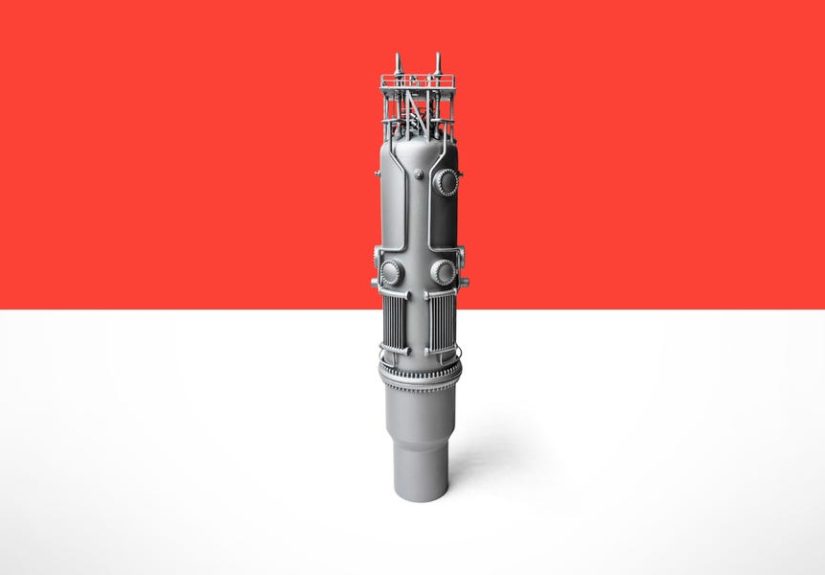
Tiny nuclear reactors are advanced reactors built at smaller scales than traditional nuclear power plants. The term can refer to several technologies. Small modular reactors, or SMRs, generally produce up to 300 megawatts electric per module. Microreactors are much smaller, often designed to produce power in the single-digit or low double-digit megawatt range. Some advanced reactors use conventional light-water technology, while others rely on sodium, gas, molten salt, or heat-pipe cooling systems.
The basic science remains familiar: nuclear fission releases heat, that heat is converted into electricity, and the electricity powers homes, factories, data centers, hospitals, military bases, and everything else Americans insist on charging before breakfast. What changes is the design philosophy. Instead of building one giant plant piece by piece on-site, many tiny reactor concepts aim to use factory manufacturing. That could improve quality control, reduce construction delays, and allow companies to repeat designs instead of reinventing the wheel every time.
Small Does Not Mean Weak
A smaller reactor is not a toy version of nuclear power. It is more like comparing a cargo ship to a fleet of reliable trucks. One massive plant can move a huge amount of energy. Smaller reactors can be distributed, added in stages, and matched to local demand. A utility might start with one module and add more later. A remote community might need a microreactor rather than a full-scale power station. A retiring coal plant site might use existing transmission lines, workforce skills, and industrial land to host new nuclear generation.
This flexibility is one of the biggest reasons tiny nuclear reactors are getting serious attention. They can support a grid with more wind and solar by providing steady clean power when weather-dependent generation dips. They can also provide high-temperature heat for industrial processes, desalination, hydrogen production, or district heating. In other words, they are not just electricity machines; they are heat machines, and modern industry is extremely hungry for heat.
Why American Energy Needs a New Tool
The United States is entering an era of rising electricity demand. Data centers, artificial intelligence, electric vehicles, advanced manufacturing, semiconductor plants, and home electrification are all pushing the grid harder. America spent years assuming electricity demand would grow slowly. Then the digital economy walked in wearing steel-toed boots and asked for a dedicated substation.
Renewable energy is growing quickly, and that is good news. Wind and solar are essential parts of a cleaner energy system. But they are variable by nature. Solar panels do not work at night, and wind turbines are not famous for respecting office hours. Batteries help, but long-duration storage remains expensive and geographically uneven. Natural gas can fill gaps, but it produces carbon emissions and depends on fuel price stability. Coal plants are retiring because they are older, dirtier, and increasingly uneconomic.
Tiny nuclear reactors fit into this puzzle because they can provide clean baseload power. “Baseload” may not be the trendiest word in the energy vocabulary, but it is the reason your refrigerator stays on while you sleep. A power grid cannot run on vibes. It needs generation that is steady, dispatchable, and resilient.
The Big Benefits of Small Modular Reactors
1. Reliable Power Around the Clock
Nuclear plants are known for high capacity factors, meaning they run at full output or near full output for long periods. Tiny nuclear reactors are designed to bring that reliability into more flexible settings. For rural grids, industrial hubs, military installations, and data centers, a reactor that can produce power day and night without relying on fuel deliveries every few hours is a serious advantage.
2. Smaller Footprints
Land use matters. Building clean energy at national scale requires space, permits, transmission lines, local acceptance, and patiencefour things America does not always have in bulk. SMRs and microreactors can produce significant energy on smaller sites. That makes them attractive for existing industrial zones, retired coal plant locations, remote communities, and campuses that need dependable power without swallowing half the county.
3. Factory Manufacturing
Traditional nuclear construction has often suffered from cost overruns and schedule delays. Tiny nuclear reactors aim to solve part of that problem through modular manufacturing. If major components can be built in factories, transported to sites, and assembled using standardized designs, the industry may reduce risk through repetition. The first unit may still be expensivefirst pancakes are rarely prettybut the tenth, twentieth, and fiftieth units could become faster and cheaper.
4. Passive Safety Features
Many advanced reactor designs use passive safety systems. That means natural physical forces such as gravity, convection, or heat conduction can help shut down and cool the reactor during abnormal conditions. This does not eliminate the need for regulation, trained operators, or emergency planning. It does, however, represent a major design goal: make safety less dependent on active mechanical systems and human intervention.
5. Better Fit for Remote and Critical Sites
Some communities are difficult to power. Alaska villages, island territories, mining operations, military bases, and remote research facilities may depend on diesel fuel that is expensive to transport and vulnerable to supply disruptions. Microreactors could offer long-lasting clean power in places where the current energy plan is basically “hope the fuel shipment arrives before winter gets rude.”
Real U.S. Examples Are Already Moving
This is not just science fiction wearing a hard hat. Several American advanced reactor projects have reached important milestones. NuScale’s US460 small modular reactor design received standard design approval from the Nuclear Regulatory Commission in 2025. The design uses 77-megawatt modules and passive safety features, with a six-module configuration producing roughly 460 megawatts of electricity.
TerraPower’s Natrium project in Wyoming is another major example. The Natrium design pairs a 345-megawatt sodium-cooled fast reactor with molten salt energy storage, allowing the system to boost output when demand rises. That combination is especially interesting because it treats nuclear not only as baseload power, but as flexible clean power. Located near a retiring coal community, the project also shows how advanced nuclear could support energy towns that do not want to become museum exhibits titled “Here Lies the Local Tax Base.”
Oklo’s Aurora powerhouse at Idaho National Laboratory is focused on a smaller advanced reactor concept. The company has broken ground on its first Aurora project and is working through federal authorization and licensing steps. Its approach builds on sodium-cooled fast reactor experience and metal fuel heritage from earlier U.S. research. If successful, projects like Aurora could help prove that microreactors can serve specialized markets such as industrial facilities, defense sites, and remote power needs.
How Tiny Reactors Could Strengthen Energy Security
Energy security is not just about producing enough electricity. It is about producing electricity in ways that are resilient to storms, cyberattacks, supply chain shocks, fuel disruptions, and geopolitical surprises. A power system that depends too heavily on one fuel or one type of infrastructure becomes fragile. Tiny nuclear reactors can diversify the grid by adding firm, carbon-free generation close to demand centers.
For the military, secure power is not optional. Bases need electricity even when the wider grid is stressed or damaged. For hospitals, emergency operations centers, and water systems, outages are more than inconvenient; they can be dangerous. For data centers, downtime is expensive, and the appetite for power is growing faster than a teenager near a refrigerator. Dedicated nuclear generation could provide stable electricity without the emissions profile of fossil backup generators.
Tiny reactors also support national industrial strategy. If America wants to lead in artificial intelligence, advanced manufacturing, clean hydrogen, semiconductor production, and next-generation defense technology, it needs power that is abundant, reliable, and affordable. A country cannot run a high-tech economy on a grid that keeps asking everyone to please avoid using appliances between 4 p.m. and 9 p.m.
The Hard Problems Nobody Should Ignore
Tiny nuclear reactors are promising, but they are not a free square on the energy bingo card. The challenges are real.
Licensing Takes Time
Nuclear regulation exists for a reason. Any reactor design must prove that it can operate safely, protect workers and the public, secure nuclear materials, and manage accident scenarios. The Nuclear Regulatory Commission has been modernizing its approach for advanced reactors, but careful review still takes time. Faster licensing is useful only if it remains rigorous. Nobody wants “move fast and break atoms” as a national slogan.
Fuel Supply Is a Bottleneck
Many advanced reactor designs require high-assay low-enriched uranium, often called HALEU. The United States has been working to build domestic HALEU supply, but the market is still young. Without reliable fuel availability, even excellent reactor designs can be delayed. This is one of the biggest practical constraints facing advanced nuclear deployment.
Costs Must Come Down
SMRs are often described as cheaper than large reactors, but that claim depends on deployment at scale. A first-of-a-kind reactor can be expensive because engineering, licensing, supply chains, and construction methods are still being proven. The economic promise of tiny nuclear reactors comes from repetition: build the same design many times, learn from each unit, standardize the supply chain, and reduce surprises.
Public Trust Matters
Nuclear power carries emotional weight. People remember accidents, even when modern designs and regulatory systems are different. Communities need clear information about safety, waste, water use, emergency planning, jobs, and long-term benefits. Public acceptance cannot be stapled onto a project at the end like a forgotten receipt. It has to be built from the beginning through transparency and local engagement.
What About Nuclear Waste?
No honest article about nuclear energy gets to skip waste. Used nuclear fuel is highly regulated and must be managed carefully. The good news is that the volume of nuclear waste is small compared with the massive amount of electricity produced. The bad news is that America still lacks a permanent national repository for commercial spent fuel. That policy failure has lasted longer than many streaming subscriptions and is far less entertaining.
Tiny nuclear reactors do not make the waste question disappear. Some designs may use fuel more efficiently, operate longer between refueling, or even recycle certain fuel materials in future systems. But the country still needs a durable waste strategy. If the United States wants a serious advanced nuclear future, it needs serious fuel-cycle policy, not a national habit of putting hard decisions in a drawer labeled “later.”
Why Tiny Reactors Pair Well With Renewables
The smartest energy future is not nuclear versus renewables. It is nuclear plus renewables plus storage plus transmission plus efficiency. Energy debates often turn into team sports, which is silly because electrons do not care about your jersey. Wind and solar can provide large amounts of low-cost electricity when conditions are favorable. Nuclear can provide steady clean power when they are not.
Advanced reactors with flexible output or integrated thermal storage could work especially well with renewable-heavy grids. When solar generation is high, reactors may support industrial heat or storage. When evening demand peaks, they can help meet the load. This kind of hybrid system could reduce dependence on gas peaker plants and make clean energy more dependable.
Coal Communities Could Get a Second Energy Life
One of the strongest arguments for tiny nuclear reactors is their potential to reuse retiring coal plant sites. These locations already have transmission connections, industrial zoning, roads, water access in some cases, and workers who understand power generation. Instead of abandoning communities after coal plants close, advanced nuclear projects could preserve energy jobs and tax revenue.
This does not mean every coal site is a good nuclear site. Geology, water availability, grid needs, community support, and licensing requirements all matter. But the concept is powerful: use the skeleton of yesterday’s energy system to build tomorrow’s cleaner one. That is not nostalgia. That is infrastructure recycling with a hard hat.
Data Centers May Become Nuclear’s New Best Friend
Data centers are rapidly becoming some of the most important electricity customers in America. Artificial intelligence, cloud computing, streaming, search, finance, and digital services all require enormous amounts of power. These facilities want clean electricity, but they also need reliability. A data center cannot politely pause because the wind took a coffee break.
That is why advanced nuclear agreements involving major technology companies are worth watching. When large power buyers help support first projects, they can reduce market risk and accelerate deployment. For tiny nuclear reactors, data centers may provide the steady demand and financial backing needed to move from demonstration to commercial scale.
Policy Choices That Could Make or Break the Future
If tiny nuclear reactors are going to help save American energy, the country needs smart policy. That means modernizing licensing without weakening safety, building domestic fuel supply, supporting first-of-a-kind projects, investing in nuclear workforce training, and creating markets that value reliable clean power.
It also means avoiding magical thinking. Tiny reactors will not replace every power plant, solve every grid problem, or make electricity bills vanish like socks in a dryer. They are one tool. But they are a powerful tool, especially when paired with renewables, storage, grid upgrades, and demand management.
Experiences and Practical Lessons From the Tiny Nuclear Reactor Conversation
When people first hear the phrase “tiny nuclear reactors,” the reaction is usually a mix of curiosity and cartoon-level alarm. Tiny? Nuclear? Reactor? That sounds like something a supervillain keeps under a desk lamp. But once the conversation moves past the name, the practical value becomes easier to understand. The best way to think about tiny nuclear reactors is not as miniature versions of old nuclear plants, but as energy infrastructure designed for a world that needs clean power in more places, at more times, with less room for error.
One useful experience comes from looking at communities that have depended on one major energy employer for decades. In a coal town, the power plant is not just a building with smokestacks. It is payroll, school funding, equipment contracts, diner traffic, Little League sponsorships, and the reason a young person might stay instead of moving away. When that plant retires, the conversation cannot stop at emissions. It has to include livelihoods. Tiny nuclear reactors may give some of those communities a new role in the energy economy, especially because many already have grid connections and skilled industrial workers.
Another lesson comes from remote power needs. In isolated regions, diesel fuel can be expensive, difficult to deliver, and vulnerable to weather. A microreactor that runs for years without frequent refueling could transform the economics of remote communities, mines, research stations, or defense installations. The experience here is simple: reliability is not an abstract energy-policy word when the alternative is waiting for fuel in brutal weather. It is the difference between resilience and anxiety.
There is also a lesson from the technology sector. Data centers are forcing America to be honest about electricity demand. The internet feels weightless because websites do not arrive in cardboard boxes, but the servers behind them are very real, very hungry, and very uninterested in power interruptions. Tiny reactors could offer dedicated clean energy for these facilities, especially when companies are willing to support long-term power agreements. That does not mean every data center should have a reactor next door. It means reliable clean power is becoming a competitive advantage.
The biggest practical experience, however, is that public trust cannot be engineered after the fact. Communities need early conversations, not glossy brochures after decisions are already made. People deserve clear answers about safety, waste, emergency planning, jobs, water use, and costs. Tiny nuclear reactors can be technically impressive and still fail if the public feels ignored. The technology may be advanced, but the relationship-building has to be old-fashioned: show up, listen, explain, and keep showing up.
Finally, the tiny reactor discussion teaches humility. Energy systems are complicated. Every source has trade-offs. Solar needs land and storage. Wind needs transmission and siting. Gas emits carbon. Coal is declining. Batteries help but do not solve every duration problem. Nuclear is reliable and clean during operation, but faces cost, licensing, fuel, and waste challenges. The winning strategy is not to worship one technology. It is to build a balanced system where each tool does what it does best. In that system, tiny nuclear reactors could be the compact, steady, surprisingly muscular tool America has been missing.
Conclusion: Small Reactors, Big Stakes
Tiny nuclear reactors can save American energy only if America treats them as serious infrastructure, not as a shiny shortcut. Their promise is real: dependable clean power, smaller footprints, support for remote communities, industrial heat, coal-site reuse, data center reliability, and stronger energy security. Their challenges are also real: licensing, cost, fuel supply, waste policy, and public trust.
The United States does not need an energy miracle. It needs an energy portfolio that is cleaner, tougher, and better matched to modern demand. Small modular reactors and microreactors can help provide that portfolio. They will not replace wind, solar, hydro, geothermal, storage, or efficiency. They can make those resources work better by adding firm power that does not depend on the weather.
If America can build reactors safely, repeat designs efficiently, secure domestic fuel, and earn community trust, tiny nuclear reactors could become one of the most important energy technologies of the next few decades. Small reactors may not look dramatic from the outside. But in the future grid, the quiet machines may do the loudest work.






 Close
Close