
Table of Contents >> Show >> Hide
- Quick Picks at a Glance
- How We Chose These Wine Fridges
- Our Top 3 Editor-Recommended Wine Fridges
- Wine Fridge Buying Guide: What Actually Matters (and What’s Just Marketing)
- Care and Setup Tips (So Your Wine Fridge Works Like It Should)
- Extra Editor Experiences (): What Living With a Wine Fridge Is Actually Like
- Conclusion
A wine fridge is one of those “tiny luxuries” that quietly improves your life. Not in a fireworks waymore like a
“why does my Chardonnay taste better when it’s not stored next to leftover curry?” way.
If you’re buying bottles you actually care about (or you’re tired of playing temperature roulette with your kitchen
fridge), a dedicated wine refrigerator helps keep a steadier environment: consistent temps, less light exposure,
and fewer random vibrations. Translation: your wine stays closer to the way it was meant to taste.
But here’s the catch: “best wine fridge” is a little like “best pair of jeans.” The right choice depends on your
space, your collection size, and whether you store mostly reds, mostly whites, or a chaotic mix of both (no shame
I’ve seen your group chat).
So our editors pulled together the most consistently recommended, real-world-tested options and narrowed it down
to three picks that cover the sweet spot for most homes: best overall, best built-in/undercounter, and best budget.
Quick Picks at a Glance
| Pick | Best For | Capacity (claimed) | Zones | Why We Like It |
|---|---|---|---|---|
| Wine Enthusiast 32-Bottle Dual Zone MAX Compressor | Most households, mixed collections | 32 bottles | Dual | Great value, steady performance, flexible temps |
| Frigidaire FGWC5233TS (52-Bottle) | Built-in/undercounter setups, bigger storage | 52 bottles | Single | Solid shelving, reversible door, clean built-in look |
| Honeywell 24-Bottle Compressor Wine Cooler | Budget buys, casual drinkers, starter collections | 24 bottles | Single | Simple controls, wide temp range, wallet-friendly |
Note: Bottle counts are “standard Bordeaux bottle” math. Real-life collections include Champagne, Burgundy, funky bottles, and that one magnum you bought for “a special occasion” in 2021. Plan for less usable capacity than advertised.
How We Chose These Wine Fridges
We didn’t just scroll a few shopping pages and call it a day. We prioritized models that show up repeatedly across
reputable U.S. testing and review outlets, and we looked for agreement on the stuff that actually matters at home:
- Temperature performance: not just the set point, but how consistently it holds.
- Practical storage: shelves that glide, racks that fit real bottles, and layouts that don’t require bottle Tetris.
- Noise and vibration: especially important in apartments, open kitchens, and “my desk is in the dining room” homes.
- Fit and placement: freestanding vs. built-in/undercounter, ventilation needs, and door swing direction.
- Value: the features you’ll actually usenot just buzzwords.
The final result is a trio that fits most shopping scenarios: a reliable all-rounder, a built-in-friendly workhorse,
and a budget pick that still behaves like an adult appliance.
Our Top 3 Editor-Recommended Wine Fridges
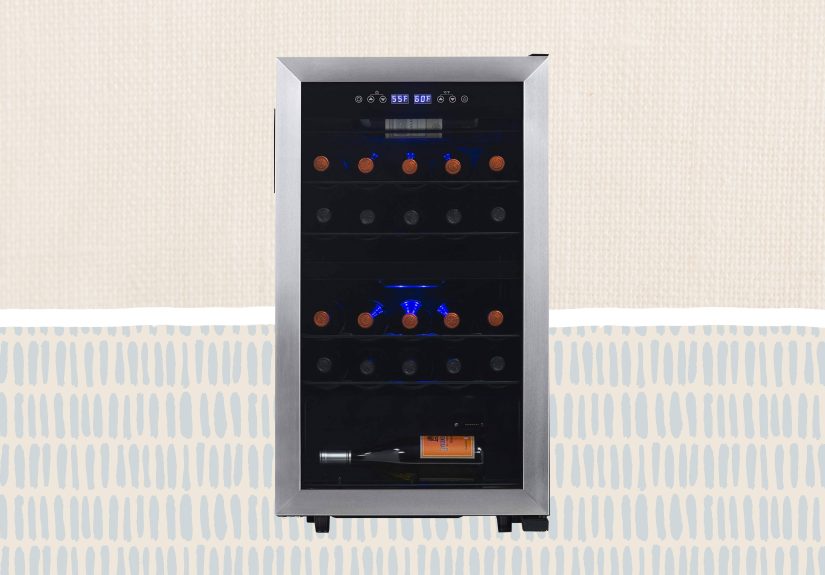
1) Best Overall: Wine Enthusiast 32-Bottle Dual Zone MAX Compressor Wine Cooler
If you want one wine fridge that can handle “I drink reds” and “I love crisp whites” without forcing you to pick a
side, this is the crowd-pleasing choice. Multiple reputable reviewers consistently rank this model at or near the
top because it balances capacity, dual-zone flexibility, and price better than most of the market.
Why it earns our best overall spot: dual zones let you keep bottles ready-to-serve up top while
keeping others at a steadier storage temperature below. That’s perfect if your collection includes both whites and
redsor if you’re the kind of person who buys sparkling “just in case” (which is also known as being prepared).
What you’ll like day-to-day
- Dual-zone controls: set two different temperature areas for different styles.
- Compressor cooling: generally stronger and more stable than many thermoelectric units, especially in warmer rooms.
- Wide temperature range: flexible enough for serving and short-term storage.
- Strong value: priced like a “serious hobby,” not like a “private jet for Pinot.”
What to watch out for
- Ventilation matters: freestanding units often need breathing room around themdon’t wedge it tight like a library book.
- Non-standard bottles: shelves are usually optimized for standard shapes; Champagne and wide Burgundy bottles reduce real capacity.
- Placement planning: check door swing and how you’ll load bottles without blocking a walkway.
Who should buy it: Most households with a growing collection (roughly a case or two), especially if
you enjoy a mix of reds and whites and want the convenience of dual temperatures without paying luxury-tier pricing.
Who should skip it: Anyone who needs true built-in, flush-to-cabinet installation or who mainly
stores oversized bottles and hates reorganizing shelves.
2) Best Built-In / Undercounter Option: Frigidaire FGWC5233TS (52-Bottle Wine Cooler)
If your goal is an undercounter setup that looks intentionallike your kitchen was designed by someone who owns a
levelthis Frigidaire is a strong contender. It’s a popular pick in lab-style product roundups thanks to its solid
build, smooth shelving, and flexible installation (often suitable for built-in or freestanding use, depending on
your cabinet and ventilation situation).
What stands out
- Undercounter-friendly design: great for kitchen islands, wet bars, or built-in beverage stations.
- Reversible door: you can usually set it to open left or righthuge for tight layouts.
- Thoughtful shelving: wood-trimmed racks that slide nicely, making it easier to grab bottles without scraping labels.
- Single-zone simplicity: one temperature zone is easier if your collection is mostly one style or you store for short periods.
Real-world note: several tests and reviews find that some wine fridges can run a bit warmer than the
exact setting. That doesn’t mean they’re unusableit just means you may need to set the temperature a few degrees
lower to land where you want. Consistency matters more than perfection, and this one tends to be consistent.
Who should buy it: Homeowners or renters doing a more “built-in” look, entertainers who want a larger capacity, and anyone who values smooth shelves and a clean finish.
Who should skip it: People who want dual-zone control for keeping whites and reds at different temps at the same time.
3) Best Budget Pick: Honeywell 24-Bottle Compressor Wine Cooler
Not every wine fridge needs to be a statement piece. Sometimes you just want a dependable box that keeps bottles at
the temperature you pickedand doesn’t bully your bank account in the process.
This Honeywell is frequently highlighted as a strong “bang for your buck” option: compressor cooling, a wide usable
range for most everyday wines, and a capacity that feels realistic for apartment living or starter collections.
Why it’s great for the price
- Wide temperature range: helpful if you rotate between reds, whites, and occasional bubbles.
- Compressor cooling: tends to handle warmer ambient rooms better than many thermoelectric units.
- Simple, low-fuss controls: fewer features, fewer headaches.
- Starter-friendly size: enough room to feel like an upgrade without taking over your living space.
Budget reality check
- Single-zone only: you can’t keep whites and reds at two different temps simultaneously.
- Standard-bottle math applies: if your collection leans Champagne-heavy, expect fewer than 24 bottles.
- Fewer premium touches: shelves and lighting may be simpler than higher-priced modelsfunction first, glam second.
Who should buy it: Casual wine drinkers, first-time wine fridge shoppers, smaller households, and anyone who wants “good enough to feel fancy” without paying fancy prices.
Wine Fridge Buying Guide: What Actually Matters (and What’s Just Marketing)
1) Dual-Zone vs. Single-Zone
Dual-zone is for mixed collections and convenience: keep whites colder and reds slightly warmer, ready to pour.
Single-zone is for simplicity: one stable setting for everything. If you mostly drink one style (or you’re storing
short-term), single-zone can be totally fine.
2) Compressor vs. Thermoelectric Cooling
In plain English: compressor models are typically stronger at holding temperature when your home is warm, and they
cool down faster. Thermoelectric models are often quieter and vibration-light, but they can struggle more if the
room temperature swings or runs hot.
If your wine fridge will live in a warm kitchen, garage-adjacent bar area, or anywhere that feels like summer most
of the year, compressor cooling is usually the safer bet.
3) Temperature Range (and the “55°F Rule of Thumb”)
Many wine folks treat around 55°F as a general “happy place” for wine storage. Serving temps vary
sparkling is typically colder, whites are cool, reds are slightly cool (not warm like a radiator). A good wine fridge
gives you flexibility without wild swings.
4) Capacity: Always Buy Bigger Than You Think
This is the most universal wine fridge truth: you will outgrow your capacity plan. Bottle shapes vary, and shelves
aren’t always friendly to Champagne or Burgundy bottles. If you think you need 18 bottles, you probably need 24. If
you think you need 24, you probably need 32. (This is not a conspiracy. Wine just does this.)
5) Shelves, Racks, and Real-Life Usability
Look for shelves that slide smoothly and don’t require two hands, a prayer, and a physics degree. Wood-trimmed racks
often feel nicer and can reduce label scuffing. Removable shelves are helpful for odd-shaped bottlesbut remember,
removing shelves can reduce organization fast.
6) Noise, Vibration, and Where You’ll Put It
If the fridge is near your couch, desk, or bedroom wall, pay attention to noise reviews. A gentle hum is normal;
a constant rattle is not a vibe. Also, don’t place a freestanding unit in a tight cabinet cutout unless it’s truly
designed for built-in ventilation.
7) Door Swing, Locks, and Lighting
Door swing sounds boring until you realize your fridge door smacks a wall every time you open it. Reversible doors
are a big win in tight kitchens. Locks are optional, but useful if you have curious kids, roommates, or a “party
guest who thinks they’re helping.”
Care and Setup Tips (So Your Wine Fridge Works Like It Should)
- Give it airflow: Follow clearance recommendations so the unit can vent heat properly.
- Level it: A slightly unlevel fridge can increase noise and affect door sealing.
- Don’t overload on day one: Let the fridge stabilize at temperature before packing it full.
- Organize by “grab frequency”: Keep your go-to bottles at eye level so you’re not constantly rearranging racks.
- Wipe seals and glass: A clean gasket helps maintain consistent temps and prevents humidity issues.
Extra Editor Experiences (): What Living With a Wine Fridge Is Actually Like
The first week you own a wine fridge, you’ll open it more times than your regular refrigerator. Not because you’re
thirsty (okay, maybe a little), but because it feels oddly satisfying to see bottles lined up like a tiny museum
exhibit you curated yourself. Then reality kicks in and you start noticing the “real life” stuff that glossy product
photos never show.
Experience #1: the bottle-count myth. A “32-bottle” fridge can absolutely hold 32 bottles… if every bottle is the
same shape and you load them like you’re building a Lego set. The second you introduce Champagne, a wide Burgundy,
or that fancy bottle with the dramatic shoulders (you know the one), your capacity turns into an optimistic suggestion.
Editors who test these units for a living keep repeating the same advice: buy bigger than you think you need, because
bottle variety is the silent collection killer.
Experience #2: shelves matter more than you expect. Smooth-gliding racks are the difference between “I’ll grab a
bottle” and “why am I wrestling a drawer at 10:30 p.m.?” Cheap racks can snag labels or tilt bottles in a way that
makes you feel like you’re defusing a minor bomb. The best fridges make it easy to slide, select, and replace a
bottle without shifting the entire collection like a domino line.
Experience #3: temperature is a lifestyle, not a number. Most people start out trying to dial the exact perfect
temperature, then learn that consistency is what really changes the drinking experience. If a unit runs slightly
warm, it’s not the end of the worldyou adjust the setting and move on. What you don’t want is a fridge that swings
wildly every time the kitchen gets busy or the door opens during a party. A stable environment makes your whites taste
fresher and your reds feel more balancedespecially when you’re serving them, not just storing them.
Experience #4: placement decisions are forever (or at least until you move). Put a wine fridge in a tight corner and
you’ll remember it every time you try to load bottles. Put it in a high-traffic path and you’ll do that awkward “sorry
just need one bottle” shuffle every time someone walks by. Editors often recommend choosing a spot where the door can
open fully, the unit can breathe, and you can stand comfortably in front of it while browsing. Yes, browsing. You will
browse your own wine like you’re shopping your personal store.
Experience #5: you become the kind of person who plans. With a wine fridge, it’s easy to keep bottles close to serving
temperature, but you’ll still learn little timing tricks: chill reds slightly before serving, let some whites warm a
bit in the glass, and keep sparkling cold until the last moment. Suddenly, you’re saying sentences like, “Give it ten
minutes,” and feeling weirdly proud of yourself.
And maybe that’s the best part: a wine fridge doesn’t just store wineit makes your home feel a little more put-together.
Like you have your life together enough to give your bottles their own real estate. Even if your sock drawer remains
a disaster. Balance.
Conclusion
If you want the easiest all-around recommendation, go with the Wine Enthusiast 32-Bottle Dual Zone MAX.
It’s the best combination of flexible storage, dual-zone convenience, and price for most homes.
If you’re building a built-in look (or want something that feels like it belongs in a finished kitchen), the
Frigidaire FGWC5233TS is a strong undercounter-friendly choice with excellent shelving and a clean design.
And if you want to start smart without spending big, the Honeywell 24-Bottle Compressor delivers the
basics that mattersteady temps, decent capacity, and simple controlswithout the premium markup.
Pick the one that matches your space and your drinking habits, give it proper airflow, and accept this universal truth:
your collection will grow. (It’s not your fault. Bottles are just… persuasive.)






 Close
Close