
Table of Contents >> Show >> Hide
Chimichurri is the kind of sauce that makes grilled food feel like it got promoted at work. It’s bright, herby, garlicky, and tangybasically a green
fireworks show for your taste buds. Now add orange zest and a splash of fresh juice, and suddenly it’s wearing a crisp citrus cologne and walking into the
party like, “Sorry I’m late, I brought charm.”
This guide gives you a foolproof, orange-spiked chimichurri recipe that’s punchy but balanced, plus the why behind each step.
You’ll get pro tips, flavor “tuning” tricks, and plenty of ways to use this citrus herb sauce on steak, chicken, seafood, and vegetables
without turning your kitchen into a science fair (unless that’s your vibe).
What Is Chimichurri?
Chimichurri sauce is a raw, no-cook condiment most closely associated with Argentina and Uruguay. Think of it as a rustic herb vinaigrette:
chopped herbs + garlic + vinegar + oil + seasoning, often with a little chili heat. It’s not pesto’s cousinit’s pesto’s louder friend who shows up with a
guitar and somehow makes it work.
Green vs. Red Chimichurri
The “classic” version is green: lots of parsley (sometimes cilantro), oregano, garlic, vinegar, olive oil, salt, pepper, and chile flakes. “Red” chimichurri
usually leans into dried chiles, smoked paprika, and deeper spice notes. This recipe stays in the green lanebut the orange gives it a sunny, slightly sweet
edge that plays especially well with grilled meats.
Why Add Orange to Chimichurri?
Orange works here for the same reason a good playlist works at a cookout: it ties the whole experience together. You’re not trying to make “orange sauce.”
You’re adding lift.
Flavor benefits (a.k.a. the tasty logic)
- Zest adds aroma: The oils in orange zest carry big floral-citrus notes that make herbs smell even fresher.
- Juice rounds the acidity: Vinegar can be sharp; orange juice softens the corners and adds brightness without turning sugary.
- It loves smoky, charred foods: Orange and grill flavor are best friendsthink citrus with caramelized edges.
- It’s a natural “bridge”: Orange helps chimichurri pair with chicken, pork, shrimp, and roasted vegetables even better than usual.
When orange wins (and when to chill)
Orange-spiked chimichurri shines with beef (especially skirt, flank, hanger), grilled chicken thighs, pork chops, shrimp, salmon, roasted carrots, and hearty
grain bowls. If you’re topping something delicate like mild white fish, go lighter on the zest and keep the sauce looser and less garlicky.
Ingredients for the Best Orange-Spiked Chimichurri
This is a fresh orange chimichurri, so ingredient quality mattersespecially the herbs, citrus, and oil.
- Flat-leaf parsley (Italian parsley): Clean, grassy backbone. Curly parsley can work, but the flavor is milder.
- Fresh oregano (plus optional dried): Fresh is aromatic; a pinch of dried adds that classic “chimichurri punch.”
- Garlic: Minced fine so it blends, not bites.
- Orange zest: Use only the bright orange partavoid the bitter white pith.
- Fresh orange juice: A little goes a long way; it’s a “spike,” not a citrus flood.
- Red wine vinegar: Traditional tang and snap.
- Extra-virgin olive oil: Fruity body. If your olive oil is super peppery/bitter, use a milder one here.
- Crushed red pepper flakes: Gentle heat, adjustable.
- Kosher salt + black pepper: The “turn it from good to great” button.
Optional add-ins (useful, not required)
- Shallot (finely minced): Sweet oniony depth.
- Lemon juice (1–2 tsp): If your orange is very sweet, lemon keeps the sauce snappy.
- Chopped cilantro (a handful): Adds extra freshness. Skip if cilantro tastes like soap to you (no judgment, genetics are rude).
- Smoked paprika (a pinch): For a subtle smoky warmth.
Orange-Spiked Chimichurri Recipe
Quick stats
- Prep time: 10–15 minutes
- Rest time: 15 minutes (recommended)
- Yield: About 1 cup
- Best for: steak, chicken, pork, shrimp, roasted veggies, grain bowls
Ingredients
- 1 cup flat-leaf parsley leaves and tender stems, finely chopped
- 1 tablespoon fresh oregano, finely chopped (or 1 teaspoon dried oregano)
- 2–3 garlic cloves, minced very fine
- 1 small shallot, minced (optional)
- 1 tablespoon orange zest (from 1 medium orange)
- 2 tablespoons fresh orange juice
- 3 tablespoons red wine vinegar
- 1/2 teaspoon crushed red pepper flakes (more to taste)
- 3/4 teaspoon kosher salt, plus more to taste
- 1/4 teaspoon freshly ground black pepper
- 1/2 cup extra-virgin olive oil
- Optional: 1–2 teaspoons lemon juice (for extra snap)
Step-by-step instructions
-
Mellow the sharp stuff (highly recommended):
In a medium bowl, combine the minced garlic (and shallot if using), red wine vinegar, salt, pepper, and red pepper flakes. Let it sit for 10 minutes.
This softens the raw bite so your sauce tastes boldnot aggressive. -
Add the herbs:
Stir in chopped parsley and oregano. Mix until everything looks evenly distributed. -
Spike it with orange:
Add orange zest and orange juice. Stir again. Smell itthis is the “wow” moment. -
Stream in the oil:
Pour in the olive oil and stir until glossy and spoonable. Taste and adjust:
more salt for depth, more vinegar for tang, more orange juice for brightness, more pepper flakes for heat. -
Let it rest:
Give it 15 minutes at room temperature so the flavors meld. (Yes, you can use it right away. But resting makes it taste like it had a plan.)
Knife-chopped vs. food processor
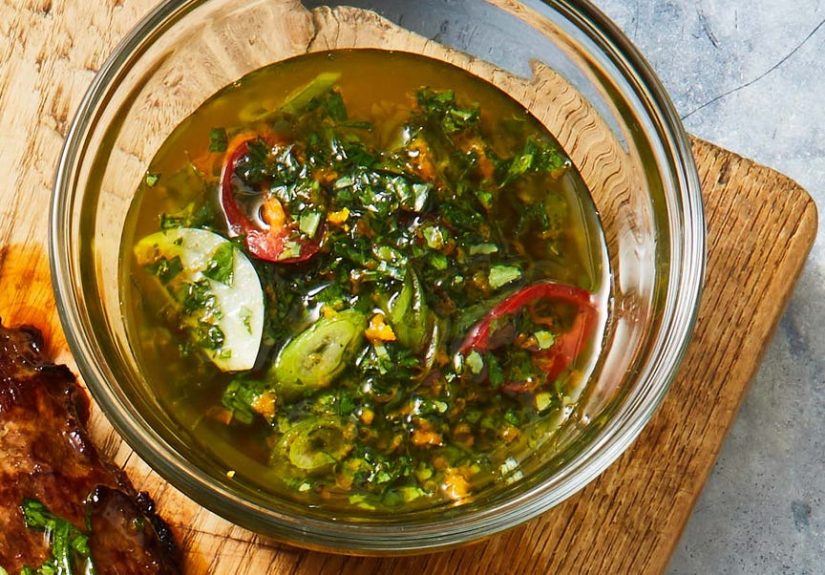
Knife-chopped chimichurri has the best texturelittle herb confetti suspended in oil and vinegar. A food processor is fine if you pulse carefully, but don’t
puree it into green smoothie territory. If using a processor, pulse the garlic/shallot first, then herbs briefly, then stir in liquids by hand for a more
traditional finish.
Pro Tips for a “Restaurant” Taste at Home
-
Use zest like a spice, not a garnish:
Zest is powerful. One tablespoon is usually perfect for 1 cup sauce. -
Avoid bitterness:
Zest only the orange part of the peel. If you taste bitterness, you probably grabbed pith or used an extra-bitter olive oil. -
Balance the triangle:
Chimichurri lives in a triangle: salt + acid + fat. If it tastes flat, add salt. If it’s heavy, add vinegar or lemon. If it’s sharp, add a touch more oil. -
Let the vinegar do some work:
That 10-minute rest with garlic/shallot makes the sauce taste smoother and more cohesive. -
Don’t drown the herbs:
Chimichurri shouldn’t be a soup. If it looks too oily, add more chopped parsley. If it’s too thick, add a teaspoon of vinegar or orange juice. -
Room temp is your friend:
If refrigerated, let it sit 15–20 minutes before serving so the oil loosens and the flavors wake up.
How to Use Orange Chimichurri
1) Steak (the classic flex)
Spoon orange chimichurri for steak over sliced flank, skirt, ribeye, or hanger. For best results, slice beef against the grain, then drizzle
sauce over the top and serve extra on the side. The orange makes charred edges taste even more “grilled,” if that makes sense.
2) Chicken and pork
This sauce is a cheat code for weeknight chicken thighs, grilled breasts, and pork chops. It brings brightness to lean cuts and cuts through richer ones.
Try it on crispy roasted chicken, toochimichurri + crackly skin is a very real love story.
3) Seafood
Orange-spiked chimichurri is especially good with shrimp skewers, salmon, and scallops. Use it as a finishing sauce, not a long marinade, since acid can
start “cooking” tender seafood if it sits too long.
4) Vegetables, potatoes, and bread
Toss roasted carrots, cauliflower, or potatoes with a few tablespoons. Swipe it on toasted sourdough. Drizzle over grilled corn. If vegetables ever feel
boring, chimichurri is the friend who shows up with a confetti cannon.
5) Bowls, salads, sandwiches, and eggs
Use it like a vinaigrette for grain bowls. Stir a spoonful into mayo for a sandwich spread. Add to Greek yogurt for a fast dip. Spoon over fried eggs if you
want breakfast to feel like it has a passport.
Variations (Because You’re Allowed to Have Fun)
Spicy citrus chimichurri
Add a finely minced jalapeño or Fresno chile. Keep seeds for heat, remove for milder. Great for tacos and grilled shrimp.
Smoky orange chimichurri
Add 1/2 teaspoon smoked paprika and swap half the parsley for cilantro. Excellent with steak, mushrooms, and grilled onions.
Herb swaps
Parsley should stay the main character, but you can swap in small amounts of mint, basil, or chives for a twist. Keep any “new” herb to about 1/4 of the
total herb volume so it doesn’t hijack the sauce.
Orange chimichurri marinade (short and smart)
Chimichurri can be used as a marinade, but treat it like a strong perfume: a little goes a long way. For beef or chicken, marinate 30 minutes to 4 hours.
For shrimp or delicate fish, 10–20 minutes is plentyany longer and the acid can change the texture.
Storage and Make-Ahead
Store chimichurri in an airtight container in the fridge. It tastes best within a few days, but it can often last up to about a week depending on freshness
of herbs and how cleanly it was handled. The olive oil may thicken when coldjust let it sit at room temp and stir before serving.
Can you freeze chimichurri?
You can, but it’s not ideal. Freezing dulls fresh herb brightness. If you must freeze, do it in ice cube trays for small portions, and expect it to be best
as a cooking sauce (stirred into warm grains or spooned over roasted veggies) rather than a fresh topping.
FAQ
Can I use bottled orange juice?
Fresh is better because the zest + fresh juice combo tastes clean and aromatic. Bottled juice can be slightly cooked-tasting. If using bottled, reduce the
amount a bit and lean more on zest.
Is chimichurri gluten-free and vegan?
Typically yes: herbs, oil, vinegar, garlic, and spices are naturally gluten-free and vegan. Just make sure your vinegar and seasonings are standard and
unflavored.
My chimichurri tastes bitterwhat happened?
Common culprits: too much orange pith in the zest, an extra-bitter olive oil, or over-processing herbs into a paste (which can taste harsh). Fix it by
adding a bit more vinegar or orange juice, a pinch more salt, and a small drizzle of oil. If it’s very bitter, fold in extra chopped parsley to dilute.
How do I fix chimichurri that’s too acidic?
Add olive oil a teaspoon at a time and a tiny pinch of salt. If it still bites, add a teaspoon of orange juice. The goal is brightness, not a vinegar slap.
Conclusion
The best orange-spiked chimichurri is bright, herby, and balancedparsley-forward, garlicky (but not harsh), tangy, and finished with a
citrus lift that makes grilled foods taste even more alive. Make it once and you’ll start looking at random ingredients like they owe you a cookout.
(They do.)
Extra: Real-World Orange-Spiked Chimichurri Experiences (about )
If you’ve ever made a green sauce and thought, “This is going to be incredible,” only to taste it and realize you’ve created a salad that fights backwelcome.
Chimichurri is forgiving, but it has opinions. The good news? Most “oops” moments are easy to fix once you know what’s actually happening in the bowl.
One common experience: the first bite tastes sharp, like the vinegar is doing stand-up comedy and garlic is heckling from the front row. That’s usually
because the aromatics didn’t get a chance to mellow. Letting minced garlic (and shallot, if you use it) sit in vinegar with salt for even 10 minutes can turn
that raw sting into a smoother, rounder flavor. It doesn’t make the sauce “less garlicky”it makes it taste more intentional, like it’s wearing shoes that match.
Another classic moment: the sauce tastes great, but it somehow feels heavy. That’s often an oil-to-acid balance issue or simply too much oil for your herb
volume. Chimichurri should look like herb confetti suspended in a shiny dressingnot like a green oil slick. The fix is delightfully simple: add more chopped
parsley (or a small handful of cilantro) to give the sauce more structure. If it’s still heavy, add a teaspoon of vinegar or a squeeze of citrus. You’re
re-tuning the brightness, not rewriting the whole song.
Orange adds its own set of real-life lessons. Zest can be magical or… mildly terrifying. If your orange chimichurri comes out bitter, the usual culprit is
grabbing too much white pith while zesting. A microplane helps, but the real trick is pressure: let the tool do the work and stop as soon as you hit white.
If bitterness happens anyway, don’t panicadd a little more vinegar or orange juice for brightness, a pinch of salt for depth, and extra parsley to dilute.
That trio fixes more sauces than therapy (and is cheaper).
There’s also the “my chimichurri separated” moment, especially after refrigeration. Totally normal. Olive oil thickens in the cold, and herbs can sink a bit.
Let it sit on the counter for 15–20 minutes, then stir. If you want a slightly more cohesive texture, drizzle in oil slowly while stirring next time, or mince
the garlic extra fine so it disperses instead of clumping like a tiny, angry island.
Finally, the most satisfying experience: discovering how far this sauce travels. One day it’s on steak. The next day it’s stirred into rice, spooned over
roasted potatoes, mixed into yogurt for a dip, or used as a punchy salad dressing. Orange-spiked chimichurri especially loves leftovers because it makes
reheated food taste freshly “finished.” It’s not just a sauceit’s a strategy.







 Close
Close