Table of Contents >> Show >> Hide
If you have ever looked at a bag of Epsom salt and thought, “So this is either a spa treatment, a grandparent remedy, or a chemistry experiment,” welcome to the club. Epsom salt has been a bathroom-cabinet regular for ages, praised for everything from sore muscles to tired feet to the kind of stress that makes your shoulders live somewhere near your ears. But what does it actually do, what is just tradition, and how should you use it without turning a simple soak into a bad idea?
The short version: Epsom salt is real, useful in certain situations, and not magic. It can be a practical soaking aid and, in some products, a short-term saline laxative. At the same time, it is not a proven cure-all, and it is definitely not a “detox miracle” because the internet got dramatic again. The best way to think about Epsom salt is as a helpful tool with some legitimate uses, some overhyped claims, and a safety label that deserves more respect than many people give it.
What Is Epsom Salt, Exactly?
Epsom salt is magnesium sulfate, a mineral compound that looks a lot like table salt but is absolutely not the same thing. Table salt is sodium chloride. Epsom salt is magnesium sulfate. One belongs on fries. The other belongs in a bath or, in some cases, in properly labeled over-the-counter medicine used exactly as directed.
Magnesium itself is an important mineral in the body. It helps with muscle and nerve function, energy production, blood glucose regulation, bone health, and normal heart rhythm. That part is not hype. Where things get fuzzy is when people assume soaking in Epsom salt automatically boosts magnesium levels in a major way. That claim sounds soothing, but the evidence is much less dramatic than the marketing.
Potential Benefits of Epsom Salt
1. Soothing sore muscles and tired feet
This is the use most people know best, and honestly, it is easy to see why. A warm bath already helps many people feel looser and more comfortable. Add Epsom salt, dim the lights, and suddenly your bathroom feels like it is making an effort. Some products specifically label Epsom salt as a soaking aid for sore, tired muscles, minor sprains, bruises, joint stiffness, and tired feet.
Does the salt itself deserve all the credit? Not necessarily. Warm water does a lot of the heavy lifting. Heat can help muscles relax, improve comfort, and make stiff areas feel less cranky. Epsom salt may still be part of a ritual that people genuinely find helpful, but the relief may come from the total experience: warmth, rest, reduced tension, and a temporary pause from whatever chaos your day was running.
2. Warm compress support for minor aches and swelling
Epsom salt is not just for full-body baths. Some labels also include directions for warm compresses. That makes it a practical option when your whole body does not need a soak but one stubborn area is being rude. Think mild muscle soreness, a minor strain, or general post-activity discomfort. Used as directed, a warm compress can be a simple home-care step that feels targeted and low-fuss.
3. Relief for occasional constipation when used as a labeled laxative
This is where Epsom salt stops being “bath stuff” and starts acting like medicine. Certain Epsom salt products are sold as saline laxatives for short-term relief of occasional constipation. The key phrase there is short-term. Not daily. Not casually. Not because a social media detox post used sparkly fonts. Oral use has real side effects and real warnings.
When used as a laxative, magnesium sulfate draws water into the intestines, which can help produce a bowel movement. That may sound straightforward, but it can also lead to diarrhea, cramping, dehydration, and electrolyte problems if used too much or used when it should not be. If constipation keeps showing up like an uninvited houseguest, the answer is not to keep escalating laxatives forever. That is a sign to step back and look at hydration, fiber, medication effects, routine, and possible medical causes.
4. Comfort during some skin-care routines
Some dermatology and medical sources mention Epsom salt baths as one option that may help soothe certain irritated skin conditions, such as psoriasis, when used in lukewarm water and followed by moisturizing. In those situations, the goal is usually comfort, softening scales, and making skin care a bit easier, not curing the underlying condition in one heroic bath.
That said, skin is complicated and moody. What feels soothing for one person may sting or irritate another. If your skin is actively inflamed, infected, burned, or broken, Epsom salt is not the moment. Gentle care and medical guidance matter more than improvising a home spa experiment.
5. A relaxation ritual that may help you unwind
People often talk about Epsom salt baths as stress relief. That does not mean the salt itself has some secret off switch for modern life. More realistically, warm water, quiet time, a slower breathing pattern, and being offline for 15 or 20 minutes can all help your body shift gears. If Epsom salt makes that ritual feel more intentional, great. Sometimes wellness is partly chemistry and partly finally sitting down.
The Reality Check: What Epsom Salt Probably Does Not Do
Let us gently retire a few exaggerated claims.
First, Epsom salt baths are not a proven fix for magnesium deficiency. Current evidence suggests there is little proof that soaking in Epsom salt significantly raises the body’s magnesium levels. So if you are low in magnesium, the answer is not to glare meaningfully at your bathtub. The right approach is dietary improvement, a properly chosen supplement, or treatment recommended by a healthcare professional.
Second, Epsom salt is not a detox cure. Your body already has a detox team. It is called your liver, kidneys, lungs, and gastrointestinal tract. They are busy, underappreciated, and do not need a crystal-themed rebrand. A warm bath can feel calming and comforting, but that is very different from medically “detoxifying” your body.
Third, oral Epsom salt should not be treated like a casual wellness hack. Medical sources and product labels are very clear that it must be used carefully, not overused, and not treated like a harmless daily ritual. A product that works as a laxative can also work a little too enthusiastically if you ignore the directions.
How to Use Epsom Salt Safely
For a full bath soak
A common labeled method is to pour about 2 cups of Epsom salt into warm, running bath water and soak for about 20 minutes. The water should feel warm, not scorching. Your skin is not a lobster, and there is no prize for boiling yourself slightly. If you are using a jetted tub, hot tub, or whirlpool bath, check the manufacturer instructions first because not every system welcomes added salts.
For a warm compress
Some product directions call for dissolving 1 cup of Epsom salt in 1 quart of warm water, soaking a towel in the solution, and applying it to the affected area for about 15 to 30 minutes. This can be useful for small areas of minor discomfort when a full bath feels excessive.
For a local soak or foot soak
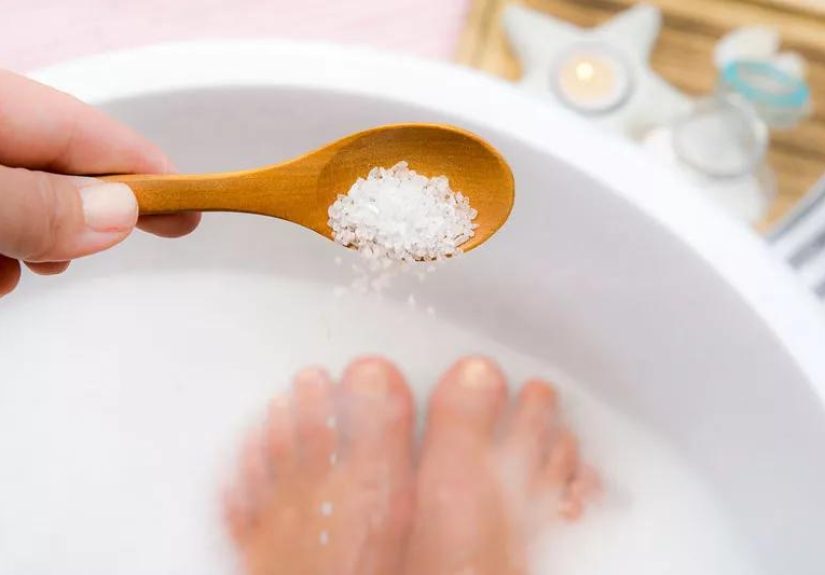
If you want to soak feet or a smaller area, follow the package directions for your specific product. A practical approach is to use warm water and the amount directed on the label, then soak for about 15 to 20 minutes. People often use this after long periods of standing, sports, or footwear choices they regret in hindsight.
For occasional constipation
Only use Epsom salt orally if the product is specifically labeled for laxative use, and follow the package directions exactly or a clinician’s instructions. Do not improvise the dose. Do not use more than directed. Do not keep using it for more than a week unless a healthcare professional tells you to. And do not confuse “it worked fast” with “more must be better,” because that is how people end up regretting both their choices and their hydration status.
For sitz baths and perineal comfort
Warm sitz baths are commonly recommended for hemorrhoids, postpartum soreness, anal fissures, and other perineal discomfort. But here is an important nuance: many medical sources say plain warm water often works just fine, and sometimes works better, because added salts or oils can irritate already sensitive skin. If your clinician specifically recommends Epsom salt, use it as directed. Otherwise, warm water alone is often the safer, simpler move.
Who Should Be Careful With Epsom Salt?
Epsom salt may be easy to buy, but that does not mean it is for everyone in every situation.
Talk with a healthcare professional before using Epsom salt orally if you have kidney disease, a magnesium-restricted diet, stomach pain, nausea, vomiting, or a sudden change in bowel habits that has lasted more than two weeks. Ask before use as well if you are pregnant, breastfeeding, or taking prescription medications.
For soaking use, be cautious if you have diabetes, are pregnant, or have open wounds, severe burns, skin infections, or significant skin inflammation. Stop using it if you develop irritation or if the skin area looks worse instead of better.
Also, if you are using a sitz bath after childbirth, surgery, or a rectal condition, ask your provider exactly what they want you to do. Warm water is common advice. Epsom salt is not always necessary.
Common Mistakes People Make
Using it like a daily cure-all
Epsom salt can be helpful, but it should not replace real treatment for recurring constipation, major muscle injury, ongoing skin disease, or severe pain.
Assuming “natural” means “risk-free”
Plenty of natural things can still irritate skin, upset your stomach, or interact badly with health conditions. Arsenic is natural too, and no one is making that into bath-time branding.
Taking it by mouth without reading the label
This one deserves bold letters in spirit, if not typography. Not every product is meant to be taken orally, and even labeled oral use has warnings.
Ignoring persistent symptoms
If you keep getting constipation, hemorrhoid pain, skin flares, or muscle soreness that does not improve, that is your sign to investigate the cause rather than keep buying larger bags of optimism.
About of Real-World Experiences With Epsom Salt
In real life, people usually do not reach for Epsom salt because they have read a thrilling mineral monograph. They reach for it because something hurts, something feels irritated, or the day has been so long that a warm bath starts to sound like medical equipment. That is part of why Epsom salt has lasted for generations: it fits into ordinary routines.
One of the most common experiences is post-workout soreness. Someone finishes a run, leg day, a long hike, or a weekend project that involved more squatting than expected, and by evening their body is filing complaints. A warm Epsom salt bath can feel genuinely comforting here. People often describe their muscles as “looser” or “less tight” afterward. The important detail is that the relief may come more from the warm soak and rest than from dramatic magnesium absorption. But from a comfort standpoint, that distinction may not matter much. Relief is relief.
Another common scenario is the tired-feet experience. Teachers, retail workers, nurses, servers, parents, travelers, and anyone who has spent too much time upright know this feeling well. A foot soak with warm water and Epsom salt can become a practical end-of-day ritual. People often say their feet feel lighter, softer, and less achy afterward. Again, part of the benefit is probably the warm water, the pause, and getting pressure off the feet for 15 to 20 minutes. Still, if a simple routine helps you feel more human again, that has value.
There is also the “everything feels tense” experience. This is the classic desk-job neck, stress shoulders, and jaw-clenching lifestyle package. Many people use Epsom salt baths less for a single body part and more because the whole system feels overcaffeinated and under-rested. The bath becomes a ritual: warm water, quiet, slower breathing, fewer notifications, maybe a book you pretend you are going to finish. In this setting, Epsom salt may function as part of the atmosphere. It tells your brain, “We are off duty for twenty minutes.” That is not fake medicine. It is just not a miracle cure either.
People with chronic skin conditions sometimes report mixed experiences. Some find that a lukewarm bath with Epsom salt helps soften rough patches and makes moisturizer work better afterward. Others find that any added salt stings or dries them out. This is why skin care with Epsom salt should be treated like a trial, not a universal rule. Patch testing, short soaks, and quick moisturizing afterward are smarter than going all-in and hoping your skin applauds.
Then there is the laxative experience, which is probably the least glamorous and the most medically important. People often notice that when Epsom salt works orally, it can work fast. That is exactly why labels emphasize caution. This is not a “sip and see” situation. It is a stay-near-a-bathroom, follow-directions-exactly situation. If someone finds they need it repeatedly, the real lesson is usually not “buy more.” It is “figure out why constipation keeps happening.”
Overall, the most realistic experience with Epsom salt is not transformation. It is support. It can help make certain symptoms more manageable, certain routines more soothing, and certain evenings a little less miserable. That is not flashy, but it is honest.
Final Thoughts
Epsom salt earns its place by being simple, inexpensive, and genuinely useful in the right situations. It can be a helpful soaking aid for sore muscles, tired feet, and minor aches. It may fit into certain skin-care routines. And when sold as a labeled OTC laxative, it can relieve occasional constipation for some people. But it is not a proven magnesium shortcut, not a detox miracle, and not something to use carelessly just because it hangs out near bubble bath products.
The smartest approach is wonderfully unglamorous: read the label, use the right product for the right purpose, keep expectations realistic, and ask a clinician when symptoms are persistent or your health situation is more complicated. In other words, treat Epsom salt like a useful tool, not a wizard potion in a bag.
Note: This article is for general informational purposes only and is not a substitute for medical advice. Use Epsom salt exactly as directed on the product label or by your healthcare professional, especially for oral use or when you have an underlying medical condition.