Table of Contents >> Show >> Hide
- Why Garlic, Lime, Pork, Farro, and Kale Belong Together
- Ingredients You’ll Need (and Smart Swaps)
- Garlic-Lime Pork with Farro and Kale Recipe
- Flavor Upgrades That Don’t Feel Like Extra Work
- Pro Tips for a Restaurant-Quality Result
- Meal Prep, Storage, and Reheating
- Frequently Asked Questions
- Conclusion
- Extra: of Real-Life “Garlic-Lime Pork Bowl” Experience (So Yours Goes Smoothly)
If “weeknight dinner” usually means you staring into the fridge like it owes you money, this is your bailout plan.
We’re making juicy garlic-lime pork, tossing it with chewy farro, and piling it onto garlicky kaleall tied together
with a glossy, tangy-sweet sauce that tastes like it took effort (it didn’t).
This is a bowl-style meal that checks a lot of boxes: big flavor, solid nutrition, and the kind of leftovers that
make you smug at noon the next day. Also: it’s friendly to imperfect cooks. If your kale looks “a little dramatic,”
don’t worrykale is a theater kid. We’ll calm it down.
Why Garlic, Lime, Pork, Farro, and Kale Belong Together
This combo works because each piece pulls its weight. Pork brings savory richness. Garlic adds the “hello, neighbors”
aroma that makes your kitchen smell like you know what you’re doing. Lime brightens everything, cutting through the
pork and making the whole bowl feel lighter.
Farro is the chewy, nutty backbonethink of it as rice’s cooler, sweater-wearing friend. It holds up under sauce,
doesn’t turn to mush if you look at it wrong, and makes the meal feel hearty without being heavy. Kale adds bitter-green
bite and texture, plus it’s sturdy enough to hang out with warm grains and still keep its personality.
The sauce is the secret handshake: a quick blend of lime juice, garlic, a touch of sweetness, and a spoonful of nut butter
(optional but highly recommended). It turns pan drippings into something that tastes like a restaurant drizzlewithout the
tiny squeeze bottle and the existential dread of plating.
Ingredients You’ll Need (and Smart Swaps)
Pork
- Pork tenderloin (best for quick cooking and a tender bite)
- Pork chops (boneless works great; adjust cook time)
Tenderloin is lean, so the goal is “juicy” not “jerky.” Use a thermometer if you can. If you’re using chops, go for
3/4-inch to 1-inch thick so they stay tender.
Farro
- Pearled farro (fastest, most common)
- Semi-pearled farro (a bit longer cook time, still manageable)
No farro? Try barley (chewy), wheat berries (extra chewy), or brown rice (classic). If you need a gluten-free option,
swap in quinoa or ricefarro is wheat-based.
Kale (and friends)
- Tuscan/Lacinato kale (tender, less curly drama)
- Curly kale (more texture, needs a little more love)
- Substitutions: spinach, Swiss chard, or broccolini
Kale can be bitter if it’s not handled nicely. A quick sauté helps, and a little oil + salt goes a long way toward
“pleasantly chewy” instead of “edible hedge.”
Garlic-Lime Sauce (the “why is this so good?” part)
- Fresh lime juice (bottled works in a pinch, but fresh tastes brighter)
- Garlic (yes, more than you think is reasonable)
- Honey or maple syrup (just enough to balance the lime)
- Nut butter (peanut or almond) for body and richness (optional but fabulous)
- Olive oil
- Salt and black pepper
- Optional: soy sauce or fish sauce (tiny splash for savory depth), red pepper flakes, toasted nuts
Garlic-Lime Pork with Farro and Kale Recipe
Serves: 4 | Prep: 15 minutes | Cook: 20–30 minutes
Ingredients
- 1 to 1 1/4 lb pork tenderloin (or 4 boneless pork chops)
- 1 cup dry farro (pearled preferred) or about 3 cups cooked farro
- 1 large bunch kale, stems removed, leaves chopped (about 6–8 cups)
- 2–3 tbsp olive oil, divided
- 4 cloves garlic, minced (or 6, if you’re brave and correct)
- 3 tbsp fresh lime juice (plus wedges for serving)
- 1 to 1 1/2 tbsp honey (or maple syrup)
- 1 tbsp peanut butter or almond butter (optional, but recommended)
- 1/2 tsp kosher salt (plus more to taste)
- 1/4 tsp black pepper (plus more to taste)
- Optional toppings: toasted walnuts/peanuts, sliced scallions, cilantro, red pepper flakes
Step 1: Cook the farro (two easy methods)
Method A: “Like pasta” (low-stress, hard to mess up).
Bring a large pot of salted water to a boil. Add farro and simmer until tender but chewy.
Pearled farro often takes 10–25 minutes; semi-pearled can take longer. Drain well, then spread on a plate for a few
minutes so it stops steaming itself into softness.
Method B: Absorption method (tidy, fewer dishes).
Combine 1 cup farro with about 3 cups water or broth and a pinch of salt. Simmer uncovered until tender; drain any
excess liquid if needed. (Farro is chill like that.)
Shortcut: If you’re using pre-cooked farro, warm it with a splash of water or broth in the skillet at the end.
Step 2: Mix the garlic-lime sauce
In a small bowl, whisk together lime juice, honey, nut butter (if using), half the minced garlic, 1 tablespoon olive oil,
salt, and pepper. If it looks thick, add 1–2 tablespoons warm water to loosen it. Taste. If your face puckers like a cartoon,
add a little more honey. If it tastes “nice but flat,” add a tiny splash of soy sauce.
Step 3: Sear the pork
Pat the pork dry. Slice tenderloin into 3/4-inch medallions (or keep chops whole). Season with salt and pepper.
Heat 1 tablespoon olive oil in a large skillet over medium-high heat. Sear pork in a single layer until browned,
2–3 minutes per side for medallions (longer for chops), until the thickest piece hits 145°F.
Transfer to a plate and let it rest for 3 minutes.
Important: Resting isn’t optional; it’s where juiciness happens. Cut too soon and the juices run away like
they just remembered they left the stove on at home.
Step 4: Sauté the kale (and make the pan sauce)
Lower heat to medium. Add the remaining olive oil if the pan looks dry. Add the rest of the garlic and stir for about
20–30 seconds until fragrant (don’t let it burnburnt garlic is a kitchen grudge that lasts all night).
Add kale with a pinch of salt and toss until it wilts, 2–4 minutes. If it seems dry, add a splash of water and cover for
1 minute to steam-tenderize.
Pour the garlic-lime sauce into the skillet and stir, scraping up browned bits. Add cooked farro and toss until everything
is glossy and warm.
Step 5: Build bowls and serve
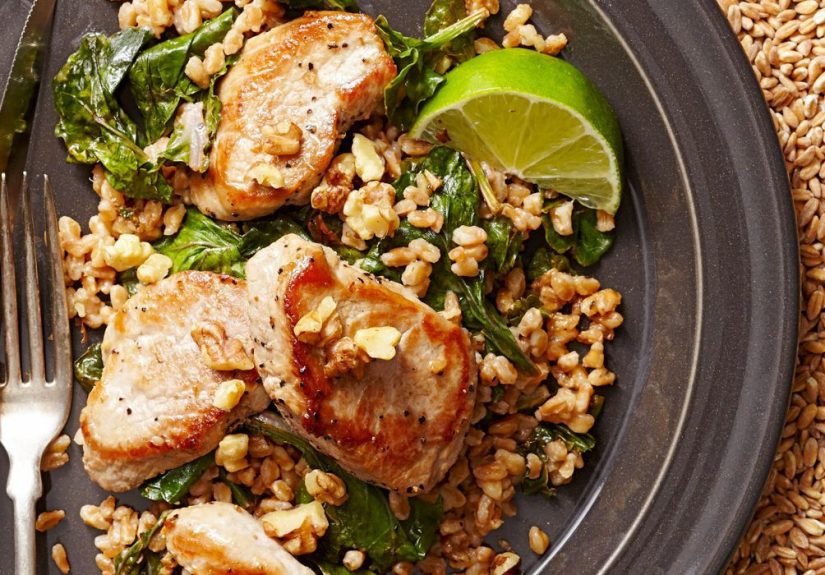
Spoon farro and kale into bowls, top with pork, and finish with lime wedges. Add toasted nuts for crunch, herbs for freshness,
and red pepper flakes if you like a little “wake-up call.”
Flavor Upgrades That Don’t Feel Like Extra Work
Make it spicy
Add red pepper flakes to the sauce, or whisk in a little sriracha. Lime + heat is a classic for a reason.
Make it smoky
A pinch of smoked paprika on the pork before searing adds instant “grill energy” even if you’re cooking in socks on a Tuesday.
Make it extra savory
A teaspoon of soy sauce (or a few drops of fish sauce) in the sauce boosts umami without making the bowl taste like soy sauce.
It’s like turning the contrast up on flavor.
Make it creamy (without cream)
Nut butter thickens the sauce and makes it cling to farro. If you’re allergic, use tahini or skip it and add a little extra olive oil.
Pro Tips for a Restaurant-Quality Result
Don’t overcook the pork
Lean pork is at its best when it’s just cooked through. Use a thermometer and aim for 145°F,
then rest. That’s the sweet spot for tender, juicy pork.
Keep farro chewy, not gummy
If farro overcooks, it can go from “pleasantly toothsome” to “why is this paste judging me.” Drain it promptly and let it
dry/steam off briefly before mixing with sauce.
Tame kale’s toughness
Kale softens best with a little fat and salt. If you want it even more tender, massage it for 30 seconds with a teaspoon of oil
and a pinch of salt before sautéing. It’s like giving kale a pep talk.
Let the skillet do the work
Those browned bits after searing pork? That’s free flavor. When you whisk in the sauce, scrape them up. Congratulationsyou just
made a pan sauce like a person with multiple cutting boards.
Meal Prep, Storage, and Reheating
- Meal prep: Cook farro ahead and refrigerate up to 4 days. Chop kale in advance and store it dry.
- Storage: Keep pork separate if possible to avoid overcooking when reheating.
- Reheating: Warm farro and kale in a skillet with a splash of water. Add pork at the end just to heat through.
- Cold option: This also works as a farro saladadd extra lime juice and a drizzle of olive oil.
Frequently Asked Questions
Is farro gluten-free?
No. Farro is a type of wheat. If you need gluten-free, swap quinoa, rice, or certified gluten-free grains.
Can I use pre-cooked farro?
Absolutely. It’s a great time-saver. Warm it in the sauce so it absorbs flavor instead of staying politely bland.
Can I grill the pork instead?
Yes. Grill pork tenderloin or chops, let it rest, then slice and serve over the farro-kale base with the sauce drizzled on top.
What if I hate kale?
First, respect. Second, try spinach or chopped broccoli rabe (if you like bitter) or even roasted Brussels sprouts. The sauce is flexible.
Conclusion
This Garlic-Lime Pork with Farro and Kale recipe is the kind of dinner that feels balanced without feeling like punishment.
You get bright citrus, savory pork, garlicky greens, and a grain that’s chewy in the best way. It’s quick enough for a weeknight,
impressive enough for guests, and sturdy enough for leftovers that won’t turn sad by tomorrow.
If you try it once, you’ll start keeping farro around “just in case,” which is how your pantry becomes a responsible adult.
And honestly? That’s a pretty good outcome for a bowl of pork and greens.
Extra: of Real-Life “Garlic-Lime Pork Bowl” Experience (So Yours Goes Smoothly)
Let’s talk about how this recipe behaves in the wildaka your kitchen at 6:37 p.m., when someone is hungry, someone is tired,
and someone (possibly you) is considering cereal as a personality trait. This is the part where tiny choices make the difference
between “I nailed it” and “why is my pork auditioning for a leather handbag?”
The first little win is drying the pork before it hits the pan. Pork tenderloin is lean, and lean meat needs a good sear
to taste exciting. If it’s wet, it steams instead of browns, and suddenly your “garlic-lime pork” tastes like “pork that heard
about garlic and lime once.” Pat it dry, season it confidently, and don’t move it around in the skillet like you’re trying to help.
The pork doesn’t need a life coachit needs contact with the hot pan.
The second win is knowing that garlic has the attention span of a toddler. One moment it’s fragrant and golden, and the next
it’s bitter and burnt and ruining the vibe. When you add garlic after the pork, drop the heat a bit and stir constantly for those
first 20–30 seconds. If you’re the type who likes to check your phone “real quick,” this is not the time. Garlic will absolutely use
that moment to set a boundary.
Now about the kale: if you’ve ever cooked kale and thought, “Cool, this is still basically a houseplant,” you’re not alone. Kale needs
either time, heat, or a small amount of steam. The fast fix is a splash of water and a lid for a minute. That tiny steam sauna relaxes
the leaves without turning them into mush. And if you’re starting with especially tough curly kale, give it the quick oil-and-salt massage
before it hits the skillet. It sounds fussy, but it’s 30 seconds of rubbing leaves together, which is basically free therapy.
Farro is the chillest part of the operation, but it does have one quirk: it keeps cooking from residual heat. If you boil it until it’s
“perfect” in the pot and then leave it sitting hot, it can drift into soft territory. Draining and letting it air-dry for a couple minutes
keeps it pleasantly chewyexactly what you want in a grain bowl. Also, farro loves salt. Season it like you mean it, and suddenly it tastes
nutty and rich instead of like “health food props.”
Finally, the sauce. On paper it’s simple: lime + garlic + sweetener + (maybe) nut butter. In real life, it’s a knob you can turn. Too sharp?
Add a little more honey. Too thick? Warm water. Too tame? A pinch of chili flakes or a tiny splash of soy sauce. You’re not “messing up the recipe”
you’re calibrating it to your lime’s mood and your taste buds. Limes vary wildly. Some are bright and friendly; some are out here doing combat.
The best “experience” move of all: build the bowls while the pork rests. That 3-minute rest isn’t dead time; it’s your chance to
toss farro and kale into the sauce, taste for seasoning, and cut lime wedges. When the pork is ready, you slice it, lay it on top, and suddenly dinner
looks intentional. You didn’t just cookyou assembled. And assembly is 70% of what people mean when they say, “Wow, this is so good.”
So yes: this meal is quick. But it’s also forgiving, adjustable, and kind of funespecially when you realize the “fancy” part is basically just
not burning garlic and using lime with confidence. You’ve got this.