Table of Contents >> Show >> Hide
- Important Disclaimer (Because Puppies Are Not DIY Projects)
- Why Chihuahua Labor Can Be Trickier Than “Regular Dog” Labor
- Before Labor: The Prep That Makes You Look Like a Genius Later
- Signs Your Chihuahua Is Going Into Labor
- Dog Labor Stages (In Plain English)
- How to Help Your Chihuahua During Labor (The Helpful, Not-Hovering Plan)
- When to Call the Vet Immediately (Save This Section)
- After Delivery: First 48 Hours (The “Everyone Is Alive, Now What?” Phase)
- Common Chihuahua-Specific Situations (And How to Handle Them)
- Conclusion
- Experience Notes from the Whelping Trenches (Extra )
Your Chihuahua is about to do something wildly impressive: bring brand-new, squeaky little puppies into the world. And because Chihuahuas are basically “tiny but dramatic” as a lifestyle, labor can feel like a high-stakes reality show. The good news? Most dogs deliver just fine on their own. The better news? With the right prep, you can be calm, helpful, and ready to act if something isn’t normalwithout hovering like a helicopter parent with thumbs.
This guide walks you through Chihuahua labor (whelping) step by step: what’s normal, what’s not, how to set up a safe whelping space, when to help a puppy, and when to call your veterinarian immediately. (Spoiler: the phrase “call your vet” is not a vibe-killerit’s a life-saver.)
Important Disclaimer (Because Puppies Are Not DIY Projects)
This article is educational and not a substitute for veterinary care. Chihuahua births can turn complicated quickly due to their size. If your dog is pregnant, talk to your vet ahead of time about an emergency plan, after-hours options, and whether your Chihuahua is high-risk. When in doubt, call your vet or an emergency animal hospital.
Why Chihuahua Labor Can Be Trickier Than “Regular Dog” Labor
Chihuahuas are toy breeds, which means their pelvis is small and their puppies can be relatively large-headed compared to mom’s body size. That mismatch can raise the risk of difficult birth (dystocia). Some Chihuahuas need a planned or emergency C-section. Your job is to be preparedbecause “tiny dog, tiny problems” is a myth. Tiny dogs can come with big labor surprises.
Before Labor: The Prep That Makes You Look Like a Genius Later
1) Have the “Due Date + Emergency” Vet Conversation
Dog pregnancy is typically about two months (often around 57–65 days, depending on timing and individual variation). Your veterinarian can help you estimate timing more accurately and assess risk. Ask about:
- Puppy count: Many vets recommend X-rays late in pregnancy (often around day 55+) to estimate litter size, so you know when she’s done delivering.
- Risk factors: Small litters (singletons) can mean larger puppies and a higher dystocia risk.
- Emergency plan: Phone number, driving route, and what to do if labor stalls at 2 a.m.
- C-section discussion: If your Chihuahua is high-risk, your vet may recommend planning ahead instead of hoping for the best.
2) Set Up a Whelping Area (A.K.A. The Puppy Launch Pad)
Make a quiet, warm, low-traffic space at least 1–2 weeks before the due window so your Chihuahua accepts it as “her place.” Your setup should include:
- Whelping box with low entry for mom and higher walls for puppy safety (so pups can’t wander off and get chilled).
- Washable bedding (think layers: towels/blankets you can swap fast). Avoid loose strings or shredded fabric that can tangle around puppies.
- A temperature gradient so puppies can stay warm without overheating (warm area + cooler corner).
- Dim lighting and minimal noise. Stress can slow labor.
3) Build a Simple Whelping Kit
You don’t need a spaceship control room. You do need the basics, ready to grab:
- Digital rectal thermometer + lubricant
- Clean towels (a lotpuppies are messy overachievers)
- Disposable gloves
- Bulb syringe (for gentle suction if needed)
- Dental floss or sterile string (for tying the cord if mom doesn’t)
- Clean blunt-tipped scissors (only if absolutely necessary and ideally vet-approved)
- Iodine solution (to dab the cord stump if you must manage the cord)
- Kitchen scale (grams are your friend) + notebook/phone notes for weights and times
- Heating source designed for pets (use safely, never directly against puppies)
- Vet + emergency hospital phone numbers posted where you won’t panic-scroll for them
Signs Your Chihuahua Is Going Into Labor
Many dogs show a temporary temperature drop before labor. Normal dog temperature is often around 100–102.5°F. A drop into the ~98–99°F range can happen within about 8–24 hours before active labor begins. (Not every dog follows the textbook, but it’s a useful clue.)
Other common pre-labor signs:
- Restlessness, pacing, panting
- “Nesting” (digging, circling, rearranging bedding like an interior designer on espresso)
- Shivering or trembling
- Clinginess or, alternatively, “do not perceive me” hiding
- Reduced appetite or skipping meals
- Clear discharge may appear as labor approaches
Dog Labor Stages (In Plain English)
Stage 1: Cervix Opens, Contractions Start (But You Might Not See Them)
This stage often lasts about 6–12 hours, but can be longer (sometimes up to a day or more). Your Chihuahua may look uncomfortable, pant, pace, and nest. She might refuse food or vomit. This is when you quietly supervise and keep things calm.
Your job in Stage 1:
- Keep the room quiet and warm. No visitors. No “meet the babies” livestream.
- Offer water frequently.
- Take short leash potty breaks (don’t let her disappear into the yard and surprise you).
- Start your timer/log: when you notice signs, write it down.
Stage 2: Active Delivery (The Puppies Arrive)
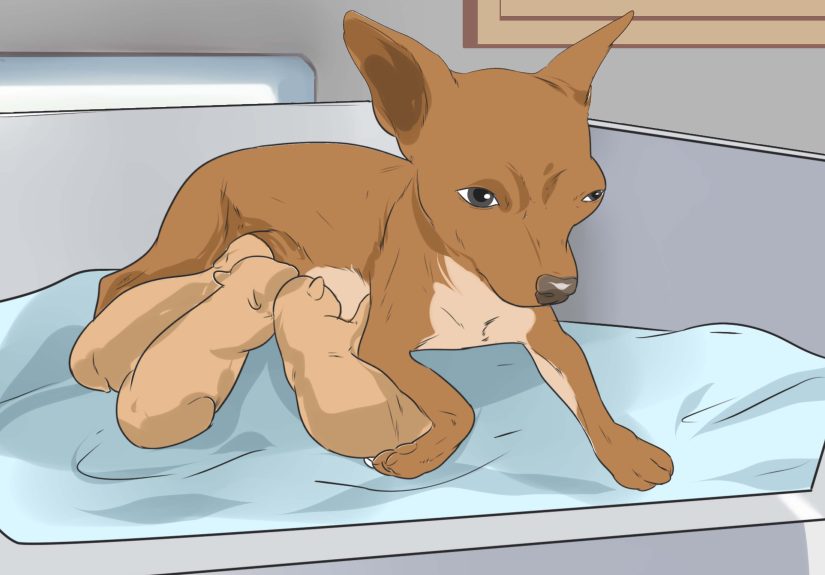
Stage 2 is when you’ll see visible abdominal pushing and the first puppy is born. Once strong pushing starts, a puppy typically arrives within about 30–60 minutes. It’s also normal for a mom to pause between pups.
Normal-ish patterns during Stage 2:
- Strong pushing, puppy delivered, then a rest period.
- Some vocalizing, panting, position changes.
- Mom may chew the sac, lick the puppy, and sever the umbilical cord herself.
Chihuahuas, however, can be more prone to “stalling” if a puppy is oversized, malpositioned, or if mom gets exhausted. That’s why timing matters.
Stage 3: Placentas Deliver (Often Right After Each Puppy)
Placentas (afterbirth) usually follow each puppy, and in dogs Stage 2 and Stage 3 can overlap. Many moms eat placentas. It’s generally not an emergency, but it can cause vomiting or diarrhea later, so don’t let her eat an unlimited buffet if you can prevent it without stress.
How to Help Your Chihuahua During Labor (The Helpful, Not-Hovering Plan)
1) Be the Calm Timekeeper
This sounds boring until it becomes incredibly important. Track:
- When Stage 2 pushing clearly starts
- Time each puppy is born
- Approximate time of each placenta
- Puppy sex, color/markings (helpful for ID), and birth weight
Knowing the puppy count (from vet imaging) plus your log helps you recognize “we’re done” vs. “we’re missing one,” which can be a big deal.
2) Let Mom Do Her JobUntil She Doesn’t
Most dogs handle the basics: removing membranes, licking pups, and chewing the cord. Your default setting should be “observe quietly.” Intervening too early can stress her and slow labor.
3) If a Puppy Is Born in the Sac and Mom Doesn’t Open It Quickly
This is one of the few times you may need to act fast. A puppy needs an open airway promptly. If mom isn’t tearing the sac:
- Use a clean towel to gently tear the membrane away from the puppy’s face (start near the head).
- Wipe the nose and mouth.
- If needed, use a bulb syringe gently at the nostrils/mouth to clear fluids.
- Rub the puppy briskly (but carefully) with a warm towel to stimulate breathing and circulation.
- Once breathing, place the puppy where it can nurse or stay warm.
Avoid dramatic “swinging” motions to clear fluid. It can be dangerous. If the puppy is not breathing or remains weak despite basic stimulation, call your vet/emergency hospital immediately.
4) Umbilical Cord Help (Only If Necessary)
If mom doesn’t sever the cord and it’s clearly needed, you can tie it off with sterile string/dental floss about an inch from the puppy’s belly, then cut on the far side (away from the puppy). Dab the stump with iodine if recommended by your vet. If you see bleeding that won’t stop, or you’re unsure, stop and call your vet.
5) Keep Puppies Warm (Chihuahuas Are Tiny Heat-Losers)
Newborn puppies can’t regulate body temperature well. Chilling is a common danger. The general goal for the first days is a warm environment (often around 85–90°F) with a cooler area available, so puppies can move away if needed.
- Use a safe heat source and create a warm zone + cool zone.
- Never place puppies directly on a heating pad without thick layers and supervision.
- Dry puppies quicklywet fur cools them fast.
6) Make Nursing Happen Early
Colostrum (early milk) matters. Encourage nursing once pups are stable and warm. If mom is overwhelmed, gently guide a puppy to a nipple and confirm it’s actually latched and suckling. Weighing puppies daily is a practical way to confirm they’re getting milk.
When to Call the Vet Immediately (Save This Section)
Chihuahua labor can go sideways quickly. Do not “wait and see” with these red flags:
- Strong, active pushing for ~20–30 minutes with no puppy produced
- Active labor for 1–2 hours with no puppy (especially if she seems exhausted or distressed)
- More than 2 hours between puppies (or a long stall with no progress)
- Green/black discharge before the first puppy or discharge with no puppy following soon after
- A puppy visibly stuck in the birth canal
- Fetal membranes protruding for more than a short time without a puppy
- Heavy bleeding, collapse, extreme weakness, or signs of severe pain
- Foul-smelling discharge or mom seems very ill
- More than ~24 hours after a temperature drop with no labor progression
If you’re reading this while panicking: put the phone down, call the vet, and drive safely. A timely C-section or medical assistance can protect mom and puppies.
After Delivery: First 48 Hours (The “Everyone Is Alive, Now What?” Phase)
Mom Checklist
- Hydration: Offer water often. Labor is hard work.
- Appetite: She may eat lightly at first, but persistent refusal to eat plus lethargy is concerning.
- Discharge: Some discharge is normal after whelping. Worsening odor, heavy bleeding, or “looks sick” warrants a vet call.
- Mammary glands: Watch for hot, painful, swollen glands or abnormal milk (possible mastitis).
- Behavior: Calm nursing and settling is ideal. Severe restlessness, tremors, stiffness, or seizures can indicate dangerous low calcium (eclampsia), often in small breedsthis is an emergency.
Puppy Checklist
- Warmth: Puppies should be warm, dry, and quiet between feedings.
- Nursing: They should latch and nurse regularly.
- Weight: Weigh daily at the same time. No gain (or weight loss) is a warning sign.
- Crying: Constant crying can mean cold, hungry, or unwell.
Common Chihuahua-Specific Situations (And How to Handle Them)
Singleton Puppy (One Pup Only)
A single puppy can become relatively large, raising the chance of a difficult delivery. If your vet suspects a singleton, take labor timing seriously and keep your emergency plan close. Many difficult births are easier to manage when you act early.
First-Time Mom Who’s Confused
Some Chihuahuas don’t instantly flip into “mother mode,” especially if they’re anxious. You can help by keeping the environment quiet, guiding pups to nurse under supervision, and calling your vet if she refuses to care for them or seems aggressive toward pups.
C-Section Recovery Basics
If your Chihuahua delivers by C-section, follow your vet’s medication and activity instructions exactly. Keep the incision clean and dry, restrict jumping, and supervise nursing so puppies don’t irritate the incision. Many C-section moms do great with calm support and close monitoring.
Conclusion
Helping your Chihuahua during labor is mostly about preparation, observation, and knowing when to call for help. Set up a safe whelping space, keep a simple kit ready, track timing, and intervene only when necessaryespecially for airway issues or obvious delays. With a vet-backed plan and a calm approach, you can support your tiny mom like a pro and welcome those tiny pups safely.
Experience Notes from the Whelping Trenches (Extra )
If you ask longtime Chihuahua breeders what their “secret weapon” is during labor, you won’t hear “fancy equipment.” You’ll hear: routine, lighting, and staying out of the way until it matters. One breeder describes it as being a stagehand, not the star of the show. You set the scene, keep the props ready, and don’t walk onstage unless something catches fire. (Metaphorically. Please do not have actual fires in your whelping area.)
Another surprisingly common theme: Chihuahuas pick their own labor vibe. Some want you nearby, quietly sitting on the floor like a supportive roommate. Others want privacy and will give you a look that says, “I didn’t invite you into this meeting.” In practice, that means you may need to position yourself where you can see what’s happening without hovering over her face. A baby gate at the doorway and a chair you can sit in (with a clear line of sight) can be the difference between calm monitoring and annoying your dog into relocating under the bed.
Practical tip you’ll thank yourself for: pre-fold towels and stage them in stacks. During delivery you don’t want to be rummaging through a closet like you’re on a game show called “Where Did I Put The Clean Laundry?” A neat pile of towels, a second pile for “used,” and a small trash bag nearby keeps chaos contained. People also swear by having a dedicated “puppy warming towel” that stays dry and warmbecause the moment a damp puppy touches a cool surface, they lose heat fast.
Timing stories are where owners get religion. The most common regret isn’t “I didn’t help enough,” it’s “I waited too long to call.” Especially with toy breeds, there’s a fine line between “normal pause” and “this is stuck.” Experienced folks often set simple rules for themselves: if there’s hard pushing and nothing happens, they call; if the interval stretches and mom looks tired, they call. They don’t argue with the clock, and they don’t negotiate with green discharge. When in doubt, they let the vet be the adult in the room.
One last real-world thing that doesn’t get talked about enough: your energy matters. Dogs read tension like it’s a second language. People who stay quiet, dim the lights, reduce foot traffic, and speak softly often report smoother labor. People who panic-text ten relatives and keep “checking” every two minutes tend to wind up with a stressed mom who keeps standing up mid-contraction. So if you need something to do, do this: breathe, write down times, refresh the water bowl, and keep your vet’s number ready. It’s boring. It’s also incredibly effective.