
Table of Contents >> Show >> Hide
- Getting to Know Heartleaf Brunnera
- Where Heartleaf Brunnera Grows Best
- How to Plant Heartleaf Brunnera
- Everyday Care for Heartleaf Brunnera
- Common Problems, Pests, and Diseases
- Design Ideas: Using Heartleaf Brunnera in the Garden
- Propagating Heartleaf Brunnera
- Real-Life Lessons from Growing Heartleaf Brunnera (Experience Section)
- Conclusion: Why Heartleaf Brunnera Belongs in Your Garden
If you have a shady corner of your yard that looks like a before photo from a garden makeover show, heartleaf brunnera is here to save the day. This pretty perennial offers clouds of tiny blue flowers in spring and shimmering, heart-shaped foliage all season long. Best of all, it does all of this in the dark, forgotten parts of the garden where sun-loving plants refuse to cooperate.
In this guide, you’ll learn exactly how to plant and grow heartleaf brunnera (Brunnera macrophylla), from choosing the right spot and preparing the soil to long-term care, division, and design ideas. We’ll also walk through real-world lessons and gardener-tested tips so you can skip the trial and error and go straight to the lush, woodland look.
Getting to Know Heartleaf Brunnera
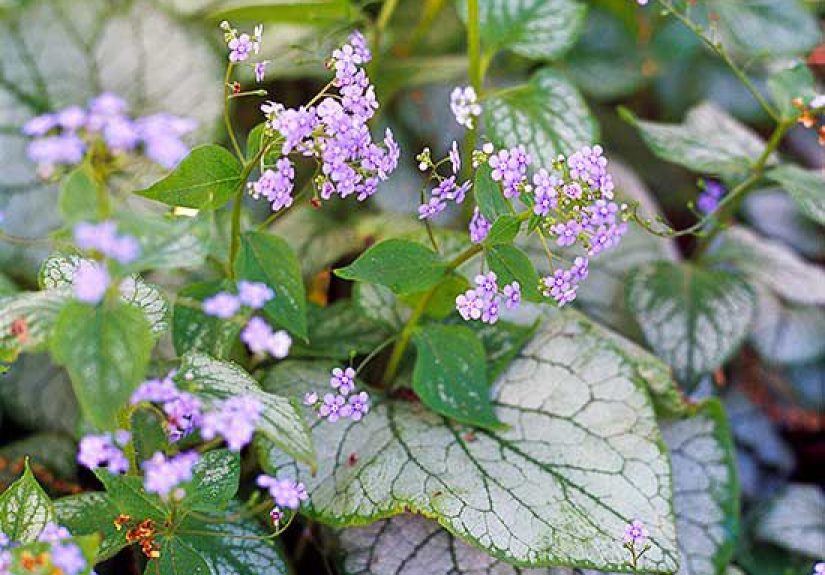
Heartleaf brunnera is a clump-forming, cool-season perennial originally native to woodlands in Eastern Europe and Western Asia. It’s often sold under common names like heartleaf brunnera, Siberian bugloss, or heartleaf bugloss. The plant forms a low mound of fuzzy, heart-shaped leaves topped in spring by sprays of tiny blue flowers that look a lot like forget-me-nots.
Most varieties grow about 12–18 inches tall and spread 18–30 inches wide, slowly expanding over time via short rhizomes to form a dense ground cover. Many modern cultivars, such as ‘Jack Frost’ and ‘Looking Glass,’ feature silver or variegated foliage with dark green veins that almost glow in shady light, making them standouts in woodland and shade borders.
Heartleaf brunnera is hardy in roughly USDA Zones 3–8, depending on the variety, and is considered a long-lived, low-maintenance perennial when planted in the right spot. It’s also generally ignored by deer and rabbits, which is always a bonus if your neighborhood wildlife thinks of your yard as an all-you-can-eat buffet.
Where Heartleaf Brunnera Grows Best
Light Requirements
Heartleaf brunnera is a shade garden classic. It thrives in partial to full shade, especially in regions with warm summers. Morning sun with afternoon shade is ideal in cooler climates, but the more intense your afternoon sun, the more shade this plant will want. Too much hot sun can scorch the foliage, especially on silver or variegated cultivars, leaving crispy brown patches along the leaf edges.
Good light scenarios include the east side of a house, the north side of a garage or fence, or a dappled spot under deciduous trees and large shrubs. If you’re planting in a hot-summer region and only have brighter locations, choose more green-leafed varieties, which generally tolerate slightly more light than heavily variegated types.
Soil and pH
In nature, brunnera grows in woodland soils rich in organic matter, and it appreciates similar conditions in home gardens. Aim for soil that is:
- Moist but well-drained: The roots dislike standing water, but they also resent drying out completely.
- Rich in organic matter: Compost, shredded leaves, or well-rotted manure mixed into the planting area help mimic forest duff.
- pH-flexible: Brunnera performs well in a broad pH range from about 6.0 to 8.0, so most garden soils are fine with minimal adjustment.
If your soil is very sandy, work in generous amounts of compost to help it retain moisture. In heavy clay, organic matter also helps loosen the texture and improve drainage. Avoid low spots where water puddles after rain; soggy conditions can lead to crown or root rot.
Temperature and Hardiness
Heartleaf brunnera prefers cool to moderate summer temperatures and consistent soil moisture. In hotter climates, the foliage may look tired in late summer, especially if the soil dries out. A thick layer of mulch and a bit of extra water during heat waves help keep plants looking fresh.
In cold climates, the tops die back to the ground in winter, but the root system is reliably hardy. In milder regions, foliage may remain semi-evergreen, especially on green-leafed forms, providing winter interest in shade beds.
How to Plant Heartleaf Brunnera
Best Time to Plant
Plant heartleaf brunnera in early spring or fall when the weather is cool and the soil is workable. These seasons let the roots establish before dealing with summer heat or winter cold. Container-grown plants from nurseries can technically be planted during the growing season, but you’ll need to be more diligent about watering in hot weather.
Choosing the Right Location
Before you start digging, spend a few minutes scouting your garden. Ask yourself:
- Does this area get mostly morning light and afternoon shade, or is it in dappled shade all day?
- Does water drain well here, or does the spot stay soggy after rain?
- Is the soil bare under trees where turf struggles, or along a shady path that needs soft edging?
Heartleaf brunnera is perfect for underplanting hostas, ferns, and shrubs; lining shady walkways; or filling the ground around trees where grass refuses to grow. Just avoid planting directly under very thirsty, shallow-rooted trees that suck up all available moisture.
Spacing and Layout
For most varieties, space plants 12–18 inches apart. If you’re aiming for a solid carpet of foliage, go closer to 12 inches; for individual clumps with space between them, 18 inches works well. In a mixed border, use groups of 3–5 plants to create visual impact instead of scattering singletons like plant confetti.
Step-by-Step Planting
- Prep the soil. Loosen the top 8–10 inches of soil in an area at least twice as wide as the pot. Mix in 2–3 inches of compost or other organic matter.
- Dig the hole. Make it roughly the same depth and slightly wider than the nursery pot.
- Remove the plant from its pot. Support the root ball and gently tap the sides of the pot to slide it out. If the roots are circling tightly, lightly tease them apart.
- Set the plant in place. Position the crown (where the stems meet the roots) level with the surrounding soil, not buried too deeply.
- Backfill and firm in. Fill the hole with your improved soil, gently firming to remove air pockets without compacting too much.
- Water thoroughly. Give the plant a deep soak to settle the soil around the roots.
- Add mulch. Apply a 1–2 inch layer of shredded bark, leaf mold, or compost around the plant, keeping mulch a couple of inches away from the crown to prevent rot.
Everyday Care for Heartleaf Brunnera
Watering
During the first growing season, keep the soil consistently moist but not waterlogged. Once established, brunnera can tolerate brief dry spells, especially in cooler, shady spots, but it will always look best with steady moisture.
- Check soil moisture by inserting your finger an inch or two deep; if it feels dry at that depth, it’s time to water.
- Water deeply rather than giving frequent, shallow sprinkles. Deep watering encourages roots to grow down into cooler soil layers.
- Container-grown brunnera dries out faster and may need watering several times a week in hot weather.
Mulching and Fertilizing
Mulch is your best friend with heartleaf brunnera. A 2-inch layer of shredded bark, pine needles, or compost maintains moisture, keeps roots cool, and suppresses weeds. Refresh the mulch each spring as it breaks down.
In rich garden soil, brunnera usually doesn’t need heavy fertilizing. An annual top-dressing of compost in spring or a light application of a balanced, slow-release fertilizer is plenty. Avoid high-nitrogen fertilizers, which can encourage soft, floppy growth.
Pruning and Grooming
Brunnera doesn’t require elaborate pruning. Focus on simple cleanup:
- Snip off spent flower stems after blooming if you prefer a neater look or want to reduce self-seeding.
- Remove yellowing or tattered leaves throughout the season to keep clumps tidy.
- In cold climates, many gardeners leave foliage over winter for extra protection and then cut it back in early spring as new growth emerges.
Dividing Mature Plants
Over several years, clumps slowly expand and may become crowded in the center. Division every 3–4 years keeps plants vigorous and gives you bonus plants to spread aroundor share with friends.
- Divide in early spring as new growth appears or in early fall while the soil is still warm.
- Dig up the entire clump, trying to keep as much root intact as possible.
- Use your hands or a sharp knife to separate the clump into sections, each with several buds and a good root system.
- Replant divisions at the same depth as before, water well, and mulch.
Common Problems, Pests, and Diseases
One of the joys of heartleaf brunnera is that it’s generally very low maintenance. However, a few issues can pop up:
Leaf Scorch
If the edges of the leaves turn crispy brown, especially on silver varieties, your plant is likely getting too much direct sun or not enough water. Provide more shade, increase irrigation during heat waves, or add extra mulch to cool the root zone.
Slugs and Snails
The soft foliage can be attractive to slugs and snails. Look for irregular holes and slime trails. Control options include hand-picking, iron-phosphate slug baits, beer traps, or surrounding plants with copper barriers or rough mulch that makes travel uncomfortable for these pests.
Crown or Root Rot
Brunnera dislikes soggy soil. If plants collapse, yellow rapidly, or rot at the base, poor drainage may be the culprit. Improve drainage by raising the planting area, adding organic matter, or relocating plants to a site that doesn’t stay saturated.
Deer and Rabbits
Good news: heartleaf brunnera is usually far down the menu for deer and rabbits. While no plant is completely “deer proof,” most gardeners find that these critters tend to walk right past brunnera in search of tastier options like hostas or tulips.
Design Ideas: Using Heartleaf Brunnera in the Garden
Think of heartleaf brunnera as living garden lighting. Those silvered leaves brighten dark corners and create beautiful contrast with deep green and burgundy foliage.
- Woodland carpet: Mass brunnera under deciduous trees along with ferns, astilbe, and spring bulbs for a layered, woodland feel.
- Hosta companion: Pair the patterned leaves of brunnera with big, smooth hosta leaves. The contrast in texture is gorgeous.
- Shady path edging: Plant on either side of a stepping-stone path where the low mounds will gently spill toward the walkway.
- Container star: Use brunnera as the “filler” plant in a shade container with upright ferns and trailing ivy.
Because brunnera’s flowers are delicate and airy, they won’t overwhelm other spring bloomers. Instead, they float above the foliage like a cloud of tiny blue fireflies, drawing the eye through the planting.
Propagating Heartleaf Brunnera
The most reliable way to propagate heartleaf brunnera is by division, as described above. Some varieties will self-seed lightly if you leave the flowers to mature, producing seedlings nearby. These seedlings may not look exactly like a named cultivar, but they can still be attractive additions to your shade garden.
Note that many of the most popular cultivars, especially those with fancy foliage, are patented. That means they cannot legally be propagated asexually (via division or cuttings) for sale without permission from the patent holder. For home use in your own garden, most gardeners simply divide and replant to keep clumps healthy, but always check plant tags and local regulations if you’re unsure.
Real-Life Lessons from Growing Heartleaf Brunnera (Experience Section)
Once you’ve grown heartleaf brunnera for a few seasons, you start to appreciate all the small ways it quietly improves your garden. Many gardeners discover this plant the same way: they buy one pretty pot on impulse at a nursery, tuck it into a shady bed, and then spend the next several years kicking themselves for not buying five more.
One common experience is the “shade problem area.” Maybe it’s the narrow strip between a fence and a garage, or the spot beneath a maple tree where grass has repeatedly given up. After trying and failing with sun perennials, ground covers, and yet another bag of shade grass seed, a gardener finally experiments with heartleaf brunnera. Within a year or two, that once-barren space becomes a soft, silvery carpet with blue flowers in spring. It’s an almost comical transformationlike the garden equivalent of rearranging furniture and suddenly realizing your living room has been the wrong layout for ten years.
Another lesson brunnera teaches is the value of foliage. In garden centers, the blue flowers are what catch your eye. But after a season or two, most gardeners admit that the leaves are the main event. In midsummer, when many spring bloomers have faded and some shade beds can look a bit sleepy, the bold, heart-shaped leaves of brunnera keep their structure and color. Against plain green hostas or ferns, the silvery patterns read almost like hand-painted artwork.
Many people also learn that brunnera is surprisingly forgivingwithin reason. Forget to water once or twice and the foliage may droop, but a good soak usually perks it back up. If a hot spell scorches a few leaves, you can simply trim them off and let fresh growth fill in. It’s not indestructible, but it’s far more resilient than its delicate looks suggest.
Dividing heartleaf brunnera is often a turning point for gardeners. The first time you lift a healthy clump, you’ll see how densely the rhizomes have woven through the soil. Dividing it into multiple chunks feels a bit like discovering hidden treasure: the single plant you bought is now three or four generous divisions that can fill out a shady bed or start a new planting on the other side of the yard. Garden friends quickly learn to visit on “division day,” when there are extra pieces to share.
Finally, many shade-garden enthusiasts find that heartleaf brunnera changes how they view problem spaces. Instead of dreading the back corner where nothing grows, they start imagining combinations: brunnera with spring bulbs like daffodils and grape hyacinths, brunnera with coral bells and Japanese forest grass, brunnera lining a shady stone path. Once you see how well it performs, you may start planning entirely new beds just to give it more stage time.
In short, the lived experience of growing heartleaf brunnera usually goes like this: you plant one, it behaves beautifully, and before long you’re mentally rearranging half your shade garden around its cool, glowing foliage. It’s the kind of plant that quietly earns favorite statusnot because it’s flashy or demanding, but because it shows up year after year, doing exactly what you hoped it would do, and making the rest of your garden look better in the process.
Conclusion: Why Heartleaf Brunnera Belongs in Your Garden
Heartleaf brunnera is one of those rare plants that checks almost every gardener’s wish list: it thrives in shade, has long-lasting ornamental foliage, offers charming spring flowers, resists deer and rabbits, and asks for very little in return once established. Give it rich, moist, well-drained soil and protection from hot afternoon sun, and it will reward you with years of dependable performance and quietly dazzling good looks.
Whether you’re dressing up a shady foundation bed, building a woodland border, or finally tackling that “nothing grows here” corner, heartleaf brunnera is a smart, stylish solution. Plant it once, treat it well, and you’ll soon wonder how your garden ever did without those sparkling silver hearts.






 Close
Close