
Table of Contents >> Show >> Hide
- What Does “East Coast Meets Santa Fe” Mean?
- The Design Formula: Classic Bones, Desert Soul
- Key Materials for Modern Southwest Style
- Furniture: Tailored, Relaxed, and Not Too Bulky
- Patterns and Textiles: Use the Good Stuff Sparingly
- Lighting: Where the Style Gets Sophisticated
- Room-by-Room Ideas
- Art and Accessories: Collected, Not Costumed
- How to Keep the Look Modern
- Common Mistakes to Avoid
- Experience Notes: Living With East Coast Meets Santa Fe Style
- Conclusion
Some interiors walk into the room wearing pearls. Others arrive in dusty boots with a clay mug of coffee and a suspiciously beautiful woven throw. The magic of East Coast Meets Santa Fe is that it lets both personalities share the same sofa without arguing over the thermostat. This look blends the polish of East Coast traditional design with the warmth, texture, and earthy soul of modern Southwest style. Think tailored linen beside hand-thrown pottery, crisp white walls warmed by terracotta, antique wood furniture paired with sculptural adobe-inspired curves, and just enough turquoise to wink at New Mexico without turning the house into a souvenir shop.
This inspiration file is for anyone who loves collected rooms, natural materials, architectural character, and spaces that feel sophisticated but not stiff. The East Coast brings symmetry, restraint, classic trim, antiques, coastal calm, and practical elegance. Santa Fe brings adobe textures, desert color, handcraft, raw wood, woven textiles, kiva-fireplace energy, and that grounded feeling you get when a home seems to have grown out of the landscape. Together, they create a style that is warm, modern, layered, and deeply livable.
What Does “East Coast Meets Santa Fe” Mean?
The phrase describes a design blend rather than a strict decorating rulebook. On one side, East Coast interiors often lean classic: balanced furniture arrangements, natural linen, painted woodwork, framed art, heirloom pieces, subtle coastal tones, brass accents, and rooms that feel put together even when the dog has claimed the best chair. On the other side, Santa Fe design draws from Pueblo, Spanish Colonial, Territorial, and Indigenous craft traditions. It favors earthy colors, thick plaster-like walls, rounded forms, rustic beams, handmade tile, clay, leather, wool, and woven patterns.
Modern Southwest style updates those elements with cleaner lines and a lighter hand. Instead of heavy dark furniture everywhere, it uses warm wood, pale upholstery, streamlined silhouettes, textured walls, desert neutrals, sculptural lighting, and a few high-impact handcrafted pieces. The result is less “cowboy movie set” and more “well-traveled editor who knows where to buy excellent ceramics.”
The Design Formula: Classic Bones, Desert Soul
The easiest way to understand this look is to divide the room into bones, texture, color, pattern, and personality. The East Coast side gives the room structure. Santa Fe gives it feeling. Modern design keeps everything from becoming too themed.
1. Start with architectural discipline
East Coast homes often rely on strong architectural details: crown molding, paneled walls, built-ins, traditional fireplaces, wide-plank floors, divided-light windows, and clean room layouts. You do not need all of these, but you do need a sense of order. Arrange furniture with intention. Let a sofa face a fireplace, a pair of chairs frame a window, or a console create a natural landing zone. Symmetry is your friend, but not your boss.
Then bring in Santa Fe softness. Rounded edges, plaster finishes, arched niches, curved lamps, and organic vessels can loosen up a formal room. A square colonial living room instantly feels more soulful when a rounded clay lamp sits on an antique chest or a limewash-style wall treatment adds depth behind a classic mirror.
2. Choose a palette that feels sun-warmed, not sunburned
The color palette is where many people get nervous. They picture orange walls, turquoise everything, and a rug loud enough to wake the neighbors. Modern Southwest style is more restrained. Begin with East Coast neutrals: ivory, chalk white, warm gray, oatmeal, flax, navy, slate blue, and soft charcoal. Then layer Santa Fe colors in quieter doses: terracotta, adobe clay, sand, ochre, rust, sage, chocolate brown, dusty rose, and muted turquoise.
A beautiful room might have cream walls, a flax linen sofa, dark-stained wood tables, a rust wool pillow, a blue-gray antique rug, and a handmade clay vase. That is enough. The desert is dramatic, yes, but it also understands negative space. Be like the desert. Say something, then let the room breathe.
Key Materials for Modern Southwest Style
Materials carry this look more than decoration does. The style succeeds when surfaces feel touchable, honest, and slightly imperfect. Too much polish, and the room feels hotel-ish. Too much rustic texture, and it starts asking where the mechanical bull is. Balance is the trick.
Plaster, limewash, and matte walls
Santa Fe interiors are famous for soft, earthen walls and rounded adobe forms. In a non-adobe East Coast home, you can borrow the feeling with limewash, Roman clay, mineral paint, or a matte warm-white finish. These surfaces create subtle movement, especially in changing light. A powder room, dining room, entry, or fireplace wall is a smart place to test the effect before committing the whole house to a desert spa personality.
Wood with age and warmth
East Coast design loves polished antiques, mahogany, walnut, oak, and painted furniture. Santa Fe design loves rougher beams, weathered pine, carved doors, and hand-worked wood. The modern blend pairs both. Try an antique chest under a contemporary plaster mirror, a rustic bench beneath tailored artwork, or a classic pedestal dining table surrounded by woven or leather chairs. The wood does not have to match. In fact, it is more interesting when it does not look like it all attended the same furniture convention.
Stone, clay, leather, wool, and linen
These are the quiet heroes of the style. Linen curtains, wool rugs, leather stools, stone lamps, ceramic bowls, and clay vessels add depth without shouting. A single hand-thrown pot can do more for a room than six mass-produced accessories trying very hard to be “earthy.” Look for materials that age gracefully: unlacquered brass, oil-rubbed bronze, natural leather, woven wool, jute, rattan, and handmade tile.
Furniture: Tailored, Relaxed, and Not Too Bulky
The East Coast contribution is tailoring. Choose sofas and chairs with clean arms, good proportions, and durable fabrics. Slipcovered linen works beautifully, especially in warm white, oatmeal, stone, or faded blue. A skirted sofa can feel classic and relaxed, while a track-arm sofa keeps the room current. Santa Fe influence enters through accent furniture: a carved wood stool, a leather sling chair, a rustic coffee table, a woven bench, or a low-slung lounge chair.
Avoid making every piece heavy. Traditional Southwest interiors sometimes leaned dark and substantial, but the modern version favors breathing room. Pair one chunky wood table with lighter upholstered seating. Use open-frame chairs instead of oversized recliners. Let negative space do its job. Your furniture should look like it belongs to people who read books, host dinner, and occasionally remember to water a cactus.
Patterns and Textiles: Use the Good Stuff Sparingly
Pattern is essential, but restraint keeps it elegant. Southwestern textiles often include geometric motifs, stepped diamonds, stripes, and earthy color combinations. East Coast interiors bring ticking stripes, checks, florals, block prints, faded rugs, and classic upholstery. When blending them, choose one dominant pattern family and let the others support it.
For example, pair a neutral sofa with two rust-and-cream geometric pillows and one small-scale blue ticking pillow. Or place a vintage-style rug in muted red, navy, and sand under a room of crisp linen furniture. A woven blanket over a traditional wing chair can look fantastic, but do not cover every surface with pattern. A room needs rhythm, not a drum solo.
Lighting: Where the Style Gets Sophisticated
Lighting can make or break this look. East Coast spaces often rely on pairs of lamps, shaded sconces, lanterns, and chandeliers. Santa Fe style favors hand-forged metal, ceramic bases, punched tin, raw textures, and warm glow. Combine them by choosing classic lighting shapes in earthy materials.
Try a ceramic table lamp with a linen shade, a blackened metal chandelier over a farmhouse table, brass picture lights above desert landscape art, or plaster sconces in a hallway. Use warm bulbs and multiple light sources. One overhead light in the middle of the room is not a lighting plan; it is a tiny ceiling-based interrogation device.
Room-by-Room Ideas
Living room
Anchor the space with a linen sofa, a pair of comfortable chairs, and a wood or stone coffee table. Add a muted Southwestern rug or layer a patterned wool rug over jute. Use a classic East Coast furniture arrangement, then soften it with pottery, baskets, leather, and sculptural branches. If you have a fireplace, make it the emotional center. If you do not, a large plaster-framed mirror or textural art piece can create a similar focal point.
Dining room
A dark antique table feels fresh with woven chairs, a simple linen runner, ceramic dinnerware, and a modern iron chandelier. Add one piece of art with desert colors, but keep the table setting edited. This is not the place for seventeen tiny chili-pepper napkin rings unless you are hosting a theme party and have accepted the consequences.
Bedroom
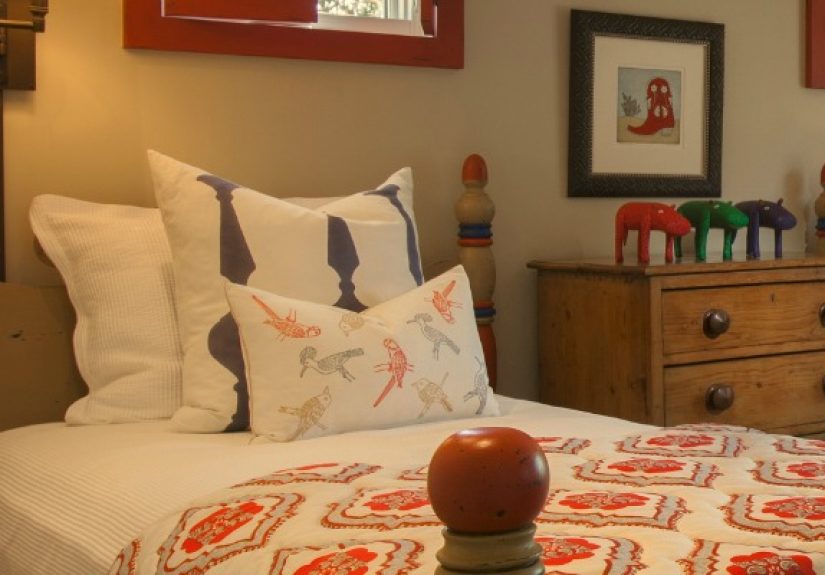
Use quiet colors: warm white, sand, faded blue, clay, and soft brown. Choose linen bedding, a wool throw, and wood nightstands. A curved headboard, plaster lamp, or woven wall hanging can introduce Santa Fe warmth without overwhelming the calm. East Coast symmetry works especially well here: matching lamps, balanced pillows, and a bench at the foot of the bed keep everything serene.
Kitchen
For a kitchen, mix Shaker-style or inset cabinets with handmade tile, warm wood shelves, aged brass, and clay-toned accents. A blue-gray cabinet color can nod to coastal East Coast style, while terracotta tile or pottery brings the Southwest. Keep counters practical and uncluttered. Display fewer, better pieces: a wood bowl, a ceramic pitcher, a woven tray. The kitchen should look cooked in, not staged for a person who only eats decorative lemons.
Entryway
An entry is perfect for this style because it can make a strong first impression without requiring a full renovation. Use a classic console table, a rounded mirror, a clay lamp, a small landscape painting, and a woven basket for shoes or scarves. If there is room, add a rustic bench with a striped cushion. The message is clear: welcome, please come in, and yes, we have excellent taste in baskets.
Art and Accessories: Collected, Not Costumed
The best East Coast Meets Santa Fe rooms feel collected over time. Art should be personal and layered. Mix framed antique prints, abstract landscapes, black-and-white photography, desert studies, small oil paintings, and handcrafted objects. Avoid filling the room with literal symbols. You do not need five cactus prints, three cow skulls, and a neon sign that says “Howdy.” One thoughtful regional reference is charming. Ten is a gift shop.
Accessories should earn their space. Choose pieces with texture and weight: pottery, carved wood, woven trays, vintage books, metal candlesticks, natural baskets, and stone objects. Leave some surfaces partially empty. Modern style depends on editing, and editing is just decorating with a stronger spine.
How to Keep the Look Modern
To make this style feel current, focus on scale, simplicity, and quality. Use larger accessories instead of many tiny ones. Choose art with breathing room. Keep window treatments simple. Avoid overly distressed finishes, faux-rustic signs, and anything that looks like it came from a themed restaurant. Modern Southwest style is not about pretending your suburban dining room is a ranch house. It is about borrowing the Southwest’s best design lessons: natural materials, handmade character, warm light, grounded colors, and respect for place.
At the same time, do not erase the East Coast personality. Keep the classic silhouettes, the good lamps, the framed art, the antique sideboard, the crisp bedding, and the sense of proportion. The contrast is the point. A room becomes memorable when polished and earthy elements hold hands.
Common Mistakes to Avoid
Going too literal
Literal decorating dates quickly. Instead of using obvious motifs everywhere, suggest the Southwest through materials and color. A terracotta lamp is more versatile than a wall full of novelty desert signs.
Using too many small accessories
Clutter weakens the look. Choose fewer pieces with more presence. A large ceramic vessel, one substantial basket, or a strong textile can carry a room better than a parade of tiny objects.
Forgetting comfort
Beautiful rooms still need to work. Choose chairs people can sit in, rugs that can handle real life, and tables large enough for books, drinks, and the occasional emergency snack bowl.
Ignoring regional context
If your home is a Cape Cod cottage, a brick row house, or a colonial, do not try to fake adobe architecture everywhere. Instead, layer Santa Fe elements respectfully through texture, color, art, and craft. The goal is fusion, not costume drama.
Experience Notes: Living With East Coast Meets Santa Fe Style
The first thing you notice about this style is how calming it feels when it is done well. A room with East Coast structure and Santa Fe warmth has a way of slowing people down. The furniture arrangement feels familiar, so guests know where to sit. The textures feel grounded, so the space does not become cold or overly formal. It is the kind of room where someone can arrive in a blazer, kick off their shoes, and somehow both actions make sense.
One of the best experiences with this look is discovering how flexible it is. In a city apartment, you might use a cream sofa, a small antique table, a rust pillow, and a single clay lamp to create the feeling. In a coastal cottage, you might keep the white walls and blue accents but add terracotta tile, woven shades, and a desert landscape above the mantel. In a suburban colonial, you might retain the traditional fireplace and built-ins while introducing plaster-like paint, leather stools, warm wood, and a geometric wool rug. The style adapts because it is based on principles, not props.
It also changes beautifully throughout the day. Morning light makes pale walls and linen feel crisp and East Coast fresh. Afternoon sun pulls warmth out of clay, wood, and wool. Evening lamplight turns the room cozy, especially when brass, ceramic, and textured walls catch the glow. This is why lighting matters so much. A single ceramic lamp on a side table can make a room feel more finished than an entire cart of random decor.
Another pleasure is shopping for the pieces. This style rewards patience. Antique stores, local craft fairs, estate sales, small ceramic studios, vintage textile shops, and independent furniture makers all become part of the process. You begin looking for objects with weight and story. A slightly uneven bowl becomes more appealing than a perfect factory-made one. A worn wood bench suddenly looks elegant under a clean modern mirror. A faded rug feels better than a brand-new one trying too hard to look old.
The biggest lesson is restraint. At first, it is tempting to add more: more pattern, more pottery, more rustic wood, more Southwestern references. But the rooms that work best are edited. They let a few meaningful pieces stand out against quiet walls and classic furniture. They trust texture to do the talking. They do not panic-fill every corner. That restraint is what makes the blend feel modern and sophisticated.
In daily life, East Coast Meets Santa Fe style feels practical. Linen wrinkles, but in a charming way. Leather gains patina. Wood gets better with age. Wool rugs hide more than they confess. Baskets store blankets, shoes, toys, and all the mysterious objects that appear in living rooms after 7 p.m. The style is elegant, but it is not precious. It understands that homes are for living, not just for standing in the doorway and whispering, “Wow, nice vignette.”
Conclusion
East Coast Meets Santa Fe is a design story about balance. It combines the East Coast’s tailored confidence with Santa Fe’s earthy beauty and the clean restraint of modern interiors. The look works because it respects contrast: polished and rustic, classic and organic, coastal calm and desert heat, antique and handmade. Start with strong bones, add natural texture, keep the palette warm but controlled, and choose objects that feel collected rather than themed.
The secret is not to decorate like you are copying a region. Decorate like you are building a conversation between places you love. Let a traditional chair sit beside a clay lamp. Let a blue-gray room hold a rust-colored textile. Let a formal dining table relax under a simple iron light. When the mix feels personal, comfortable, and grounded, you have found the sweet spot. That is modern Southwest style with East Coast manners: gracious, warm, edited, and just rugged enough to make your throw pillows feel adventurous.
Editorial note: This article synthesizes current and established ideas from reputable U.S. interior design, architecture, home decor, and regional Santa Fe design resources, rewritten in an original editorial style for web publication.




 Close
Close