
Table of Contents >> Show >> Hide
- What Is a Julienne Slicer?
- What Is a Bamboo Grater?
- Julienne Slicer and Bamboo Grater: Why the Pair Works
- How to Use a Julienne Slicer Safely
- How to Use a Bamboo Grater
- Best Foods to Prepare with These Tools
- Cleaning and Maintenance
- Advantages and Limitations
- What to Look for When Buying
- Kitchen Experiences with a Julienne Slicer and Bamboo Grater
- Conclusion
Some kitchen tools arrive with motors, touchscreens, and enough attachments to require their own storage unit. The julienne slicer and bamboo grater take the opposite approach. These compact Japanese-style utensils rely on sharp blades, natural materials, and a little hand power to turn ordinary produce into beautifully prepared ingredients.
A julienne slicer creates slender, uniform vegetable strips for salads, stir-fries, garnishes, spring rolls, and noodle alternatives. A bamboo grater handles softer or more fibrous ingredients, transforming daikon, onion, ginger, garlic, bread, and even firm cheese into finely textured mixtures. Together, they offer a quiet, efficient alternative to hauling out a food processor every time a carrot needs a makeover.
What Is a Julienne Slicer?
A julienne slicer is a handheld cutting tool designed to produce long, narrow strips that resemble matchsticks. Traditional knife technique can achieve the same result, but it requires time, a steady hand, and a willingness to accept that the first carrot may look professionally cut while the fifth resembles modern sculpture.
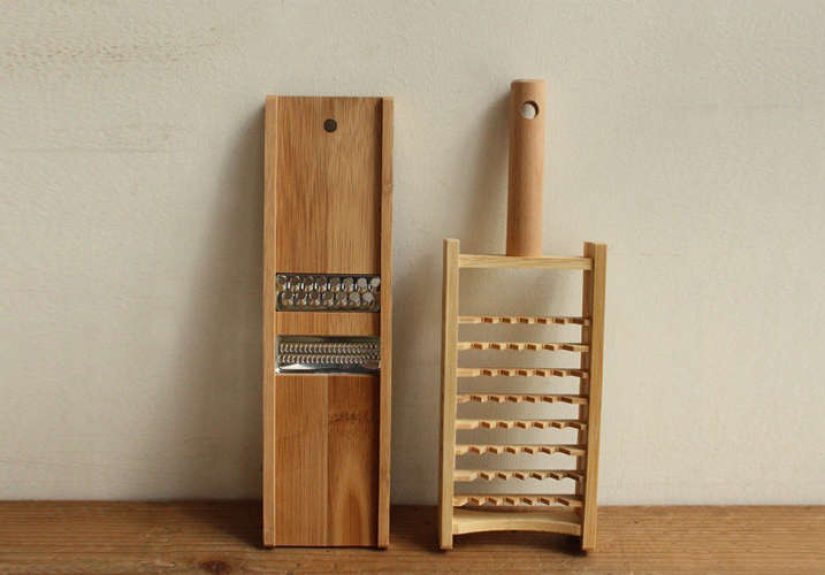
The slicer typically consists of a flat body fitted with one or more rows of exposed stainless steel teeth. As a vegetable moves across the blade, the teeth divide it into evenly sized strands. Some Japanese models include two blade sections, allowing the cook to choose between finer and wider strips.
Why uniform strips matter
Consistent cutting is not merely decorative. Pieces of similar thickness cook at approximately the same rate. When carrots, zucchini, or daikon are cut evenly, one strip is less likely to become limp while another remains stubbornly crunchy.
Uniform julienne vegetables also absorb dressings and sauces more evenly. Their increased surface area makes them especially useful in quick marinades, slaws, rice-paper rolls, noodle bowls, and fast stir-fries.
How it differs from a mandoline
A full-size mandoline can often make slices, julienne strips, waffle cuts, and other shapes. It may also offer adjustable thickness controls and interchangeable blades. A simple julienne slicer is more specialized. It is lighter, easier to store, and usually faster to clean.
The trade-off is versatility. A handheld julienne cutter will not replace every mandoline attachment, but it may be the better tool for cooks who mainly want vegetable matchsticks without turning dinner preparation into equipment assembly.
What Is a Bamboo Grater?
A bamboo grater is a traditional low-tech utensil used to break ingredients into fine shreds or moist pulp. Depending on its construction, the grating surface may be formed from sharpened bamboo teeth, textured natural fibers, or cutting points secured within a wooden frame.
Unlike a Western box grater, which usually produces separate shreds, a Japanese-style grater may create a softer, juicier texture. This makes it particularly useful for ingredients served as condiments or incorporated into dressings, sauces, marinades, soups, and noodle dishes.
Ingredients suited to bamboo grating
Daikon radish is a classic candidate. When finely grated, it becomes juicy and refreshing, making it a bright companion for grilled fish, tempura, noodles, and richer foods. Onion can be grated into marinades or dressings, where its flavor spreads more thoroughly than diced pieces.
Fresh ginger and garlic can also be reduced to a fine paste, although results vary according to the size and sharpness of the grating teeth. Stale bread may be rubbed over the surface to create homemade crumbs, while certain firm cheeses can be grated when only a modest quantity is needed.
Why bamboo feels different
Bamboo has a warmer, quieter character than stainless steel or plastic. It is lightweight in the hand and visually at home in kitchens that favor natural materials. Because bamboo is renewable and grows quickly, it also appeals to shoppers trying to reduce their dependence on heavily processed kitchen products.
That does not make every bamboo tool automatically sustainable. Durability, manufacturing quality, adhesives, finishes, packaging, and shipping all affect environmental impact. The most responsible utensil is usually one that performs well enough to be used for years rather than abandoned after three disappointing carrots.
Julienne Slicer and Bamboo Grater: Why the Pair Works
The two tools create distinctly different textures. The julienne slicer makes defined strands with visible shape and bite. The bamboo grater creates finer particles, pulp, or juicy shreds. Using both gives a cook more control over how vegetables behave in a finished dish.
Consider a simple noodle bowl. The slicer can prepare crisp carrot, cucumber, and daikon matchsticks. The grater can turn ginger, garlic, and onion into the base of a dressing. One tool builds structure; the other distributes flavor.
Compact tools for small kitchens
Both utensils are well suited to apartments, recreational vehicles, dorm-compatible cooking spaces, and kitchens with limited storage. They slip into a drawer, hang from a hook, and require no electrical outlet.
They are also convenient when preparing small quantities. A food processor may finish the job quickly, but washing its bowl, lid, blade, feed tube, and mysterious corner where carrot fragments hide can take longer than the cutting itself. A handheld slicer and grater can usually be rinsed and cleaned within minutes.
Useful for plant-forward cooking
Vegetables become more appealing when their texture changes. A whole raw carrot is worthy but not particularly exciting. Turn it into delicate strands, toss it with sesame oil, rice vinegar, scallions, and toasted seeds, and suddenly it has weekend plans.
Julienned vegetables can increase volume and crunch in salads, tacos, wraps, grain bowls, and sandwiches. Grated vegetables can enrich sauces, burger mixtures, curries, soups, fritters, and savory pancakes. These tools encourage cooks to use produce creatively rather than allowing it to conduct a slow retirement ceremony in the crisper drawer.
How to Use a Julienne Slicer Safely
A sharp slicer works efficiently because its teeth meet very little resistance. Unfortunately, those teeth do not distinguish between a carrot and a fingertip. Safety should therefore be treated as part of the technique, not as an optional accessory for nervous people.
Prepare a stable work area
Place a cutting board on a level counter. If the board slides, put a damp kitchen towel underneath it. Hold the slicer at the angle recommended by its maker, preferably over the board or a wide bowl that can catch the strips.
Wash and dry the vegetable before cutting. Excess water can make both the produce and the tool slippery. Trim the vegetable into a manageable length and create a flat starting surface when necessary.
Use a guard or cut-resistant glove
Use the supplied food holder whenever one is included. If the design has no guard, wear a properly fitting cut-resistant kitchen glove. A glove reduces risk, but it does not turn an exposed blade into a petting zoo. Maintain controlled movements and keep pressure directed toward the tool rather than sideways.
Stop slicing while a safe portion of the vegetable remains. Finish the final piece with a knife, save it for stock, or snack on it. No garnish is improved by a dramatic visit to urgent care.
Let the blade do the work
Move the vegetable with smooth, moderate strokes. Excessive force can cause the ingredient to twist, the slicer to shift, or the hand to travel farther than intended. If cutting requires heavy pressure, the blade may be dull, clogged, damaged, or unsuitable for that ingredient.
How to Use a Bamboo Grater
Set the grater on a stable work surface or hold it firmly over a shallow bowl. Work with small pieces that are easy to control. Move the ingredient over the textured area using short circular or back-and-forth motions, depending on the tooth pattern.
For ginger, begin with a peeled or thoroughly scrubbed piece. Grate only the quantity needed, then collect the pulp and juice with a small bamboo brush, wooden spatula, silicone scraper, or spoon. A dedicated brush can reach between the teeth without damaging them.
Adjust pressure for the desired texture
Gentle pressure tends to create a lighter, more textured result. Firmer pressure breaks the ingredient down more aggressively and releases additional liquid. When grating daikon for a topping, moderate pressure usually preserves a pleasant balance of pulp and juice.
With onion, work carefully because the released juices can be potent. Chilling the onion beforehand may reduce irritation, although it will not stop every tear. Sometimes dinner simply demands emotional honesty.
Best Foods to Prepare with These Tools
Carrots, daikon, and burdock root
Firm root vegetables are natural partners for a julienne slicer. Their dense structure produces defined strips that hold up well in salads, pickles, stir-fries, and soups. Burdock root can be sliced for kinpira-style preparations, while daikon and carrot strands make colorful quick pickles.
Cucumbers and zucchini
Cucumber strands work in cold noodle salads, sushi-inspired bowls, and crunchy garnishes. Remove the watery seed core when necessary to keep the finished dish from becoming diluted. Zucchini can be cut into short vegetable noodles, though it should be cooked briefly to prevent excessive softness.
Potatoes and sweet potatoes
Thin potato strips can become hash browns, shoestring fries, fritters, or crispy pancake edges. Rinse cut white potatoes when a recipe calls for removing surface starch, then dry them thoroughly before frying. Sweet potatoes are denser and may require more pressure, making a sharp blade and stable grip especially important.
Ginger, garlic, and onion
Finely grated aromatics distribute flavor throughout a recipe. Ginger pulp blends smoothly into dipping sauces, soups, cookies, marinades, and stir-fry sauces. Grated garlic disappears readily into vinaigrettes and compound butter, while grated onion can tenderize and flavor meat mixtures or enrich vegetable dressings.
Bread and firm cheese
A dry piece of bread can be turned into crumbs for toppings, meatballs, croquettes, and breaded foods. Firm cheese may also be grated in small amounts, although a bamboo surface will not necessarily produce the airy flakes associated with a sharp etched metal grater.
Cleaning and Maintenance
Clean both tools promptly after use. Vegetable fibers become more difficult to remove once they dry, especially around narrow blade openings and natural grating teeth.
Cleaning the julienne slicer
Rinse the slicer from the back of the blade whenever possible so trapped material moves away from the cutting teeth. Use warm water, mild dish soap, and a soft brush. Brush in the direction of the blades rather than scrubbing against them.
Do not wipe a sharp blade with an unprotected finger or push a sponge directly into the teeth. Check the manufacturer’s instructions before using a dishwasher, as heat and strong detergent may damage handles, finishes, or blade mounts.
Caring for the bamboo grater
Wash bamboo by hand with warm, soapy water. Avoid prolonged soaking because natural material may swell, split, or warp. Rinse thoroughly and allow the grater to dry completely in an open, well-ventilated position before storing it.
Do not seal a damp bamboo grater inside a drawer or container. Persistent odors, dark spots, cracking, loose teeth, or rough splinters indicate that the tool may need deeper cleaning or replacement. Food-contact utensils should be retired when they can no longer be cleaned effectively.
Advantages and Limitations
Main advantages
- Creates attractive, consistent vegetable textures quickly.
- Requires little storage space and no electricity.
- Handles small preparation jobs with minimal cleanup.
- Supports salads, stir-fries, garnishes, sauces, and Japanese-inspired dishes.
- Offers a tactile alternative to plastic-heavy countertop equipment.
Potential limitations
- Exposed blades require disciplined safety practices.
- Fixed teeth offer less size control than an adjustable mandoline.
- Bamboo should not be soaked or routinely placed in a dishwasher.
- Very hard, wide, or irregular produce may be difficult to process.
- Natural grating surfaces may produce less predictable results than precision metal teeth.
What to Look for When Buying
Examine the blade material and mounting before choosing a julienne slicer. Stainless steel resists corrosion and can retain a useful edge when properly maintained. The blade should sit securely without wobbling, gaps, or exposed fasteners that trap food.
A comfortable handle, stable body, and protective cover are also valuable. If a food guard is not included, add the cost of a cut-resistant glove to the purchase decision.
For a bamboo grater, inspect the surface for smooth edges, uniform teeth, solid construction, and a food-safe finish. Avoid products with splinters, strong chemical odors, visible glue residue, or poorly attached components.
Consider the foods you prepare most often. A narrow fine-cut slicer is useful for garnishes and delicate salads, while a wider julienne blade is better for stir-fries and substantial slaws. A fine bamboo grater suits ginger and garlic; a coarser surface is more practical for daikon, onion, bread, or cheese.
Kitchen Experiences with a Julienne Slicer and Bamboo Grater
The first lesson learned from using a julienne slicer is that speed is a side effect, not the proper objective. During an early attempt with carrots, it was tempting to move faster each time a neat orange strip appeared. The tool made the process feel almost automatic, which is precisely when attention became most important. Slowing down, using a glove, and stopping with a generous vegetable stub made the process safer without adding meaningful preparation time.
Carrots produced the most immediately satisfying result. They emerged as crisp, even strands that looked far more polished than hand-cut pieces. Tossed with rice vinegar, sesame oil, a little soy sauce, and toasted sesame seeds, they became a side dish in minutes. The same strips also worked in spring rolls because their uniform size made the rolls easier to assemble and bite through.
Cucumber required a slightly different approach. Passing the entire vegetable repeatedly over the blade released too much water and eventually reached the soft seed core. Better results came from slicing the firm outer sections and reserving the center for infused water or a quick snack. The finished cucumber strands stayed crisp and did not flood the dressing.
Zucchini was easy to cut but eager to become soft. Short strands worked better than long ones, and a very quick sauté preserved some bite. Treating the strips exactly like wheat pasta resulted in disappointment wearing a healthy costume. They were more successful mixed with regular noodles, where they added color and reduced the heaviness of the bowl.
The bamboo grater offered a slower and more tactile experience. Grating ginger released a fragrant, juicy pulp that blended smoothly into a dipping sauce. Some fibers remained on the surface, but a small brush collected most of the usable ginger without scraping the teeth aggressively. Cleaning immediately was essential; dried ginger fibers behaved as though they had signed a long-term lease.
Grated daikon delivered one of the best demonstrations of why texture matters. Chopped daikon can be sharply crunchy, but grated daikon becomes soft, juicy, and almost sauce-like. Served beside grilled fish, it provided freshness without hiding the main ingredient. A squeeze of citrus and a small amount of soy sauce were enough to turn it into a bright condiment.
Onion was effective but dramatic. Its grated pulp disappeared into a marinade and distributed sweetness throughout the mixture, yet the process produced stronger fumes than ordinary chopping. Working near an open window helped. So did remembering that a kitchen is allowed to contain both excellent food and one briefly miserable cook.
Homemade breadcrumbs were another pleasant surprise. A piece of dry bread moved easily across the coarse surface and produced an irregular crumb with more character than powdery packaged versions. The crumbs toasted well with olive oil and herbs and gave pasta a crisp finishing layer.
Over time, the pair proved most useful not for ambitious weekend projects but for ordinary weekday meals. Their small size encouraged frequent use. There was no machine to assemble and no collection of parts to wash. A carrot could become a salad garnish, ginger could become a sauce, and leftover bread could become a topping before impatience suggested ordering takeout.
The main practical lesson was simple: specialized manual tools earn their space when they make a recurring task noticeably easier. A julienne slicer is not a replacement for strong knife skills, and a bamboo grater is not the universal answer to every shredding job. Together, however, they handle a surprisingly broad range of small tasks with efficiency, control, and considerably less countertop commotion.
Conclusion
The julienne slicer and bamboo grater represent a practical style of kitchen design: simple materials, focused functions, and very little fuss. The slicer converts firm produce into consistent matchsticks, while the grater creates fine, flavorful textures from daikon, ginger, garlic, onion, bread, and other ingredients.
They are especially valuable for cooks who prepare salads, stir-fries, noodle bowls, quick pickles, Japanese-inspired meals, and vegetable-forward dishes. Their compact size also makes them appealing in kitchens where storage space is more precious than truffle oil.
Sharp blades and natural bamboo require thoughtful handling. Use a food guard or cut-resistant glove, clean the tools promptly, dry bamboo thoroughly, and replace any utensil that becomes damaged or difficult to sanitize. With those habits in place, this humble pair can make daily meal preparation faster, more attractive, and considerably more enjoyable.







 Close
Close