Table of Contents >> Show >> Hide
- The core idea: humors, balance, and a body that “reacts”
- Who practiced medicine in the Middle Ages and Renaissance?
- Everyday medieval medical practice: what treatments looked like
- Plague and public health: when medicine meets the city
- Renaissance medicine: what changed, and why it mattered
- So… was medieval and Renaissance medicine “bad”?
- Modern takeaways you can actually use
- Experiences: how to “feel” medieval and Renaissance medicine today (about )
- Conclusion
If you think medieval medicine was just “leeches + vibes,” you’re not totally wrong… but you’re also missing the plot.
Between roughly the 5th and 15th centuries (the Middle Ages) and the 14th through 17th centuries (the Renaissance/early modern period),
healers across Europe built a medical world that mixed inherited theory, hands-on craft, religious life, andeventuallysharp-eyed observation.
Some treatments were genuinely helpful. Some were spectacularly unhelpful. And a few were the historical equivalent of “Have you tried turning it off and on again?”
(Except the “it” was your blood volume.)
This guide walks through how medieval and Renaissance medicine actually worked day to daywho treated whom, what they believed, what they did,
and how big developments like universities, anatomy, printing, and public health responses to plague nudged medicine toward something we’d recognize today.
Along the way: barber-surgeons, apothecary jars, quarantine rules, and a reminder that medical progress is rarely a straight line. It’s more of a zigzag
with occasional screaming.
The core idea: humors, balance, and a body that “reacts”
Humoral theory, explained like a normal person
For much of medieval and Renaissance Europe, the intellectual backbone of medicine was humoral theory: health depended on the balance of four bodily fluids,
or “humors” (blood, phlegm, yellow bile, black bile). If you were sick, it meant something was out of balancetoo hot, too cold, too wet, too dryoften linked
to seasons, diet, emotions, and environment. Treatment, then, wasn’t “kill the germ” (germ theory is centuries away). It was “restore balance.”
That might sound bizarre, but there’s a logic to it: it’s an early systems model. The body is an interconnected whole. Lifestyle matters. Sleep matters. Food matters.
Stress matters. Even air quality matters. Medieval physicians didn’t have microscopes or antibiotics, but they did have a framework that tried to connect symptoms
to the person’s overall conditionand it influenced medical practice for a very long time.
Diagnosis before lab tests: looking, listening, and… staring at urine
Without blood panels or imaging, diagnosis leaned on detailed observation: how you looked, your pulse, your breathing, your pain, your appetite,
and especially your urine (uroscopy). Color, cloudiness, sedimentthese were read as clues to internal imbalance. It was part medical reasoning, part pattern matching,
and part “this is what my teacher said a healthy urine looks like.” While modern medicine has moved on, the underlying impulsegather data, compare patterns,
and predict outcomeswas very real.
Who practiced medicine in the Middle Ages and Renaissance?
University-trained physicians: theory-heavy, status-heavy
By the later Middle Ages and into the Renaissance, European universities increasingly trained physicians in scholarly medicine: reading authoritative texts,
learning humoral theory, and debating causes and treatments. These doctors were often associated with elite patients or civic institutions. They tended to diagnose,
prescribe, and advise on regimendiet, rest, exercise, and environmentwhile leaving hands-on procedures to other practitioners.
Monastic healers and manuscript medicine: prayer, plants, and practicality
Earlier in the medieval period, monasteries and religious communities played a major role in preserving and producing medical texts. Many manuscripts combined
natural medicine (rooted in Greco-Roman ideas), religious healing, and what we’d call “magical” elementscharms, amulets, and prayersbecause medieval life
didn’t put hard walls between physical and spiritual health. If you were sick, it could be a bodily imbalance, a spiritual crisis, bad air, bad luck, or some
combination of the above. (The medieval worldview: “Why choose one explanation when you can collect the whole set?”)
Apothecaries: the original pharmacy counter
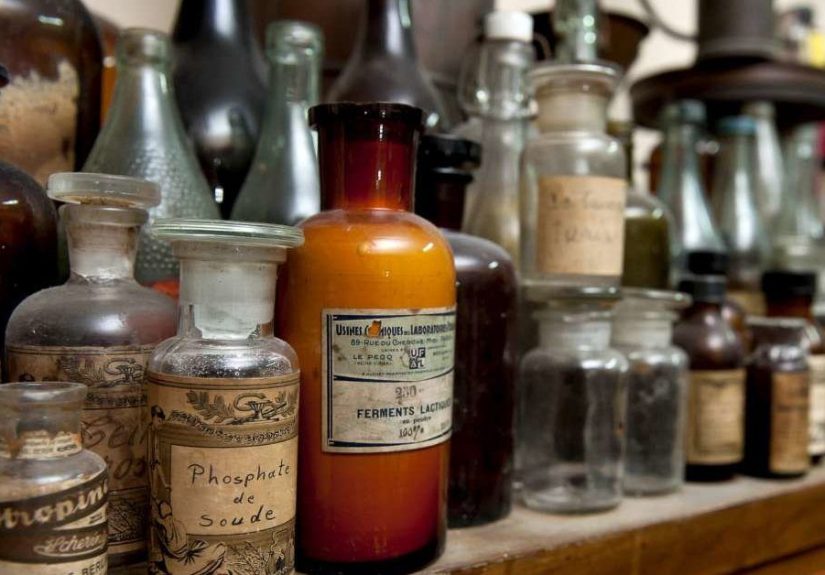
Apothecaries were specialists in making and selling medicinesherbal mixtures, powders, syrups, ointmentsoften stored in distinctive glazed jars. Their shops
were a blend of kitchen, laboratory, and retail business. Ingredients could include familiar herbs and spices, plus animal products and minerals.
Apothecaries ground, mixed, strained, and prepared compounds using mortars, pestles, and recipes that ranged from sensible to wildly ambitious.
Importantly, apothecaries helped standardize access to remedies. Even if the underlying theory was wrong, the practice of compoundingmeasuring, preserving,
combining ingredients, and repeating preparationshelped build a culture of “repeatable” medicine.
Barber-surgeons: haircuts, bloodletting, and the sharp end of healthcare
Yes, your “surgeon” might also trim your beard. Barber-surgeons handled procedures that involved blood and blades: bloodletting, lancing abscesses,
pulling teeth, treating wounds, and sometimes amputations. They were practical craftspeople with hands-on skills, often trained by apprenticeship rather than
university lecture. In many places, this created a split: physicians (diagnose and prescribe) vs. surgeons (do the messy stuff).
This division mattered. It shaped whose knowledge counted as “real medicine”and it set up the Renaissance tension between learning from old authorities
and learning from what happens when you actually cut into the human body.
Everyday medieval medical practice: what treatments looked like
Regimen and diet: the least dramatic, most common “prescription”
The most typical advice was surprisingly familiar: eat differently, sleep more, move your body, avoid extremes, and change your environment if possible.
Medieval medicine emphasized “regimen” because it fit humoral thinking: food and habits were believed to alter the body’s qualities (hot/cold, wet/dry).
A physician might recommend lighter foods, warming spices, rest, fresh air, or avoiding certain weatherdepending on your perceived imbalance.
Bloodletting, cupping, and leeches: balance by subtraction
If illness was excess, then removing something made senseat least within the theory. Bloodletting (venesection) was used to reduce “too much blood”
or to redirect humors. Cupping and leeches worked on a similar logic. Sometimes it may have eased certain conditions by lowering blood pressure or reducing
localized congestion, but it was also frequently overused. Picture a world where “Have you tried losing a pint?” is a standard medical suggestion.
Herbal remedies and “kitchen medicine”
Herbs and spices were centralpartly because they were accessible, and partly because they were thought to carry properties (warming, cooling, drying).
Fennel, for example, had a long reputation as a dietary and medicinal herb, appearing in medieval contexts both as food and as a remedy-related plant.
Some herbs likely offered real benefits (anti-inflammatory effects, mild pain relief, digestive help), though dosage and purity were unpredictable.
The line between food and medicine was thin: broths, wines, vinegars, honey-based preparations, and spice blends could all be therapeutic tools.
If nothing else, this made care continuoussomething you could do daily, not only when a professional was available.
Managing pain and doing surgery without modern anesthesia
Surgery existed, but it was limited by pain, infection risk, and bleeding control. Pain relief might involve alcohol, opiates, sedating herbs,
and topical preparationsuseful sometimes, unreliable often. Wound care relied on cleaning, dressings, ointments, and cautery (burning tissue to stop bleeding).
And because infection wasn’t understood as microbial, explanations for post-surgical complications often blamed “bad humors,” “corruption,” or poor air.
Plague and public health: when medicine meets the city
Plague as a stress test for the entire medical system
Epidemicsespecially plagueforced communities to think beyond individual treatment. When illness spreads through households and markets,
you need rules, logistics, and enforcement. Even without germ theory, people recognized patterns: proximity mattered, crowded spaces mattered,
trade routes mattered, and some places seemed “unsafe.”
Quarantine: forty days that still echoes
One of the biggest institutional developments was quarantine. In maritime cities, ships arriving from infected ports could be required to wait before landing.
The famous “40 days” concept (the origin of the word quarantine) reflected a practical attempt to separate potential infection from the general population.
It wasn’t perfect, and it could be harsh and politically charged, but it represents a key step toward organized public health: policies designed to protect
communities, not just treat individuals.
Renaissance medicine: what changed, and why it mattered
Humanism and a new attitude toward texts
Renaissance scholars didn’t discard older authorities overnight. Galen and Hippocrates remained influential.
But humanism encouraged closer reading, comparison of manuscripts, and skepticism about errors introduced through centuries of copying.
That mattered because medical education relied on texts; improving texts meant (in theory) improving practice.
Anatomy and dissection: the body becomes a primary source
The Renaissance didn’t invent dissection, but it expanded and formalized it in certain university settings, especially in parts of Italy.
Dissection shifted anatomy from secondhand description to direct observation. This was a big deal: once you decide the body itself can correct the book,
you’ve changed the rules of knowledge.
Andreas Vesalius’s De humani corporis fabrica (1543) is often used as a symbol of this shiftdetailed anatomical illustration paired with a strong emphasis
on observation. It helped reframe anatomy as something you learn with your eyes and hands, not only your memory.
Printing and illustration: medical knowledge scales up
Printing made medical ideas easier to distribute and standardize. High-quality anatomical images and widely circulated texts helped create a shared reference
point for students and practitioners. Think of it as the Renaissance version of “everyone’s using the same textbook now,” which is a quiet revolution
if you’re trying to build a profession.
Paracelsus and chemical medicine: a noisy alternative to humors
Renaissance medicine wasn’t a single road; it was a busy intersection. Paracelsus challenged traditional Galenic medicine and promoted chemical approaches:
minerals, compounds, and the idea that dose and substance could target disease in a more specific way. He also leaned into the claim that medicine should be
grounded in experience and nature rather than inherited authority alone.
Not all of Paracelsus’s ideas aged well, but the broader movement toward iatrochemistry (chemical medicine) helped expand the toolkit of medical explanation
and treatmentan important step in the long transition toward pharmacology.
Practical surgery grows up: Ambroise Paré and the power of “try something else”
The Renaissance also brought more visible surgical innovation. Ambroise Paré is frequently cited for moving away from brutal standard practices when evidence
(and outcomes) suggested better options. In accounts of treating gunshot wounds, for example, Paré is associated with abandoning boiling-oil cauterization
in favor of gentler dressings when circumstances forced a changeand noticing that patients did better. He’s also linked with using ligatures (tying off vessels)
rather than cautery for bleeding control in some settings.
This is an early and imperfect form of something modern: observing outcomes and adjusting technique. It’s not randomized clinical trials,
but it is medicine inching toward “show me what works.”
So… was medieval and Renaissance medicine “bad”?
What it got right
- Observation mattered. Practitioners watched symptoms over time and tried to connect them to patterns.
- Lifestyle medicine existed. Diet, sleep, stress, and environment were considered legitimate health factors.
- Pharmacy became a craft. Apothecaries helped create repeatable preparation of remediesan ancestor of modern compounding and dispensing.
- Public health appeared. Quarantine and civic measures reflect an early understanding that policy can shape disease spread.
- Anatomy advanced. Dissection and illustration improved knowledge of structure, which later supports better surgery and physiology.
What it got wrong (or at least overconfident about)
- Humoral theory wasn’t germ theory. Many “balances” were metaphorical rather than mechanistic.
- Overuse of bloodletting and purging. Some patients were weakened by the very treatments meant to help.
- Explanations mixed with superstition. Astrology, charms, and religious interpretations could steer care in unhelpful directions.
- Infection control was limited. Without microbial understanding, surgery and childbirth remained dangerously risky.
Modern takeaways you can actually use
No, you should not request leeches as a personality trait. But the medieval-to-Renaissance transition offers real lessons:
medicine improves when it respects lived experience, measures outcomes, shares knowledge widely, and builds institutions that protect communities.
The Renaissance didn’t “solve” medicineit widened the pipeline from observation to teaching to practice.
Experiences: how to “feel” medieval and Renaissance medicine today (about )
If you want to understand medieval and Renaissance medicine, reading about it helpsbut experiencing its material culture hits differently.
Start with the objects. Stand in front of an apothecary jar in a museum collection and you suddenly realize healthcare was also storage, supply chains,
and branding. Those glazed vessels weren’t just pretty ceramics; they were the visible infrastructure of early pharmacyingredients cataloged, preserved,
and sold in a world where your “prescription” might be a spice blend, a syrup, and a strong suggestion to avoid damp weather.
Next, try the manuscriptsdigitally, if that’s easiest. Medieval medical pages often look like a group project where everyone showed up with a different idea:
a bit of humoral theory, a bit of prayer, a bit of herb lore, and then a charm that reads like a spell because, frankly, it is. The experience is humbling.
You see people doing their best with the tools they have, trying to make illness legible. And you realize that “evidence” isn’t just data;
it’s also whatever your culture agrees counts as proof.
Then follow the thread into the Renaissance: anatomy books, diagrams, and the way illustration becomes an argument. Looking at detailed anatomical images
is like watching medicine discover a new superpower: the ability to show. You can feel the shift from “trust the authority” to “trust your eyes,”
even if the conclusions are still tangled in older theory. It’s the intellectual version of switching from a blurry photo to HDsuddenly, people notice
details that were always there.
For a more human experience, imagine the soundscape and the social setting. In a busy town, the barber-surgeon’s shop is not a quiet clinic.
It’s a place of gossip, craft, sharp tools, and practical problem-solvinghaircut in the front, bloodletting in the back, and someone in the corner
wondering why the “doctor” smells faintly like onions and iron. Medicine is public, visible, and deeply social.
That’s not romantic; it’s reality. Care happens where people live and work, shaped by class, gender, money, and access.
Finally, reflect on plague measures and quarantine rules with modern eyes. There’s an eerie familiarity in the idea that a city might restrict movement,
close spaces, or enforce waiting periods to protect public health. The experience isn’t about praising medieval policy (it could be brutal and unequal);
it’s about recognizing that communities have long tried to balance risk, economics, and compassionsometimes wisely, sometimes poorly.
In that sense, “medieval medicine” isn’t just a chapter in a textbook. It’s a mirror that shows how health is always a mix of biology, belief, and bureaucracy.
Conclusion
Medieval and Renaissance medicine wasn’t a simple march from “ignorant” to “enlightened.” It was a layered ecosystem:
monks preserving texts, apothecaries compounding remedies, barber-surgeons doing hands-on procedures, and university physicians debating theory
all under the pressure of epidemics that demanded public action. The Renaissance accelerated change by elevating observation, anatomy,
and the spread of knowledge through print. Some ideas were wrong. Some practices were surprisingly sophisticated. And many developments
from quarantine to anatomical studybecame stepping-stones to modern clinical and public health thinking.