Table of Contents >> Show >> Hide
- What Is Red Light Therapy, Exactly?
- Can Red Light Therapy Help Eczema?
- Red Light Therapy vs. Phototherapy for Eczema: Do Not Confuse the Two
- Is Red Light Therapy Safe for Eczema?
- What to Expect Before, During, and After Treatment
- How Soon Might You See Results?
- Should You Try an At-Home Red Light Device?
- Who Might Be a Reasonable Candidate?
- Questions to Ask Your Dermatologist
- The Bottom Line
- Experiences With Red Light Therapy for Eczema: What Real Life Often Feels Like
- SEO Tags
If red light therapy sounds like something borrowed from a spaceship and dropped into a skincare aisle, that is because it kind of is. These glowing masks, panels, and in-office treatments have become the wellness world’s favorite shiny object. And if you have eczema, it is completely reasonable to wonder whether all that red glow might calm the itch, settle the inflammation, and finally convince your skin to stop acting like it is in a long-term feud with the weather.
The honest answer is a little more interesting than a simple yes or no. Red light therapy may help some people with eczema symptoms, especially as a supportive treatment, but it is not the standard treatment doctors usually reach for first. In eczema care, dermatologist-guided phototherapy usually means ultraviolet light, especially narrowband UVB, not the red LED masks crowding social media. That distinction matters a lot.
So before you spend serious money on a glowing gadget that looks like a superhero helmet for tired skin, here is what to know about red light therapy for eczema, how safe it appears to be, what results are realistic, and what a smart trial actually looks like.
What Is Red Light Therapy, Exactly?
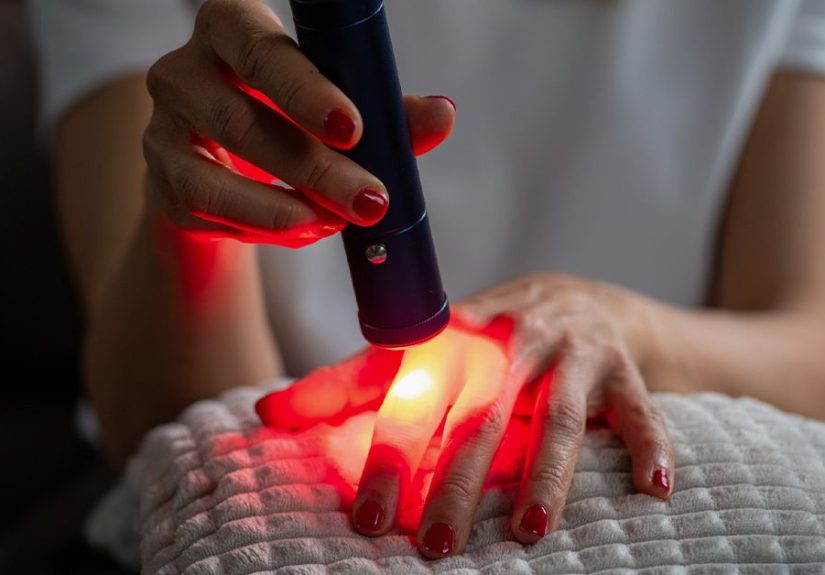
Red light therapy is a form of light-based treatment that uses visible red light, and sometimes near-infrared light, to affect cells in the skin. You may also hear it called photobiomodulation, low-level light therapy, or low-level laser therapy. The basic idea is that specific wavelengths of light may encourage skin repair, reduce inflammation, and support healing.
Unlike ultraviolet light, red light is not the type associated with tanning or the skin-cancer risk linked to UV exposure. That is one reason red light therapy gets a lot of attention: it sounds gentler, less intimidating, and much more “spa day” than “medical treatment plan.”
But gentle does not automatically mean proven for every skin problem. Red light therapy has been studied more for concerns like skin aging, acne, wound healing, and hair regrowth than for eczema itself. That does not make it useless. It just means the hype is running a little faster than the eczema-specific evidence.
Can Red Light Therapy Help Eczema?
Possibly, but expectations need to wear sensible shoes.
Eczema, especially atopic dermatitis, is driven by a messy mix of skin-barrier damage, immune-system overreaction, itch, inflammation, and trigger exposure. Red light therapy may theoretically help because it is thought to calm some inflammatory processes and support skin recovery. Some early studies and reviews of non-UV light therapies suggest there may be benefits for inflammatory skin disease, including atopic dermatitis.
That said, the research is still limited and uneven. Different studies use different wavelengths, devices, treatment schedules, and patient groups. Some studies look at blue light, some at mixed light, and only a smaller slice of the literature focuses on low-level red or near-infrared therapy for eczema. In other words, this is not a clean, settled science story where dermatologists everywhere are saying, “Yes, this is absolutely the eczema game-changer.”
The better way to think about red light therapy is as a possible add-on, not a replacement for proven eczema care. Moisturizers, trigger reduction, prescription creams or ointments, and doctor-guided treatment plans still do the heavy lifting. Red light may be a sidekick. It is not the superhero cape.
Red Light Therapy vs. Phototherapy for Eczema: Do Not Confuse the Two
This is the part many people miss. In medical eczema care, phototherapy usually refers to supervised treatment with ultraviolet light, often narrowband UVB. That approach has been part of eczema management for years and appears in dermatology guidance for selected patients, especially when topical treatments are not enough or when eczema is widespread.
Red light therapy is different. It uses non-UV visible red light, sometimes paired with near-infrared wavelengths. That means it may have a different safety profile, but it also means it does not carry the same level of eczema-specific clinical acceptance as medical UV phototherapy.
Why does this matter? Because a lot of marketing blurs the line. A person hears “light therapy helps eczema,” buys a red LED mask, and assumes that is the same thing as dermatologist-prescribed phototherapy. It is not. One is an established medical treatment option for certain eczema cases. The other is an emerging category with promising ideas, limited eczema-specific evidence, and wildly variable devices.
Is Red Light Therapy Safe for Eczema?
For most people, short-term red light therapy appears to be fairly well tolerated when used correctly. Common side effects tend to be mild, such as temporary redness, irritation, warmth, or dryness. There is not strong evidence that red light carries the same skin-cancer concerns as ultraviolet light.
Still, “generally safe” is not the same as “perfect for everyone.” Eczema skin is already reactive, picky, and occasionally dramatic. If you have ever had your face get offended by a new pillowcase, you know the vibe.
People Who Should Be Extra Careful
You should be cautious and talk with a dermatologist first if any of these apply:
You have a light-sensitive condition. Disorders such as lupus or other photosensitive conditions can make light-based treatments a bad idea.
You take photosensitizing medications. Some antibiotics and other drugs can make the skin more reactive to light.
You have darker skin and are prone to hyperpigmentation. Visible light, including red light, may trigger dark spots more easily in some people with deeper skin tones.
Your eczema is in a hot, angry, actively flaring stage. When the skin barrier is severely compromised, even a gentle device may feel like too much. Sometimes calmer skin responds better than skin that is already waving a red flag.
You plan to use a face mask device near your eyes. Eye protection matters. Always follow device instructions carefully.
What About Long-Term Safety?
This is where the fine print gets louder. Long-term effects are not fully known. Experts generally describe short-term use as low risk, but the ideal dose, treatment schedule, and long-term safety for different skin conditions still need better study. That is one more reason to avoid the “more is more” mindset. This is not a toaster. You do not get bonus points for extra minutes.
What to Expect Before, During, and After Treatment
Before Your First Session
First, make sure you actually have eczema. That sounds obvious, but skin conditions love disguises. Contact dermatitis, seborrheic dermatitis, psoriasis, fungal rashes, and even some skin cancers can confuse the picture. A dermatologist can confirm the diagnosis and help you decide whether red light is worth trying at all.
It is also smart to review your full skincare routine and medication list. If you use retinoids, exfoliating acids, benzoyl peroxide, prescription topicals, or acne products, your clinician may suggest adjusting timing so your skin is not dealing with unnecessary irritation all at once.
Many people also benefit from doing a cautious test area first rather than committing their whole face, neck, or body to the cause on day one.
During Treatment
An in-office red light session is usually simple and noninvasive. At home, the experience depends on the device. You may sit in front of a panel, wear a mask, or use a handheld unit. The skin may feel warm, but treatment should not feel like burning, stinging, or punishment for your sins.
Session length and treatment frequency vary by device and protocol. That is important because one of the biggest problems in red light therapy is inconsistency. Different products have different power levels, instructions, and intended uses. In practical terms, that means you should follow the device directions closely instead of copying a random influencer’s “I use it every night for however long I feel like it” routine.
After Treatment
There is usually little to no downtime. Most people can return to normal activities right away. Skin may look slightly pink or feel a little dry for a short time. A bland moisturizer afterward is often a good idea, especially if your eczema skin tends to interpret any new experience as betrayal.
Just do not expect instant transformation. Red light therapy is more of a slow-cooker than a microwave. When people notice benefits, they usually come gradually over consistent use, not after one glorious glow session.
How Soon Might You See Results?
Here is the realistic version: if red light therapy helps your eczema, the changes are likely to be subtle at first. You might notice less visible redness, fewer rough patches, slightly better comfort, or easier recovery after minor irritation. Some people may also feel that their skin looks calmer overall.
What you probably should not expect is a total stop to eczema flares, a cure for itching forever, or freedom from moisturizers and prescription treatments. Eczema is chronic, and even treatments that work well usually help manage it rather than erase it.
If a device promises dramatic overnight healing, that is your cue to squint suspiciously at the marketing copy and slowly back away.
Should You Try an At-Home Red Light Device?
Maybe, but only with a practical checklist.
Look for These Features
FDA-cleared labeling. This is a helpful safety signal, but remember that FDA-cleared does not mean miracle-level effectiveness, and it does not automatically mean the device is specifically cleared for eczema.
Clear instructions. Good devices tell you how far away to hold the unit, how often to use it, and whether eye protection is needed.
A realistic return policy. Because results vary, a return window is your skin-budget peace treaty.
A sane treatment goal. If the product claims to fix aging, acne, hair loss, muscle recovery, sadness, taxes, and your neighbor’s attitude, maybe keep shopping.
At-Home Reality Check
Home devices are often less powerful and less precisely controlled than professional treatments. That does not make them worthless, but it does mean results can be slower, smaller, or harder to predict. If your eczema is moderate to severe, covers large areas, or keeps flaring despite prescription care, you may be better served by asking a dermatologist about proven treatments rather than putting all your hope in a mask that looks like robot opera.
Who Might Be a Reasonable Candidate?
You may be a reasonable candidate for a cautious trial of red light therapy if your eczema is relatively stable, you are already using a good basic treatment plan, and you want to explore an additional noninvasive option with your dermatologist’s guidance.
It may be less suitable if your eczema is severe, infected, rapidly worsening, or poorly diagnosed; if you have a history of photosensitivity; if you are taking medications that increase light sensitivity; or if you tend to develop pigment changes easily.
Questions to Ask Your Dermatologist
If you are considering red light therapy for eczema, ask:
Is my rash definitely eczema?
Would red light therapy make sense as an add-on, or is there a more evidence-based option for me?
Is my current medication routine compatible with light-based treatment?
Would medical phototherapy be more appropriate than an at-home red light device?
How should I protect my eyes and skin barrier?
What signs mean I should stop treatment?
The Bottom Line
Red light therapy for eczema is not nonsense, but it is not a slam dunk either. It sits in the interesting middle: biologically plausible, somewhat promising, usually low risk in the short term, but still lacking the kind of eczema-specific evidence that makes dermatologists call it standard care.
If you are curious, the best approach is not blind optimism or total dismissal. It is a measured trial with realistic expectations, careful skin monitoring, and a dermatologist involved when needed. That way, if red light becomes a useful part of your eczema routine, great. And if it does not, you will find out without turning your already-sensitive skin into an unwilling science fair project.
Experiences With Red Light Therapy for Eczema: What Real Life Often Feels Like
People’s experiences with red light therapy for eczema tend to fall into a few familiar patterns, and none of them look quite as glamorous as the advertisements. A common story starts with hope. Someone has tried the moisturizers, the fragrance-free everything, the “maybe it is dairy” phase, the “maybe it is stress” phase, and the “maybe my skin simply enjoys chaos” phase. Red light therapy starts to sound appealing because it seems noninvasive, modern, and calmer than jumping straight to stronger medications.
For some people with mild, stable eczema, the first impression is that red light feels easy. There is no sharp pain, no peeling, and no dramatic downtime. They may notice that skin looks a little less angry after a few weeks, especially in small facial areas or places where inflammation tends to linger. Often the best feedback is modest: less visible redness, a slightly smoother texture, or skin that bounces back faster after irritation. It is rarely the kind of result that makes someone shout from a rooftop, but it may be enough to make them keep going.
Another common experience is frustration with how slow the process feels. Red light therapy usually requires consistency, and eczema patients are already tired of routines that sound suspiciously like part-time jobs. Moisturize twice a day. Avoid fragrance. Use the prescription at the right time. Track triggers. Try not to scratch. Sleep well. Manage stress. Drink water. Breathe deeply. At some point, a person starts wondering whether their skin is expecting a full-time personal assistant. Adding light therapy can help, but it can also feel like one more thing to remember, charge, clean, store, and explain to confused family members.
There is also the group that overdoes it at first because they assume gentler means unlimited. Then the skin gets dry, irritated, or weirdly tight, and the excitement cools down fast. Eczema skin usually responds better to patience than enthusiasm. People often learn that starting slowly, protecting the eyes, and watching for heat or irritation matters more than chasing maximum exposure. The lesson is not dramatic, but it is useful: if your skin likes calm, do not turn treatment into a power contest.
Some people realize the bigger issue is not the light at all. It is the diagnosis, the triggers, or the treatment plan underneath everything. A person may buy a red light mask for what they think is facial eczema, only to later learn that part of the problem is contact dermatitis from hair products, or irritation from overusing active skincare, or even rosacea mixed with eczema. In those cases, the red light device becomes an expensive reminder that no technology beats getting the basics right. The skin barrier, boring as it sounds, is still the main character.
Then there are people who try red light therapy after hearing that “light therapy helps eczema,” only to discover that dermatologist-supervised UV phototherapy is a different category entirely and may make more sense for moderate to severe disease. That realization can actually be empowering. It shifts the question from “Which glowing gadget should I buy?” to “Which treatment has the best evidence for my kind of eczema?” That is usually a much better question.
In the end, the most realistic experience is this: red light therapy may become a helpful support for some people, but the wins are usually gradual, partial, and tied to a solid eczema routine already in place. The people happiest with it are often the ones who approach it with curiosity rather than desperation. They do not expect a cure. They expect a tool. And for a chronic condition like eczema, a useful tool is nothing to sneeze at.