
Table of Contents >> Show >> Hide
- Why Baking Soda Works So Well on Dirty Pans
- What You Need Before You Start
- How to Clean a Pan with Baking Soda: 10 Steps
- Step 1: Let the Pan Cool Completely
- Step 2: Remove Loose Food and Grease
- Step 3: Rinse with Warm Water
- Step 4: Make a Baking Soda Paste
- Step 5: Spread the Paste Over Stains and Burnt Areas
- Step 6: Let It Sit
- Step 7: Scrub Gently with the Right Tool
- Step 8: Try the Baking Soda Boil Method for Burnt Food
- Step 9: Wash with Dish Soap and Rinse Thoroughly
- Step 10: Dry Immediately and Finish Properly
- How to Clean Different Types of Pans with Baking Soda
- Baking Soda and Vinegar: Should You Use Them Together?
- Common Mistakes to Avoid
- Real-Life Experience: What Actually Works Best
- Conclusion
Note: Always check your cookware manufacturer’s care instructions before cleaning. Baking soda is gentle compared with many commercial cleaners, but the wrong scrubber can still turn a beloved pan into a kitchen tragedy with handles.
Why Baking Soda Works So Well on Dirty Pans
A stained, greasy, or slightly dramatic pan can make dinner feel like a negotiation. One minute you are searing chicken like a confident home chef, and the next minute your skillet looks like it has been through a tiny barbecue apocalypse. Fortunately, baking soda is one of the simplest and safest household helpers for cleaning pans, removing burnt food, and loosening greasy residue without filling your kitchen with harsh fumes.
Baking soda, also known as sodium bicarbonate, works because it is mildly abrasive and alkaline. That means it can help lift stuck-on food, neutralize some acidic messes, and scrub away grime without being as aggressive as steel wool or heavy-duty chemical cleaners. Used correctly, it can help clean stainless steel pans, baking sheets, enamel cookware, and even nonstick pans with a gentler approach. The magic is not actually magic, of course, but when a crusty pan wipes clean after a baking soda soak, you are allowed to call it wizardry under your breath.
The key is matching the method to the pan. Stainless steel can usually handle a stronger scrub than nonstick. Enameled cast iron prefers patience and soft tools. Cast iron and carbon steel need quick drying and a thin layer of oil afterward. Nonstick needs the cleaning equivalent of a lullaby: soft sponge, light pressure, no metal tools, and absolutely no revenge-scrubbing.
What You Need Before You Start
You do not need a cleaning closet that looks like a science lab. For most baking soda pan-cleaning methods, gather baking soda, warm water, mild dish soap, a soft sponge, a nylon scrub brush or plastic scraper, a microfiber towel, and optional white vinegar or lemon juice for tougher stains. For stainless steel only, some people use aluminum foil as a scrubber, but avoid that on nonstick, enamel, cast iron seasoning, or delicate finishes.
Quick Safety and Cookware Rules
Let the pan cool before cleaning. Dropping cold water into a very hot pan can cause warping, especially with thinner cookware. Avoid abrasive pads on nonstick surfaces. Do not soak cast iron or carbon steel for long periods because moisture can invite rust. For enameled cookware, use soft sponges or nylon tools instead of metal scrubbers. When in doubt, treat the pan like it has feelings. It probably does not, but your wallet does.
How to Clean a Pan with Baking Soda: 10 Steps
Step 1: Let the Pan Cool Completely
Before you clean a burnt pan with baking soda, let it cool until it is safe to touch. This protects your hands and helps prevent thermal shock. A pan that goes from screaming hot to cold water too quickly may warp or lose its flat cooking surface. That is especially annoying if you use an electric or glass cooktop, where a flat bottom matters.
Step 2: Remove Loose Food and Grease
Scrape out loose crumbs, burnt bits, and leftover food with a wooden spoon, silicone spatula, or plastic scraper. If there is excess grease, wipe it out with a paper towel and throw it in the trash. Do not pour grease down the sink unless you enjoy future plumbing problems and the slow, expensive sadness that comes with them.
Step 3: Rinse with Warm Water
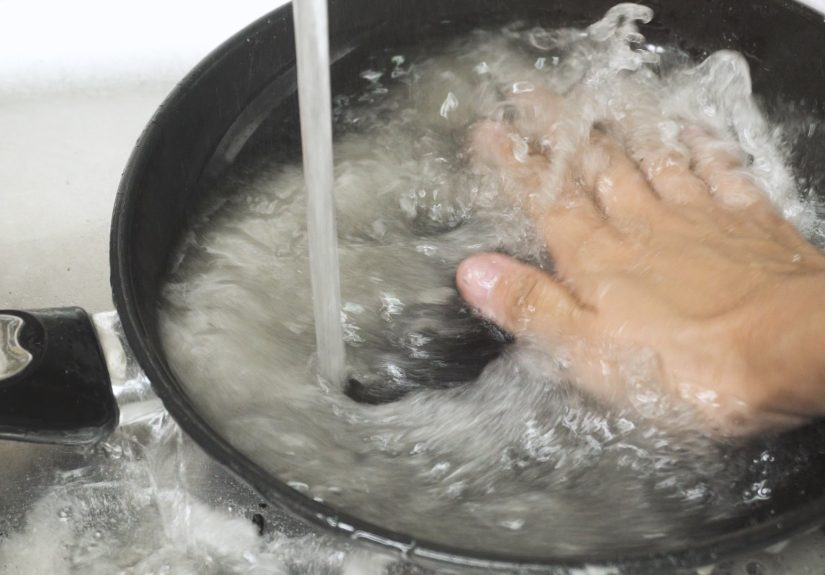
Run warm water over the pan to soften the first layer of residue. For light messes, warm water and dish soap may already remove most of the problem. Baking soda should be your next move when regular washing leaves behind stains, cooked-on oil, or stubborn food that clings like it signed a lease.
Step 4: Make a Baking Soda Paste
Mix three parts baking soda with one part water until it forms a spreadable paste. The texture should be similar to frosting, except much less delicious and definitely not for cupcakes. For a small skillet, start with three tablespoons of baking soda and one tablespoon of water. For a large pan or baking sheet, increase the amount as needed.
Step 5: Spread the Paste Over Stains and Burnt Areas
Cover the stained or burnt areas with a generous layer of baking soda paste. Focus on brown grease marks, blackened spots, and cloudy residue. If the bottom of the pan is stained, place the pan upside down on a towel and apply the paste to the exterior. This is useful for stainless steel and aluminum exteriors, but be careful with painted, coated, or decorative finishes.
Step 6: Let It Sit
Give the paste time to work. For light residue, 10 to 15 minutes may be enough. For baked-on grease, wait 30 minutes. For a badly scorched pan, let the paste sit for several hours or overnight. Time does some of the scrubbing for you, which is ideal because most of us did not put “argue with cookware” on the evening schedule.
Step 7: Scrub Gently with the Right Tool
Use a soft sponge for nonstick pans, enamel cookware, and delicate surfaces. Use a nylon scrub brush or non-scratch pad for stainless steel. Scrub in circles and apply steady, moderate pressure. If the paste dries out, add a few drops of water to reactivate it. Do not use steel wool on nonstick or enamel surfaces because it can scratch or permanently damage the finish.
Step 8: Try the Baking Soda Boil Method for Burnt Food
If paste alone does not remove the mess, add enough water to cover the burnt area and stir in two to four tablespoons of baking soda. Bring the water to a gentle simmer for a few minutes, then turn off the heat and let the pan cool. The warm alkaline solution helps loosen cooked-on food, making it easier to lift with a plastic scraper or sponge. This method is especially helpful for stainless steel and enameled cast iron, but avoid long boiling sessions in nonstick pans unless the manufacturer allows it.
Step 9: Wash with Dish Soap and Rinse Thoroughly
After the baking soda treatment, wash the pan with warm water and mild dish soap. Rinse well so no powdery residue remains. Leftover baking soda can leave a chalky film, which is harmless but not exactly the shiny “before-and-after” moment you were promised by your inner cleaning influencer.
Step 10: Dry Immediately and Finish Properly
Dry the pan with a clean towel right away. Stainless steel can develop water spots if left wet. Cast iron and carbon steel should be dried thoroughly, then rubbed with a very thin layer of cooking oil to protect the seasoning and prevent rust. Nonstick pans should be stored carefully so other cookware does not scratch the surface. A pan protector, towel, or soft cloth between stacked pans can help.
How to Clean Different Types of Pans with Baking Soda
Stainless Steel Pans
Stainless steel is the most forgiving pan type for baking soda cleaning. Use a paste for everyday stains or the boil method for burnt-on food. For rainbow discoloration or white mineral marks, vinegar may help, but do not mix every cleaner in your kitchen like you are auditioning for a chemistry show. Use one method, rinse, then try another if needed.
Nonstick Pans
Nonstick pans need gentle cleaning. Make a soft paste with baking soda and water, spread it over the residue, wait 10 to 15 minutes, and wipe with a soft sponge. Avoid aluminum foil, steel wool, scouring powder, and aggressive scrubbing. If the coating is peeling, flaking, or deeply scratched, cleaning will not restore it. At that point, the safest option is usually replacement.
Enameled Cast Iron
For enameled cast iron, baking soda is excellent for light stains and stuck-on food. Use a paste for surface marks or simmer water with baking soda for stubborn residue. Clean with a nylon brush or sponge, not a metal pad. Let the cookware cool before washing, because enamel does not appreciate sudden temperature changes. Honestly, neither do most people before coffee.
Traditional Cast Iron
Use baking soda carefully on cast iron. It can help scrub away stuck food, but you should avoid long soaks. Wash, rinse, dry immediately, and apply a thin layer of oil afterward. If you accidentally remove some seasoning, do not panic. Cast iron is tough. It has survived campfires, grandmothers, and decades of cornbread. A little oil and heat can rebuild the surface over time.
Carbon Steel Pans
Carbon steel behaves much like cast iron. Use warm water, a small amount of baking soda for stuck spots, and a gentle scrubber. Dry it completely and oil it lightly after cleaning. Do not leave carbon steel sitting wet in the sink unless you are trying to grow rust as a side hobby.
Aluminum Pans and Baking Sheets
Baking soda paste can help remove stains from aluminum pans and sheet pans, but avoid very harsh scrubbing on soft aluminum. For dark, baked-on oil, spread baking soda paste over the surface and let it sit. Some cleaning methods combine baking soda with hydrogen peroxide for sheet pans, but that can be too strong for nonstick coatings, so use caution.
Baking Soda and Vinegar: Should You Use Them Together?
Baking soda and vinegar create a satisfying fizz, which makes cleaning feel more exciting than it has any right to be. The bubbling action can help loosen debris, especially in a burnt pan. However, once the reaction is over, the mixture is less powerful than people often imagine. For many pan-cleaning jobs, baking soda paste or baking soda simmered with water works better because the baking soda stays active on the surface longer.
If you use vinegar, try this: add water and vinegar to the pan, warm it briefly, pour it out carefully, then apply baking soda while the pan is still warm. Scrub gently after the fizzing settles. This approach can help with burnt residue, but it is not required for every mess. Sometimes the humble paste is the hero, and vinegar is just there for the dramatic sound effects.
Common Mistakes to Avoid
Using the Same Scrubber on Every Pan
A stainless steel pan and a nonstick pan should not receive the same cleaning treatment. Stainless steel can handle more pressure. Nonstick surfaces cannot. Use soft tools when cleaning coated cookware.
Scrubbing Before Soaking
If food is truly stuck, soak first. Scrubbing dry burnt food is like trying to remove a sticker with harsh language. Add warm water, baking soda, and time.
Forgetting to Dry the Pan
Water spots, rust, and dull finishes often happen after cleaning, not during it. Dry pans immediately, especially cast iron, carbon steel, and stainless steel.
Overusing Abrasives
Baking soda is mild, but pressure matters. A gentle abrasive used with superhero-level force can still cause scratches. Let the cleaner and soaking time do most of the work.
Real-Life Experience: What Actually Works Best
In everyday kitchens, the best method depends on the kind of mess you are facing. For fresh stuck-on food, warm water plus a tablespoon or two of baking soda usually works quickly. Let it sit while you clear the table, then wash the pan after dinner. This is the low-drama method, and it saves you from waking up to a crusty skillet that looks like it has developed a personality.
For burnt rice, caramelized sauce, or scorched oatmeal, the baking soda boil method is the most reliable. Add enough water to cover the burnt layer, stir in baking soda, simmer gently, and let it cool. Once cooled, the burnt layer often lifts in flakes or softens enough to scrape away. This method works especially well when the food is stuck to the bottom rather than baked around the sides.
For greasy brown stains on the outside of pans, paste is better than boiling. Turn the pan upside down on a towel, spread baking soda paste over the stained area, and let it sit for at least 30 minutes. Then scrub gently with a damp sponge. You may need two rounds for older stains. Years of cooked-on oil do not always leave after one polite invitation.
For sheet pans, patience matters more than muscle. A thick baking soda paste left for several hours can loosen baked-on oil. If the sheet pan is uncoated aluminum or stainless steel, you can scrub a little more firmly. If it is nonstick, be gentle and avoid anything sharp. A stained sheet pan is not automatically dirty; many baking sheets darken with use. The goal is to remove sticky residue and burnt food, not necessarily make the pan look factory-new forever.
For nonstick pans, the best experience comes from prevention. Cook over moderate heat, avoid aerosol cooking sprays that can leave stubborn buildup, and wash with a soft sponge after each use. When residue appears, baking soda paste is helpful, but it should be used gently. If eggs start sticking badly even after careful cleaning, the coating may be worn out. Baking soda can clean a pan, but it cannot resurrect a damaged nonstick surface like a cookware miracle worker in an apron.
For cast iron, the most important lesson is to dry and oil after cleaning. A tiny amount of baking soda can help with stuck food, but cast iron care is really about routine: clean promptly, dry completely, oil lightly, and store in a dry place. If you clean cast iron with baking soda and notice dullness, warm the pan slightly and rub in a thin film of oil. The surface should look conditioned, not greasy.
Another practical tip: do not underestimate the power of repeating a gentle method. Many people scrub too hard because they expect one round to fix everything. A better approach is paste, wait, scrub, rinse, inspect, and repeat if needed. Two gentle rounds are safer than one furious attack with a scratchy pad.
Finally, baking soda is best for maintenance, not miracles. If a pan is deeply pitted, the coating is peeling, or the metal is warped, cleaning will not reverse the damage. But for everyday burnt food, greasy residue, cloudy stains, and kitchen “oops” moments, baking soda is cheap, easy, and surprisingly effective. It is the pantry staple that quietly saves dinner cleanup while asking for no applause. Give it a dry place in your cabinet and the occasional nod of respect.
Conclusion
Learning how to clean a pan with baking soda is one of those simple kitchen skills that pays off again and again. With the right method, you can remove burnt food, loosen grease, brighten stainless steel, refresh baking sheets, and treat delicate cookware more safely. The main rule is simple: choose the gentlest effective method for your pan type. Start with warm water and baking soda paste, upgrade to a simmer when food is badly stuck, and always finish by rinsing and drying thoroughly.
Baking soda will not solve every cookware problem, but it handles a surprising number of them with very little cost or effort. It is the quiet cleaning hero sitting in the pantry, waiting for its moment. And when your pan goes from disaster zone to dinner-ready, you may feel a small burst of triumph. That is normal. Enjoy it. The dishes rarely give compliments.






 Close
Close