
Table of Contents >> Show >> Hide
- What Exactly Is a Medieval Star Fort?
- Meet Vauban, Louis XIV’s Fortress Whisperer
- The Fortifications of Vauban: A 12-Site UNESCO Super-Fort
- Why Star Forts Were So Revolutionary
- Why Vauban’s Forts Feel So Modern Today
- Visiting the Fortifications of Vauban Today
- Experiences: Walking Through Vauban’s Star Forts
- Conclusion
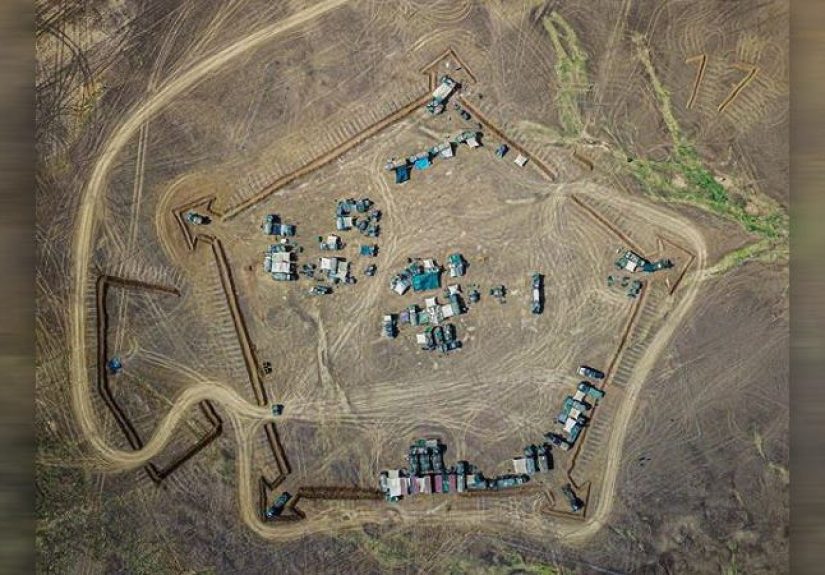
Scroll through social media long enough and you’ll see them: perfect geometric stars,
ringed with green ramparts and moats, looking less like old battlefields and more like
giant mandalas for history nerds. Those are medieval star fortsbetter
described as early modern bastion fortsand nowhere did this style reach its
peak quite like in the Fortifications of Vauban across France.
Once designed to shrug off cannon fire and invading armies, Vauban’s star-shaped
fortresses are now trending again for totally different reasons: Instagram, urban
planning, sustainable building, and even game design. Let’s dig into why these jagged
stars of stone and earth are suddenly back in styleand why the work of one French
engineer from the 1600s still feels strangely modern.
What Exactly Is a Medieval Star Fort?
Before Vauban, most European cities relied on tall medieval walls and round towers.
Those looked impressive but had one fatal flaw: cannonballs. Once gunpowder artillery
became a standard part of warfare, tall vertical walls turned into very expensive
dominoes.
Enter the star fort, also known by its Italian nickname,
trace italienne. Instead of a simple ring wall, engineers designed a low,
thick polygonal enclosure with sharp, angular bastions jutting outward like points on
a star. The goal wasn’t just to look cool (though they absolutely do). It was to:
-
Eliminate “dead zones.” The angled bastions allowed defenders to
fire along the curtain walls and into the moat, so attackers couldn’t hide at the
base of the walls. -
Deflect cannon fire. Sloped and angled earthworks encouraged
cannonballs to ricochet instead of smashing straight through. -
Layer the defenses. Advanced star forts often had multiple rings
of bastions, ravelins, hornworks, and detached batteries. If attackers took one
layer, they were still in a lethal crossfire from the next.
By the 16th and 17th centuries, this new fortification style spread across Europe
and beyond. The basic toolkitbastions, moats, glacis, and carefully calculated
anglesbecame the “modern” way to build a fortress for the age of gunpowder.
Meet Vauban, Louis XIV’s Fortress Whisperer
A quick bio of the man behind the walls
Sébastien Le Prestre de Vauban (1633–1707) was a French military
engineer who served under King Louis XIV. Over his long career, he worked on
well over a hundred fortifications across France, both building new defenses and
upgrading old ones. He wasn’t just a talented engineer; he was also a master of
logistics, siege warfare, and even early social policy, writing about taxation and
the welfare of ordinary people.
Vauban approached fortress design like a systems engineer. He thought about:
- The bigger strategic picture – where to put fortresses to protect the kingdom.
- Local geography – how to adapt his designs to mountains, coasts, and river bends.
- Human factors – how soldiers and civilians would actually live inside the walls.
An “iron belt” around France
Under Louis XIV, France’s borders were constantly being negotiated (and fought over).
Vauban’s answer was what historians sometimes call an “iron belt”:
a chain of star forts, citadels, and fortified towns encircling much of the country.
These fortifications guarded:
- France’s northern frontier facing the Low Countries and rival powers.
- Its eastern borders toward the Holy Roman Empire and German states.
- Key Atlantic and Channel coasts, including ports and naval approaches.
The result was not just a bunch of isolated forts, but an integrated defensive
network. Vauban’s designs influenced military engineering across Europe, from the
Netherlands to Spain and even colonial outposts overseas.
The Fortifications of Vauban: A 12-Site UNESCO Super-Fort
In 2008, UNESCO bundled together twelve of Vauban’s most representative works into a
single World Heritage Site called the
Fortifications of Vauban. Together, these sites form a kind of
“greatest hits” album of star forts and bastion systems, scattered around the edges
of modern France.
The collection isn’t just twelve individual forts. It includes:
-
Complete fortified towns built more or less from scratch, with
streets, squares, and defenses all planned as one coherent design. -
Citadels and city walls that dominate older urban centers and
reshape their skylines. -
Mountain forts and batteries tucked into Alpine or Pyrenean
landscapes, controlling passes and valleys. -
Sea fortifications and watchtowers that guarded bays, straits,
and important naval routes.
A few standout Vauban sites
You could write a whole book on each site, but here are some of the most striking
examples of Vauban’s star-fort style in action:
-
Neuf-Brisach (Alsace) – A star-shaped town built from the ground
up around 1700, with two rings of walls and a perfectly regular grid of streets.
From above, it looks like someone dropped a geometric snowflake in the middle of
the Rhine plain. -
Citadel of Besançon (Franche-Comté) – Perched high above a loop
in the Doubs River, this citadel combines steep natural cliffs with bastioned
walls to create a fortress that’s both intimidating and oddly elegant. -
Mont-Dauphin (Alps) – A fortified village on a high plateau,
designed to control Alpine routes. Think “mountain resort” meets “don’t even think
about invading from this direction.” -
Saint-Martin-de-Ré (Atlantic coast) – A coastal citadel and town
whose long, low walls and bastions once shielded a vital harbor from enemy fleets. -
Blaye–Fort Médoc–Fort Paté (Gironde estuary) – A trio of forts
placed to control a major river approach to Bordeaux, showing how Vauban thought
in terms of networks rather than one-off structures.
Together, these twelve UNESCO-listed sites are considered the best showcase of
Vauban’s genius and of the star-fort system as a whole.
Why Star Forts Were So Revolutionary
To modern eyes, Vauban’s plans can look decorative, almost like snowflakes, logos,
or level maps from a strategy game. But every line and angle responds to a brutal
question: How do you keep people with cannons from knocking down your walls and
marching into your city?
Geometry versus gunpowder
The central idea behind star forts is surprisingly simple: if the enemy can’t find a
safe place to stand and shoot, they can’t win. Vauban’s bastions and outworks
created overlapping fields of fire, so that any attacking force would be exposed to
guns from multiple angles at once.
Key innovations included:
-
Low, thick earth-and-stone walls that absorbed and deflected
cannon shots better than tall stone towers. -
Outer works like ravelins and hornworks that forced attackers to
fight through several layers of defenses before they even reached the main walls. -
Carefully designed ditches and slopes (the glacis) that made it
hard to get close to the walls with siege equipment.
Vauban also codified how to attack star forts, laying out systematic siege
techniques using zigzag trenches and parallel lines. In a very on-brand move, the
man who perfected defensive geometry also wrote the handbook for breaking it.
Why Vauban’s Forts Feel So Modern Today
If these fortresses are relics of 17th-century warfare, why do they feel so
contemporary? Partly it’s the aestheticsdrone photos of Neuf-Brisach or Besançon
look like minimalist graphic design. But it’s also the way Vauban designed for
multiple constraints at once, something urban planners and architects still wrestle
with.
Smart use of local materials
Vauban was practical. Wherever possible, he relied on local stone, brick,
and timber, partly to cut costs and partly because local materials handled
local climate and soil conditions better. Today we’d call that sustainability; in
his time, it was just good engineering and logistics.
Form, function, and livability
These weren’t just empty shells or isolated forts. Many of the sites are
full-fledged towns, with houses, churches, markets, and barracks
woven into the defensive layout. Streets often followed rational grids or carefully
planned lines, designed to move troops quickly and keep logistics flowing.
That dual identityas both fortress and citymakes Vauban’s work especially
attractive today. Visitors aren’t walking through a dusty ruin; they’re
experiencing living communities shaped by 300-year-old design choices.
From military tech to cultural icon
It doesn’t hurt that star forts have become a bit of an internet obsession. From
conspiracy theories (no, they weren’t built by lost super-civilizations) to
longform YouTube deep dives, the distinctive star shapes are catnip for history
fans, designers, and anyone who loves a good aerial photo.
Game developers borrow their logic for tower-defense and strategy titles; architects
and landscape designers admire the layered spaces; photographers and drone pilots
just enjoy how dramatically those sharp bastions cut into the surrounding fields or
coastline.
Visiting the Fortifications of Vauban Today
So how do you actually experience these medieval-looking but early modern star
forts in real life?
Picking your fortress
With twelve official UNESCO sites and many more Vauban-influenced works, you have
options. A few practical starting points:
-
Neuf-Brisach is ideal if you love symmetry and want that
classic aerial-star feel (even if you only see it on a map). The town’s grid and
ramparts are easy to explore on foot. -
Besançon offers a mix of dramatic topography and culture. The
citadel today houses museums and a zoo, and the views over the river loop are
spectacular. -
Mont-Dauphin lets you mix mountain landscapes with fortress
tourism. The fortified village feels remote and almost cinematic. -
Saint-Martin-de-Ré pairs Vauban’s bastions with harborside
charm, making it a favorite for travelers who want history and seaside cafes in
the same day.
What it’s like on the ground
Don’t expect a sterile museum vibe. Many Vauban sites are deeply woven into
everyday life. Locals park their cars in old parade grounds, kids bike
along ramparts that once bristled with cannons, and former powder magazines now host
art exhibits or community events.
The best way to appreciate the geometry is to:
-
Walk the walls. Follow the bastions and ramparts all the way
around. At each angle, look back and notice how one bastion covers another with
interlocking lines of sight. -
Check the maps. Whether it’s a tourist brochure or your phone,
switch to satellite view. Suddenly the town beneath your feet resolves into a
clearly defined star or polygonal pattern. -
Look for reused spaces. Many former ditches, glacis, and
outworks have become parks, gardens, and walking trailsproof that good defensive
design can be gently recycled into public space.
In other words, you don’t have to be a hardcore military-history geek to enjoy
Vauban’s star forts. You just need comfortable shoes, a bit of curiosity, and maybe
a camera wide-angle enough to capture those massive ramparts.
Experiences: Walking Through Vauban’s Star Forts
To really understand why medieval-style star forts are back in style, it helps to
imagine what they feel like in person. Here’s what a day exploring Vauban’s
fortifications might be like, stitched together from traveler reports and on-the-
ground impressions.
Morning in a star-shaped town
You arrive in Neuf-Brisach just as the light softens over the Alsace plain. From the
parking lot, it looks like a quiet, ordinary small town: low houses, a central
square, a church tower peeking above the roofs. It’s only when you walk toward the
edge that you notice the dropan abrupt ditch, then a wedge of grassy earth, then
another ditch, all cut into crisp angles that march around the town like a faceted
crown.
Climbing up onto the rampart, you realize you’re standing on just one point of an
enormous star. The path curves, then breaks sharply, and as you round each corner
you can see how the next bastion juts forward, covering the flank of the last.
Below, the town is surprisingly calm: kids walk to school, shopkeepers roll up
metal shutters, someone pedals past with a baguette poking out of a basket. Three
centuries ago, this layout was meant to repel imperial armies. Today, it mostly
repels bad traffic flow.
Afternoon on a cliff-top citadel
A few days later you find yourself in Besançon, where Vauban had more dramatic
geography to play with. The Doubs River wraps around a rocky hill in a near-circle,
creating a natural moat. Vauban simply crowned it with walls.
The climb up is steep enough that you understand instantly why this spot has been
fortified since Roman times. Inside, the citadel unfolds as a series of levels:
barracks, parade grounds, bastions, and today, museum spaces and animal enclosures.
On the ramparts, you lean against stone that has seen sieges, revolutions, world
wars, and now selfie sticks.
Looking down, the town spreads along the river loop: red roofs, narrow streets, and
the glint of modern bridges. It’s easy to see why Vauban’s work impressed UNESCO:
the citadel doesn’t just sit on the landscape; it orchestrates it. You can trace
every careful angle and understand how defenders once read this view not as scenery
but as potential lines of attack.
Evening on a windswept bastion
Your last stop is Mont-Dauphin, high in the Alps. The air is cooler, thinner, and
the views stretch across sharp peaks and deep valleys. Here the star fort feels
almost like a stone spaceship landed on a plateau.
As evening comes on, you stand at the tip of a bastion, wind tugging at your jacket,
and it’s easy to imagine the anxieties of the soldiers once posted here: watching
the mountain passes, tracking distant movement on the ridges. Yet around you now are
art studios, restored houses, and quiet streets. Children play where cannons once
stood. A café glows warm in a former guard building.
This is the magic of Vauban’s star forts in the 21st century: they are at once
weapons and neighborhoods, monuments and living places. Their sharp
geometric forms read as design icons, while their grassy ramparts serve as picnic
spots and sunset lookouts.
By the time you leave, you understand why medieval-style star forts are “back in
style.” They never really went out. We just finally have the toolsfrom satellite
maps to drones to thoughtful conservationto appreciate the full beauty and
complexity of the shapes Vauban drew on the edges of France.
Conclusion
The Fortifications of Vauban are more than a collection of old
walls. They’re a masterclass in how geometry, technology, landscape, and human life
can intersect. Designed to defend a 17th-century kingdom, they now inspire
photographers, architects, game designers, and ordinary travelers looking for places
where history is written not just in dates and names, but in lines, angles, and
lived-in streets.
From the perfect symmetry of Neuf-Brisach to the dramatic cliffs of Besançon and the
Alpine quiet of Mont-Dauphin, Vauban’s star forts show how military engineering
evolved to meet the challenge of gunpowderand how, centuries later, those same
designs can be reinterpreted as cultural treasures, public spaces, and geometric art
on a territorial scale.



 Close
Close