Table of Contents >> Show >> Hide
- What Open Subdownloader Actually Does
- Why Batch Subtitle Downloads Matter
- How the Batch Workflow Usually Works
- The Subtitle Formats You Should Know
- How to Name Subtitle Files So They Actually Work
- How Open Subdownloader Fits Into VLC, Kodi, Plex, Emby, and Jellyfin
- Common Problems and How to Fix Them
- What to Know About Open Subdownloader in 2026
- Best Practices for Batch Subtitle Success
- Experience-Based Notes From Real-World Subtitle Workflows
- Conclusion
If you have ever opened a movie folder and found a glorious mess of files like FinalMovie_REALFINAL_v2.mp4, subtitle_new.srt, and please-work-this-time.ass, congratulations: you are living the subtitle lifestyle. It is not glamorous, but it is real. And when your media library grows from a cozy handful of files into a digital mountain range, searching subtitles one video at a time becomes the kind of repetitive task that makes a person stare out a window and question every life choice that led to this moment.
That is where Open Subdownloader enters the picture. The idea is simple but powerful: instead of manually searching for subtitles for every episode, movie, or random documentary about mushrooms you downloaded three months ago and forgot to watch, you let a subtitle downloader scan your folders, identify video files, search matching subtitle databases, and pull down the files in batches. In plain English, it turns a mind-numbing chore into a mostly automated workflow.
This guide breaks down how to use Open Subdownloader for batch subtitle downloads, how the process works behind the scenes, what subtitle formats matter most, how to organize everything so your player does not panic, and what to watch out for if you are using an older tool in a newer streaming environment. There will be practical advice, a few file-naming examples, and just enough subtitle nerdiness to make you dangerous.
What Open Subdownloader Actually Does
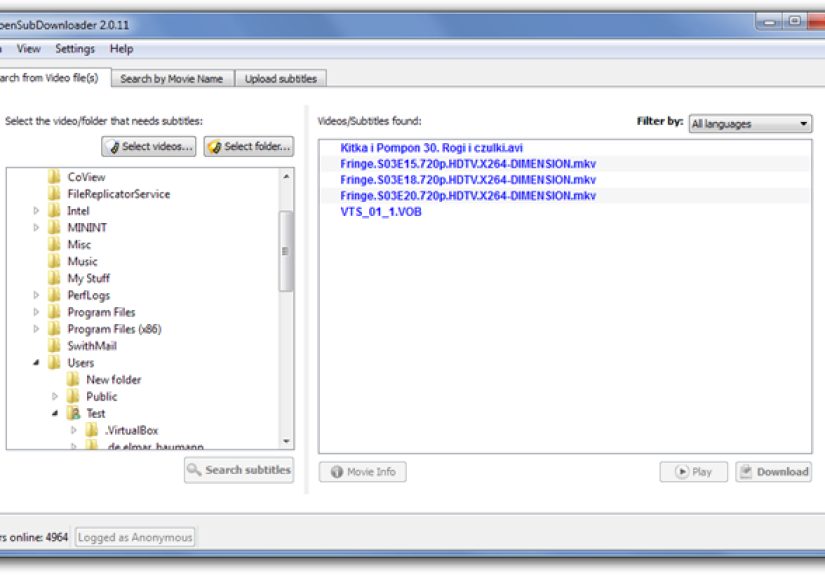
Open Subdownloader is built for one job: helping you search and download subtitles for video files automatically instead of hunting for them title by title. The classic workflow is refreshingly direct. You point the software at a folder, it scans the video files inside, tries to identify each file, searches a subtitle service for matches, and downloads subtitle files in the language you choose.
The biggest advantage is scale. If you have one movie, manual downloading is tolerable. If you have a season of TV episodes, a backup drive full of films, or a library organized by genre, actor, or “movies I swear I am going to watch this weekend,” batch searching saves enormous time. It also reduces mismatches because a good subtitle tool does more than compare filenames. It can use file data and hashing methods to improve matching, which matters when release names are messy, abbreviated, or downright chaotic.
In practical terms, the tool usually helps with four things at once: scanning folders, matching videos, filtering subtitles by language, and saving subtitle files next to the videos as external sidecar files. That last part matters more than people think, because good subtitle management is not just about finding subtitles. It is about putting them where your player, server, or web workflow expects them to be.
Why Batch Subtitle Downloads Matter
Subtitle downloading is not just a convenience feature for people who enjoy neat folders. It solves real problems. Maybe you are watching foreign-language films. Maybe you want English subtitles for noisy action scenes where every line sounds like it was recorded inside a tumble dryer. Maybe you are building a local media library for Plex, Emby, Jellyfin, Kodi, or VLC. Maybe you need subtitles for accessibility, language learning, or quiet late-night viewing when the rest of the house is asleep and not interested in your 1:30 a.m. detective marathon.
Batch downloading becomes especially valuable when you are working with television seasons, anime libraries, lecture recordings, or multilingual collections. Instead of repeating the same search twenty times, you can process a whole folder in one session. You also get more consistent results because the same language and naming rules are applied across all files.
There is another benefit people underestimate: maintenance. Once a subtitle workflow is organized, adding new files later becomes much easier. You are no longer improvising. You are running a system. A slightly nerdy system, yes, but a system.
How the Batch Workflow Usually Works
1. Add Your Video Folder
The first step is usually to load a folder that contains movies or episodes. Good folder structure helps immediately. Separate movies from TV shows. Keep season folders tidy. Avoid dumping 400 unrelated files into one directory like a digital junk drawer.
2. Let the Tool Identify the Videos
Open Subdownloader-style tools commonly analyze each file rather than relying only on the visible filename. That is important because filenames can be incomplete, inconsistent, or filled with release-group tags that are useful to power users and incomprehensible to normal humans. Better matching reduces the chance of downloading subtitles intended for the wrong cut, the wrong episode, or the wrong release.
3. Choose Your Language and Preferences
Most users set one or two subtitle languages and then let the downloader search accordingly. This is where batching really shines. You do not want to choose English, then English again, then English again for 48 episodes unless you are being punished by a very specific productivity demon.
4. Review Before You Download Everything
Automation is great. Blind trust is not. Before downloading hundreds of subtitle files, check a few matches. Are the titles correct? Is the language correct? Does the tool appear to be matching episode numbers properly? Five minutes of review can save you an hour of cleanup later.
5. Save the Subtitles Beside the Video Files
For most local playback setups, the cleanest move is to save the subtitle file in the same folder as the video using a matching base filename. That makes your media player much more likely to detect it automatically. This also makes future migration easier if you later move your library into Plex, Emby, Jellyfin, or a web player.
The Subtitle Formats You Should Know
If subtitles had a default “everybody gets along with this one” format, it would be SRT. SRT files are lightweight, text-based, widely supported, easy to edit, and perfect for most everyday needs. If your goal is broad compatibility across players and servers, SRT is usually the safe bet.
ASS and SSA are more styling-friendly. They allow richer formatting, positioning, and effects. That can be useful for anime, karaoke-style timing, or subtitle tracks where placement really matters. They look fancy, but not every environment handles them equally well, especially when streaming to a wide variety of clients.
WebVTT is especially important for web video. If your content is eventually going to live in an HTML5 player, WebVTT is often the better choice because it is designed for timed text tracks on the web. In other words, SRT is the dependable all-rounder, while WebVTT is the web-native cousin who knows how browsers think.
There are also image-based subtitle formats and specialty formats that some systems support only partially. In streaming environments, those can trigger burning-in or transcoding, which can increase CPU load and complicate playback. That is one more reason text-based subtitles are often the most practical option for batch workflows.
How to Name Subtitle Files So They Actually Work
Here is the truth nobody wants to hear: finding the subtitle is only half the job. Naming it correctly is the other half. Media servers are picky in the way only software can be picky. They do not care that you were doing your best. They care whether the file is named correctly.
For simple local playback, keep the subtitle file beside the video and match the filename as closely as possible. For example:
If you need special subtitle behavior, some platforms recognize extra flags in the filename. For example, a forced subtitle can be labeled with .forced, and subtitles for the deaf and hard of hearing may use labels such as .sdh or .cc depending on the platform. This matters when you want more than “there are words on the screen.” You want the right words, in the right context, appearing when they should.
On modern media servers, subtitles can often live either next to the video or in a dedicated subtitles folder, but the safest default for batch downloads is still the same-parent-folder approach. It is simple, portable, and easy to troubleshoot.
How Open Subdownloader Fits Into VLC, Kodi, Plex, Emby, and Jellyfin
One reason subtitle batch downloading stays useful is that the files you download are not trapped in one app. A good subtitle file can move with your media library.
VLC is generous with subtitle format support and is one of the easiest places to test whether your subtitle file works. If a subtitle opens cleanly in VLC, that is a good first sign your batch job was not a disaster.
Kodi supports both stand-alone and embedded subtitles and can search/download subtitles directly during playback. That makes it friendly for users who want both manual control and automation.
Plex, Emby, and Jellyfin all work well with properly named external subtitle files, but they can behave differently depending on client compatibility. Text-based subtitles usually travel better than image-based ones. If a subtitle format is unsupported on a given client, the server may have to remux or burn in subtitles, which can increase resource use.
That is why batch downloading should be paired with batch discipline. Choose formats that play nicely with your ecosystem, use clean filenames, and test a few files before processing an entire library. Subtitle management is not hard, but it definitely punishes optimism.
Common Problems and How to Fix Them
Wrong Subtitle for the Right Movie
This usually happens when a release has multiple cuts or when filename-only matching grabs the wrong result. Fix it by checking title/year, using more complete filenames, or manually reviewing candidates before a full batch download.
Correct Subtitle, Wrong Timing
That often means the subtitle was made for a different release. You can retime it in a subtitle editor, but it is usually better to find a version matched to your exact file if possible.
Subtitle File Exists but Does Not Appear
Check the filename first. Then check the encoding. UTF-8 is a strong default for text subtitle files because it reduces weird character issues and improves compatibility across media apps.
Playback Starts Transcoding for No Obvious Reason
Subtitles may be the reason. Some subtitle formats or client limitations can trigger remuxing or burn-in behavior. If that happens, converting or replacing the subtitle with a simpler text-based format may help.
What to Know About Open Subdownloader in 2026
Here is the honest part: this is a useful topic, but also a slightly legacy-flavored one. The SubDownloader project still exists in open-source form, which is good news for tinkerers and people comfortable with Python-based tools. But the larger subtitle ecosystem has moved. OpenSubtitles announced the final shutdown of the older .org XML-RPC API for third-party apps in January 2026, which means some older tutorials, older binaries, or older integrations may no longer behave the way they once did.
So if you are using Open Subdownloader today, treat it like a classic car. It can still be impressive. It can still get the job done. But do not assume every old guide still maps perfectly to the current road. Test your setup, verify authentication and search behavior, and confirm that downloaded files are still landing in the correct format and location. The good news is that the basic subtitle-management principles have not changed: clean naming, compatible formats, organized folders, and small-batch testing before full automation.
Best Practices for Batch Subtitle Success
- Keep movie and TV folders separate.
- Use consistent filenames with title, year, and episode numbering.
- Prefer text-based subtitle formats for broad compatibility.
- Default to UTF-8 encoding when saving text subtitle files.
- Test a sample batch before processing an entire library.
- Label forced and SDH subtitles clearly when needed.
- Use batch tools for speed, but keep human review for quality control.
Experience-Based Notes From Real-World Subtitle Workflows
The real experience of using a tool like Open Subdownloader is less “press one button and achieve cinematic enlightenment” and more “build a reliable routine and stop future-you from suffering.” That is not a complaint. It is actually the beauty of it. Once the workflow clicks, it feels great.
The first big lesson is that subtitle quality is not just about the downloader. It is about the library. People who have smooth subtitle workflows almost always have clean folder structures. Their movie titles are consistent. Their TV episodes are labeled properly. Their subtitle files sit right next to the media instead of wandering around the hard drive like lost tourists. In that kind of setup, a batch subtitle tool feels magical. In a messy setup, it feels like trying to organize a closet during a tornado.
The second lesson is that language choice changes everything. If you only need one language, batch downloads are fast and pleasant. If you need multiple languages, forced subtitles, and hearing-impaired tracks, things get more nuanced. Suddenly naming conventions matter more. You start caring about whether a file should be .eng.srt, .en.forced.ass, or .spa.sdh.srt. You become the kind of person who has opinions about subtitle suffixes, and there is no easy road back.
Another common experience is learning that “subtitle found” does not always mean “subtitle correct.” The tool may match the title perfectly but still grab a subtitle made for a different release. That is why experienced users trust automation, but only after verifying a small sample. The best rhythm is simple: scan, preview, download a few, test playback, then scale up. This approach feels slower for ten minutes and smarter for the next six months.
One surprisingly satisfying part of batch subtitle management is the moment your media server starts behaving better because your files are finally named correctly. Plex detects the external subtitle automatically. Emby displays the right language. Jellyfin avoids unnecessary playback drama. VLC opens the file and just works. It is not flashy, but it is deeply satisfying in the same way a perfectly labeled toolbox is satisfying.
There is also a strong long-term benefit. Once you have a repeatable subtitle workflow, every new addition to your library becomes easier to manage. A new season drops? Scan the season folder. A few foreign films join the collection? Run the same language profile. Migrating to a different media server? Your subtitle files are already in a portable, readable structure. Good batch subtitle habits compound over time.
And finally, there is the biggest practical truth of all: subtitle tools are best when they are boring. You do not want excitement here. You want predictable results, readable text, correct language tags, and zero mysterious transcoding surprises. If Open Subdownloader helps you reach that state, it has done its job beautifully.
Note: If you are using older Open Subdownloader tutorials or builds, test them carefully before relying on a huge batch job. The subtitle ecosystem has changed, and some legacy OpenSubtitles workflows may need updated handling in 2026-era setups.
Conclusion
Search and download video subtitles in batch using Open Subdownloader is still a smart workflow for anyone managing a serious local video library. The core idea remains excellent: scan your files, match subtitles at scale, save them with clean names, and build a setup that works across media players and servers. The software may have some legacy wrinkles, but the strategy behind it is timeless. If you combine automation with clean organization and a little quality control, subtitles stop being a recurring headache and start becoming part of a polished media system.